Muscle as a Metabolic Organ: Why Strength is the New “Metabolic Currency” in 2026
The Great Fitness Shift: From Step Counts to Muscle Mass
As we move through 2026, the global health conversation has undergone a radical transformation. For decades, we obsessed over “10,000 steps” and burning calories. But today, the clinical community is sounding a louder, more urgent alarm on a different metric: Sarcopenia, or age-related muscle loss. Metabolic Currency
As a health professional, I am seeing a shift in how we view the human body. We no longer see muscle simply as a tool for movement or a symbol of vanity. In 2026, we recognize skeletal muscle as our primary metabolic organ. It is the “engine room” where your blood sugar is processed, making it the ultimate metabolic currency in the fight against insulin resistance and Type 2 diabetes.
Muscle: Your Body’s “Metabolic Buffer”
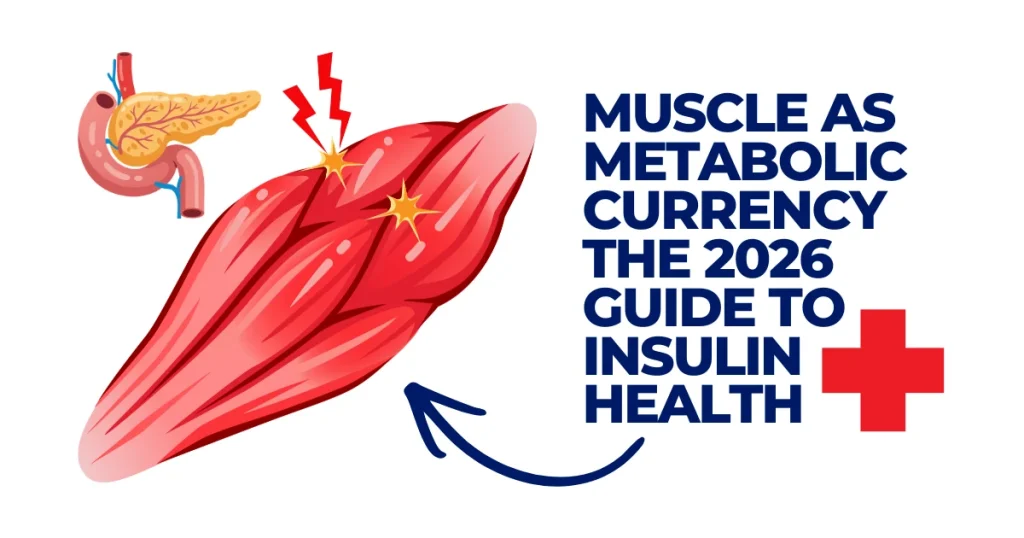
Why is muscle so critical? Think of your muscles as a giant sponge for glucose. Research has confirmed that skeletal muscle is responsible for roughly 80% of post-meal glucose clearance. When you have healthy, active muscle tissue, your body can efficiently “soak up” sugar from the bloodstream, keeping your insulin levels stable. Metabolic Currency
However, when muscle mass declines—a process that can start as early as your 30s—that “sponge” gets smaller. This leads to what we now call a diminished metabolic buffer. Without enough muscle to store glucose, your body is forced to pump out more insulin, eventually leading to the rising tide of insulin resistance. In 2026, data shows a direct, terrifying link: lower muscle mass is a more accurate predictor of metabolic disease than body weight alone.
The Rise of “Resistance Hits” Metabolic Currency
The good news? You don’t need to live in the gym to protect your metabolic health. The 2026 fitness trend is moving away from grueling hour-long sessions toward “Resistance Hits.”
These are short, high-impact bursts of strength work designed to “wake up” the muscle fibers and signal the body to maintain its lean tissue. Metabolic Currency
- The 20-Minute Rule: Just two 20-minute sessions of resistance work per day—think air squats while the coffee brews or resistance band rows during a meeting—can significantly improve insulin sensitivity.
- Functional Strength: The focus is on movements that mimic daily life. Squats, lunges, and carries aren’t just for athletes; they are the “medicine” that prevents frailty and metabolic collapse as we age.
Sarcopenia Prevention: The 2026 Priority
In the past, we treated muscle loss as an inevitable part of growing old. Today, we treat it as a clinical emergency. 2026’s most advanced fitness trackers have shifted their algorithms. Instead of just counting steps, they now use AI to estimate muscle quality and volume, alerting users when their activity levels aren’t sufficient to maintain their “metabolic buffer.”
By prioritizing strength, you aren’t just building a better physique; you are investing in a high-yield savings account for your health. Every bit of muscle you maintain acts as a shield against the metabolic complications of the modern world. Metabolic Currency
Daily Action: Build Your Buffer Today Metabolic Currency
You don’t need to be a bodybuilder to reap the rewards. Your goal for today is simple: Two 20-minute Resistance Hits. 1. Morning Hit: 10 minutes of bodyweight squats and push-ups.
- Evening Hit: 10 minutes of resistance band work or weighted carries (even carrying heavy groceries counts!).
In 2026, we know that strength is the foundation of longevity. Make sure your “metabolic currency” is in the green. Metabolic Currency
Health Disclaimer
This article is for informational purposes and does not replace professional medical advice. Always consult with a healthcare provider before beginning a new exercise regimen, especially if you have pre-existing metabolic or cardiovascular conditions. DrugsArea
Sources & References
- National Institutes of Health – Muscle and Glucose Homeostasis,
- Journal of Cachexia, Sarcopenia and Muscle,
- American College of Sports Medicine – 2026 Trends,
- World Health Organization – Aging and Health Guidelines