Breakthrough in Regenerative Medicine: Lab-Grown Heart Valves Success
The New Frontier of Cardiovascular Repair
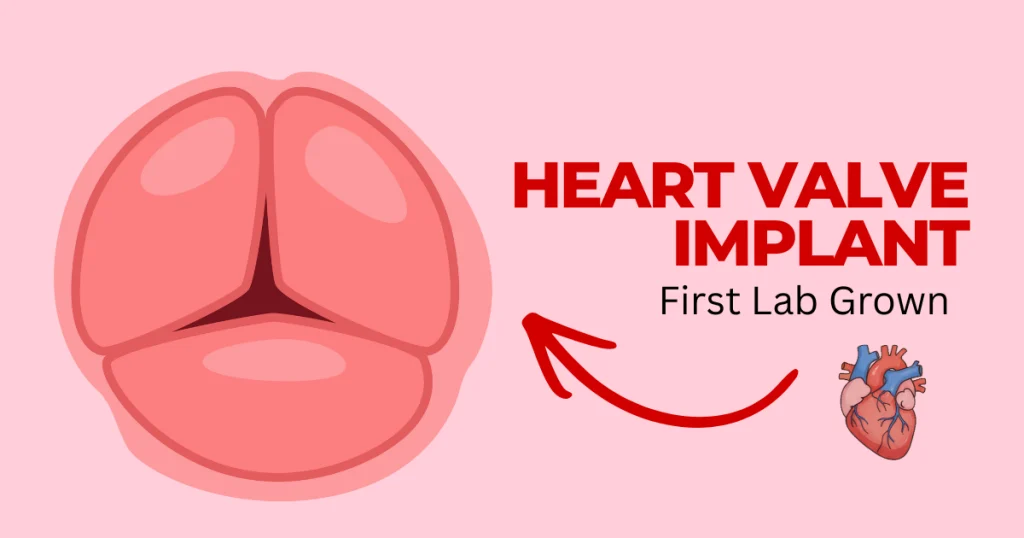
For decades, the “holy grail” of cardiac surgery has been to develop a replacement heart valve that behaves exactly like biological tissue—one that can grow, repair itself, and integrate seamlessly with the patient’s own body. As a health professional who has witnessed the limitations of mechanical and prosthetic valves, I can say that we are finally standing on the precipice of a new era.
The recent success of stem cell scaffolding for lab-grown heart valve implants isn’t just a clinical win; it is a paradigm shift in how we treat valvular heart disease.
The Problem with Traditional Replacements
To understand why this breakthrough is so significant, we must first look at the current standard of care. Currently, patients requiring valve replacement generally receive one of two types:
- Mechanical Valves: These are durable but require lifelong blood-thinning medication (anticoagulants), which carries a risk of internal bleeding.
- Bioprosthetic (Animal) Valves: These are made from porcine (pig) or bovine (cow) tissue. While they don’t require heavy medication, they wear out every 10 to 15 years and often trigger an immune response.
For pediatric patients, the situation is even more dire. Children outgrow these valves, leading to multiple high-risk open-heart surgeries throughout their childhood. This is where lab-grown technology changes the game.
Understanding Stem Cell Scaffolding
The process of creating a “living” heart valve involves an intricate dance between engineering and biology. The foundation of this technology is the scaffold.
1. The Decellularized Framework
Scientists begin by creating a three-dimensional structure shaped like a heart valve. This can be a synthetic polymer or a donor valve that has been “decellularized”—meaning all the donor’s cells are stripped away, leaving only the collagen and elastin “skeleton.”
2. Seeding with Stem Cells
The patient’s own stem cells (often derived from bone marrow or blood) are “seeded” onto this scaffold. Because these are the patient’s own cells, the body’s immune system recognizes the valve as “self” rather than a foreign object.
3. The Bioreactor Environment
The scaffold is placed in a bioreactor, a machine that mimics the conditions of the human heart. It pulses fluid through the valve, teaching the stem cells to differentiate into specialized heart tissue and strengthen the structure to withstand the high pressures of the circulatory system.
The First Successful Implants: What Happened?
The transition from the lab to the operating room is a rigorous process. The first successful human implants utilized a bio-absorbable scaffold. Once implanted, the body’s natural regenerative processes took over.
Over several months, the patient’s cells fully colonized the scaffold while the original synthetic material slowly dissolved. What was left behind was a fully functional, living heart valve made of the patient’s own tissue.
Clinical Observations:
- Integration: The valves showed immediate hemodynamic stability.
- Growth Potential: Preliminary data suggests these valves can expand as the heart grows.
- Reduced Complications: No evidence of rejection or calcification, which are common killers of traditional implants.
Why This Matters for the Future of Healthcare
As a professional in the field, I see three major impacts this technology will have on the healthcare landscape:
- Elimination of Immunosuppression: Because the tissue is autologous (from the patient), we can bypass the dangerous side effects of anti-rejection drugs.
- The End of “Redo” Surgeries: If a valve can grow with the patient, a child born with a defect may only need one surgery in their lifetime instead of five.
- Personalized Medicine: We are moving away from “one size fits all” medical devices toward biological solutions tailored to an individual’s genetic makeup.
Challenges and Ethical Considerations
Despite the excitement, we must remain grounded. Scaling this technology for mass production is expensive. Furthermore, the time required to “grow” a valve in a bioreactor (currently several weeks) makes it difficult to use in emergency settings where a patient needs a replacement immediately.
There is also the ongoing debate regarding the source of stem cells, though the use of induced pluripotent stem cells (iPSCs)—adult cells reprogrammed into an embryonic-like state—has largely mitigated the ethical concerns surrounding embryonic tissue.
Final Thoughts from the Clinic
The success of these first implants is a testament to the power of interdisciplinary collaboration between cardiologists, bioengineers, and molecular biologists. We are no longer just “repairing” the heart with cold steel and plastic; we are teaching the heart to heal itself.
For the millions of people worldwide suffering from valvular disease, the message is clear: the future of your heart is not just mechanical—it’s alive. DrugsArea
Sources & References
- Nature Communications: Bioengineered Heart Valves: Clinical Trials and Results
- The Lancet: Regenerative Medicine in Cardiovascular Surgery
- American College of Cardiology: Stem Cell Applications for Valvular Disease
- Journal of the American Medical Association (JAMA): First Human Implants of Scaffolding Tissue
People Also Ask
1. What exactly is a “lab-grown” heart valve?
A lab-grown (or tissue-engineered) heart valve is a living replacement created by seeding a patient’s own cells—or specialized donor cells—onto a 3D biodegradable scaffold. Unlike plastic or metal valves, these are designed to integrate with the patient’s body, eventually becoming living tissue that functions just like a natural valve.
2. Who received the first lab-grown heart valve implant?
While experimental versions have been studied for years, a major milestone occurred recently with the GECT-DZHK28 study, where young adults received valves made from their own (autologous) tissue. Earlier breakthroughs also include the first FDA-cleared “decellularized” human valves (CryoValve SG), which paved the way by using human donor “scaffolds” that the patient’s own cells can eventually inhabit.
3. How do these valves “grow” with a child?
This is the “holy grail” of pediatric cardiology. Because the valve is made of living cells, it can repair itself and expand as the child’s heart grows. Standard mechanical or animal-tissue valves stay the same size, meaning a growing child would typically need 3 to 5 high-risk re-operations; a lab-grown valve could potentially last a lifetime after just one procedure.
4. Do I still need to take blood thinners with a lab-grown valve?
One of the biggest benefits is the potential to avoid lifelong blood thinners (like Warfarin). Mechanical valves often cause blood clots, but because lab-grown valves are made of “biological” material that the body recognizes as its own, the risk of clotting is significantly lower.
5. How are these valves actually made?
Scientists typically use a “scaffold” (either a synthetic polymer or a decellularized donor valve). They “seed” this frame with cells, then place it in a bioreactor—a machine that mimics the environment of the human heart. The bioreactor “trains” the cells to grow into the right shape and strength by pulsing fluid through them before they are ever implanted.
6. What is the difference between a lab-grown valve and a “bioprosthetic” valve?
A standard bioprosthetic valve is made from dead animal tissue (cow or pig). It doesn’t grow, and it eventually wears out or calcifies (hardens) within 10–15 years. A lab-grown valve is alive; it is designed to resist calcification and adapt to the host’s body indefinitely.
7. Are lab-grown heart valves FDA-approved yet?
Most are currently in clinical trials. While certain “decellularized” valves have received clearance, the fully “grown-in-a-lab” varieties are still undergoing rigorous testing to ensure they are safe and durable for long-term use in humans.
8. What are the main risks associated with this new technology?
The primary challenge is ensuring the valve doesn’t “shrink” or “deform” as the living cells remodel the scaffold. Scientists are also carefully monitoring for any immune response, though using a patient’s own cells (autologous) virtually eliminates the risk of rejection.
9. Can adults benefit from lab-grown heart valves, or is it just for kids?
While the most urgent need is in children (due to growth), adults can benefit too. For adults, the main advantage is durability. If a lab-grown valve can last 40+ years without the need for blood thinners, it would be a superior option to current mechanical and animal-tissue alternatives.
10. When will lab-grown heart valves be widely available?
Experts suggest that as we move through 2026 and beyond, results from current human trials will dictate the timeline. If the safety data remains strong, we could see wider clinical availability for specific conditions (like pulmonary valve defects) within the next 3 to 5 years.