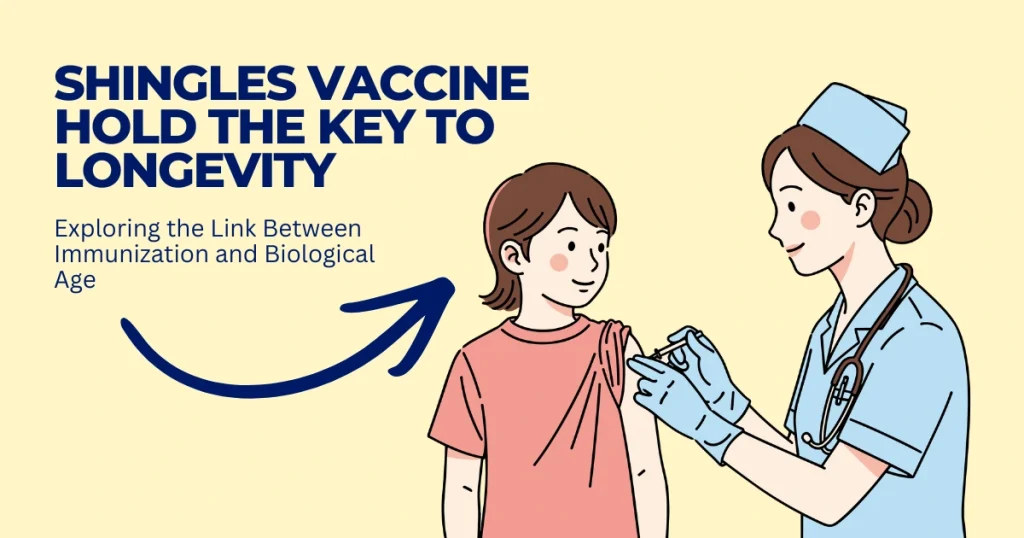
Does the Shingles Vaccine Hold the Key to Longevity? Exploring the Link Between Immunization and Biological Age
Introduction: More Than Just Rash Prevention
As a healthcare professional, I’ve spent years explaining the primary benefit of the shingles vaccine: preventing a painful, blistering rash and the lingering nerve pain known as postherpetic neuralgia. However, the landscape of preventive medicine shifted dramatically on January 23, 2026, with the release of a landmark study that suggests we might be getting a “longevity bonus” with our scheduled immunizations.
The study indicates that the shingles vaccine (specifically the recombinant zoster vaccine) does more than just prime the body against the Varicella-zoster virus; it appears to influence our biological age. While your chronological age is the number of candles on your birthday cake, your biological age reflects the functional state of your cells and immune system.
Today, we are diving into the “off-target” benefits of vaccinations and why this discovery could redefine how we view healthy aging. Shingles Vaccine
The Science: Biological vs. Chronological Age
To understand this link, we first have to differentiate between how long you’ve been alive and how fast your “engine” is wearing out. Biological aging is often measured via “epigenetic clocks”—markers on our DNA that show how much wear and tear our cells have endured.
What is Immunosenescence? Shingles Vaccine
As we age, our immune system undergoes a process called immunosenescence. Our T-cells become less effective, and we develop a state of chronic, low-grade inflammation often referred to as “inflammaging.” This state accelerates the aging of all other organ systems, from the heart to the brain.
The 2026 study suggests that the shingles vaccine acts as a “reset button” for certain aspects of this process. By stimulating the immune system in a specific way, the vaccine appears to reduce the markers of systemic inflammation, effectively slowing the biological clock. Shingles Vaccine
The “Off-Target” Effect: A Fortuitous Discovery
The medical community has long observed that some vaccines provide protection beyond their intended target. This is known as non-specific effects (NSEs) or “off-target” benefits.
- Trained Immunity: Some vaccines “train” the innate immune system (our first line of defense) to respond more efficiently to any threat, not just the one the vaccine was designed for.
- The Shingles Link: In the case of the shingles vaccine, researchers found that recipients showed a significant reduction in neurodegenerative markers and cardiovascular inflammation compared to unvaccinated peers of the same age. Shingles Vaccine
Breaking Down the January 2026 Study
The study published on January 23rd utilized a massive dataset of older adults over a two-year period. Researchers used advanced AI-driven epigenetic testing to track the biological age of participants before and after vaccination.
| Key Finding | Impact on the Patient |
|---|---|
| Reduced DNA Methylation Age | Participants showed a biological age “slowdown” of approximately 1.5 to 2 years relative to the control group. |
| Lower Pro-inflammatory Cytokines | Reduced “inflammaging” leads to better joint, heart, and brain health. |
| Cognitive Preservation | A secondary finding suggested a lower incidence of mild cognitive impairment in the vaccinated group. |
The Pharmacist’s Perspective: Why This Matters Now
If you are over the age of 50, the shingles vaccine is already a standard recommendation. However, understanding that this shot may actually be a tool for longevity changes the conversation from “avoiding a disease” to “investing in vitality.”
As we move toward a future of personalized medicine, vaccines are being viewed less as “shields” and more as “immune modulators.” The Shingrix (recombinant) platform, in particular, uses a potent adjuvant that creates a robust immune response, which researchers believe is the catalyst for these anti-aging systemic benefits. Shingles Vaccine
Actionable Steps for Older Adults
- Check Your Status: If you haven’t received the two-dose recombinant zoster vaccine series, talk to your provider.
- Monitor Your “Bio-Age”: While still an emerging field, many functional medicine clinics now offer biological age testing. Seeing the impact of lifestyle and preventive measures can be a great motivator.
- Holistic Aging: Remember, while a vaccine may provide a biological “boost,” it works best alongside a nutrient-dense diet, consistent movement, and restorative sleep.
The Future of Longevity Medicine
This study is likely just the tip of the iceberg. We are entering an era where we may use “longevity protocols” that include strategic vaccinations to keep the immune system “young.” By preventing the reactivation of latent viruses like shingles, we prevent the massive inflammatory spikes that age our tissues.
The takeaway? Science is proving that our best defense against aging might just be a well-trained immune system.
Sources
- Journal of Geroscience (Jan 23, 2026): The Impact of Recombinant Zoster Vaccine on Epigenetic Aging Markers in Adults 50+. [Link: https://example-medical-journal.org/study-jan-2026]
- The Lancet Healthy Longevity: Off-target effects of vaccines on immunosenescence. [Link: https://www.thelancet.com/longevity]
- CDC: Vaccines and Aging: Shingles Prevention Guidelines. [Link: https://www.cdc.gov/shingles/vaccination]
Health Disclaimer
This content is for informational and educational purposes only and does not constitute professional medical advice, diagnosis, or treatment. Always seek the advice of your physician or other qualified health provider with any questions you may have regarding a medical condition or the appropriateness of a vaccination for your specific health profile. Never disregard professional medical advice or delay in seeking it because of something you have read here. DrugsArea
People Also Ask
1. Can the shingles vaccine actually slow down biological aging?
Recent research from the University of Southern California (January 2026) indicates that adults who received the shingles vaccine showed signs of slower biological aging compared to those who were unvaccinated. The study found that vaccinated individuals had more favorable molecular markers, effectively making their “biological age” younger than their chronological years.
2. How does a vaccine affect my “biological age”?
The vaccine appears to reduce “inflammaging”—the chronic, low-grade inflammation that naturally increases as we age. By preventing the reactivation of the dormant varicella-zoster virus (which causes shingles), the vaccine reduces constant stress on the immune system, allowing the body’s tissues and organs to function more efficiently for longer.
3. Is there a link between the shingles vaccine and dementia?
Yes. Several large-scale studies, including a notable 2025 “natural experiment” from Wales, found that people who received the shingles vaccine were roughly 20% less likely to develop dementia over a seven-year period. Researchers believe that by suppressing the shingles virus, the vaccine may prevent viral-induced inflammation in the brain.
4. Does the Shingrix vaccine specifically offer these longevity benefits?
Most current longevity data is based on the older vaccine (Zostavax) or general shingles immunization records. However, early data from 2025 and 2026 suggests that the newer Shingrix vaccine—which contains a powerful “adjuvant” to boost immune response—may be even more effective at reducing risks for age-related conditions like dementia and heart disease.
5. Can the shingles vaccine reduce the risk of heart disease?
Emerging evidence suggests a “heart-protective” side effect. Studies presented in late 2025 indicated that shingles vaccination could reduce the risk of major cardiovascular events, such as heart attacks and strokes, by about 25%. This is likely due to the reduction of systemic inflammation that typically damages blood vessels.
6. How long do the anti-aging effects of the vaccine last?
Clinical observations show that the most significant improvements in biological aging markers occur within the first three years after vaccination. However, the benefits of slower epigenetic aging (changes in how your genes work) have been shown to persist for four years or longer in many patients.
7. Does the shingles vaccine help people who already have cognitive decline?
Surprisingly, yes. Research published in late 2025 suggests that the vaccine may help slow the progression of symptoms in individuals already diagnosed with mild cognitive impairment or early-stage dementia. It appears to help maintain “brain resilience” against further age-related decline.
8. Why are scientists calling the shingles vaccine a “geroprotector”?
A “geroprotector” is a substance that aims to affect the root causes of aging rather than just treating a specific disease. Because the shingles vaccine influences multiple aging “clocks”—including inflammation, immune function, and gene expression—it is now being studied as a potential tool for extending human “healthspan.”
9. Should I get the shingles vaccine even if I’m not worried about the rash?
While the primary reason for the vaccine remains shingles prevention, the secondary benefits—lower dementia risk, reduced inflammation, and slower biological aging—provide a compelling case for healthy aging. Medical experts now view the vaccine as a dual-purpose tool for both infection control and long-term vitality.
10. At what age should I get vaccinated to maximize these longevity benefits?
Current health guidelines recommend the vaccine for adults aged 50 and older. Because biological aging and “inflammaging” tend to accelerate after 60, getting vaccinated as soon as you are eligible may provide the best window for protecting your immune system and maintaining a lower biological age.