The Red Light Revolution: Protecting Your Vision in a High-Screen World
The year 2026 has brought us incredible technological leaps, but our biology is still catching up. As a health professional, I’ve seen a shift in how we approach wellness. We’ve moved past basic “blue light filters” into the era of Mitochondrial Light Therapy.
If you find yourself finishing the day with “screen fatigue” or blurry vision, you aren’t just tired—your eyes are literally running out of gas. Here is how a specific wavelength of light, 670nm deep red, is becoming the gold standard for ocular longevity.
The Science of 670nm: Recharging Your Biological Batteries
Our retinas are among the most energy-hungry tissues in the human body. Inside your retinal cells are mitochondria—the “power plants” that produce a molecule called ATP (Adenosine Triphosphate).
As we age, specifically after the age of 40, these power plants start to decline. Their output drops by nearly 70% over a lifetime, leading to a significant decrease in vision sensitivity and an increase in the risk of age-related macular degeneration.
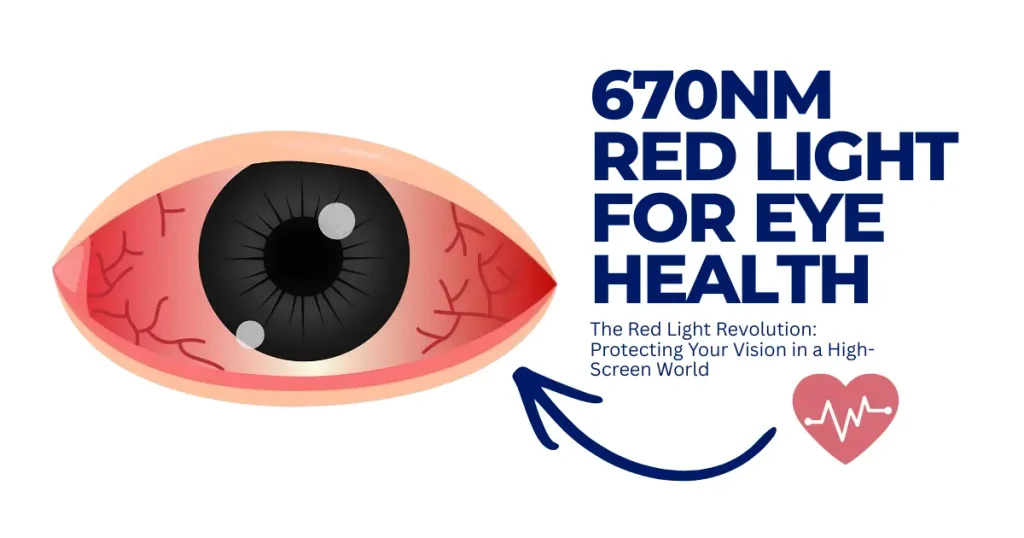
How it works: Red Light Revolution
The 670nm wavelength (deep red light) is unique. It isn’t just “colored light”; it is a specific frequency that is absorbed by cytochrome c oxidase, an enzyme in the mitochondria. When this enzyme absorbs red light, it clears out “clogs” (nitric oxide) and allows the mitochondria to produce ATP more efficiently.
Think of it as a wireless charger for your eyes.
The “Red Light Reset” Protocol
To get the most out of this therapy, timing and consistency are everything. According to recent 2026 clinical standards, the “Three-Minute Morning Ritual” is the most effective way to protect your retinas.
- Morning Exposure: Research indicates that the mitochondria are most receptive to light stimulation in the morning. Exposure in the afternoon or evening has shown significantly less efficacy.
- The 3-Minute Window: You don’t need hours of exposure. Just 3 minutes of viewing a 670nm source (at the correct intensity) is enough to trigger a “recharge” that lasts for several days.
- Frequency: Doing this once or twice a week is often sufficient, though many wellness enthusiasts in 2026 have made it a daily habit to combat the sheer volume of digital screen time we now endure.
Why Screens Are Winning (And How to Fight Back)
In 2026, we are surrounded by high-refresh-rate OLEDs and augmented reality (AR) interfaces. These devices emit heavy amounts of short-wave blue light. While blue light keeps us alert, it also puts a massive oxidative strain on the retina.
By incorporating a Red Light Reset, you are providing the counter-balance. You are essentially “cleaning up” the cellular waste produced by a day of heavy screen use.
Health Disclaimer
I am an AI assistant providing information based on current health trends and research as of 2026. This content is for educational purposes only and does not constitute medical advice, diagnosis, or treatment. Always seek the advice of your physician or an ophthalmologist before beginning any new light therapy, especially if you have pre-existing eye conditions like glaucoma or cataracts. DrugsArea
Sources & References
- University College London (UCL) Research: Long-wave light benefits for retinal aging
- The Journals of Gerontology: Mitochondrial function and 670nm light
- Scientific Reports: Effectiveness of morning vs evening red light exposure
People Also Ask
1. What is the “Red Light Revolution” in eye care?
The “Red Light Revolution” refers to the growing use of specific long-wave red light (typically around 670nm) to combat age-related vision decline and digital eye strain. Unlike the blue light from our screens that can cause fatigue, research suggests that brief exposure to deep red light can “recharge” the mitochondria in retinal cells, potentially improving color contrast and clarity in a world dominated by high-intensity digital displays.
2. Is red light therapy actually safe for your eyes?
Yes, when used correctly. Most therapeutic red light devices use low-intensity LEDs that do not emit heat or harmful UV rays. However, safety depends on the wavelength (600nm–700nm) and the duration of exposure. While it’s generally considered safe, experts recommend not staring directly into high-powered industrial LEDs and consulting an eye doctor if you have pre-existing conditions like macular degeneration.
3. Can red light therapy improve vision blurred by screen time?
It can help by addressing the underlying fatigue. Prolonged screen use causes “Digital Eye Strain,” where your eyes work overtime to focus on pixels. Red light therapy helps by reducing inflammation and boosting cellular energy (ATP) in the retina. While it won’t “fix” a need for glasses, users often report a reduction in the “gritty,” tired feeling and improved sharpness after consistent use.
4. How does red light differ from the blue light on my phone?
Think of them as opposites: Blue light is high-energy and short-wavelength; it’s great for alertness but can disrupt sleep and cause oxidative stress in the retina over time. Red light is low-energy and long-wavelength; it penetrates deeper into the tissue to promote healing and cellular repair. The “revolution” is essentially using red light to balance out the “biological tax” imposed by blue light screens.
5. How long should I use red light for eye health benefits?
The most famous studies, including those from University College London, found that just 3 minutes of exposure once a week (specifically in the morning) was enough to see significant improvements in vision for people over 40. Daily “micro-sessions” of 3–5 minutes are also common for those looking to mitigate the daily strain of 8+ hours of office work.
6. Do I need to keep my eyes open or closed during red light therapy?
For general skin health (like using an LED mask), keeping your eyes closed or wearing goggles is best. However, for targeted vision benefits, many protocols suggest keeping your eyes open but not staring directly at the source, or simply allowing the red light to permeate through closed eyelids. The light is powerful enough to reach the retina even through the lids.
7. Can red light therapy help with “Dry Eye” from computer use?
Surprisingly, yes. Red light therapy (especially Near-Infrared or NIR) can help stimulate the Meibomian glands in your eyelids. These glands produce the oil that keeps your tears from evaporating too fast. By reducing inflammation in these glands, red light can help alleviate the chronic dryness that comes from staring at screens without blinking.
8. Is this the same as the “night mode” on my computer?
Not quite. “Night mode” or “Blue Light Filters” simply subtract blue light from your screen to help you sleep better. Red light therapy is an active treatment that adds beneficial wavelengths to stimulate cellular repair. One is a shield (preventative), while the other is a supplement (restorative).
9. At what age should I start using red light for my eyes?
Most research shows the greatest benefits for individuals over the age of 40, which is when mitochondrial function in the retina begins to drop significantly (up to 70%). However, younger “digital natives” who spend 10+ hours on devices are increasingly using it as a preventative measure to reduce eye fatigue and “Computer Vision Syndrome.”
10. Are at-home red light eye devices as good as clinical ones?
Medical-grade devices used in clinics are more powerful and regulated, but many FDA-cleared at-home devices are highly effective for maintenance. The key for SEO and safety is looking for FDA clearance and ensuring the device specifies a wavelength between 630nm and 670nm, which is the “sweet spot” for retinal health.