The ORS Label War: Why Your “Energy Drink” Is Not a Medical Cure
The Controversy: Doctors Under Fire for Telling the Truth
This year, as a pharmacist working on the front lines of community health, I’ve noticed an unsettling trend peak. Early in 2026, a significant legal dispute involving Oral Rehydration Salts (ORS), the most basic of medical supplies, broke out throughout India. Pharmaceutical companies are currently sending legal notices to well-known pediatricians, such as Dr. Sivaranjani Santosh. Why? Because they are exposing “look-alike” beverages that utilize the prestige of the “ORS” brand but fall short of the life-saving requirements necessary to treat clinical dehydration.
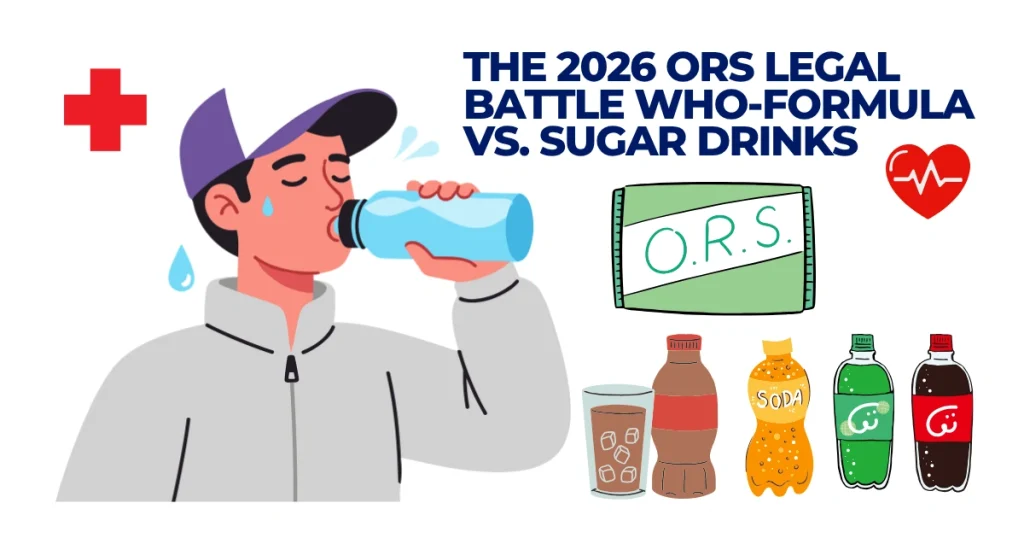
The conflict of 2026 has a straightforward core: The use of “ORS” is now restricted by law. No fruit-based beverage or “electrolyte beverage” may use the letters O-R-S unless it complies with the most recent FSSAI and CDSCO regulations. World Health Organization (WHO) formula.
The Pharmacist’s Breakdown: Why “Standard Osmolarity” Matters
Your child’s gut isn’t just thirsty when they have diarrhea or heatstroke; it’s broken. To “unlock” the intestinal walls and restore water to the bloodstream, a very precise ratio of glucose to sodium is required.
Numerous “electrolyte drinks” that can be found in gym coolers or grocery stores are heavy in sugar and low in salt. This is a cool snack for someone in good health. This excess sugar can actually exacerbate dehydration in children by drawing more water into the gut from the cells, a condition known as osmotic diarrhea.
How to spot the “Real Deal” in 2026:
- Examine the label for the words “WHO-Formula ORS” or “Reduced Osmolarity.”
- The Osmolarity Mark: The total osmolarity of medical-grade ORS is 245 mOsm/L. It’s probably a beverage rather than a medication if the bottle doesn’t specify this.
- Sugar vs. Glucose: Anhydrous glucose at precisely 13.5 g/L is used by Real ORS. Put it back if the primary ingredient is sucrose or high-fructose corn syrup.
The Legal Shift: No More “ORSL” or “ORS-Plus” Confusion
Parents were unintentionally purchasing sugary “ORS-like” beverages from grocery stores under the mistaken impression that they were giving their ailing children medication, which led to the regulatory crackdown in 2025–2026.
“ORS” is a therapeutic category, not a marketing term, according to the Delhi High Court and the FSSAI. As a pharmacist, I strongly advise you to look past the brand name even though companies have rebranded (using names like ERZL or CRZL). A sachet of WHO-standard salts is a clinical intervention; a fancy bottle with “electrolytes” on the front is a lifestyle choice.
Practical Guide for Parents and Caregivers
- Pharmacy vs. Grocery Store: Purchase your rehydration solution from a licensed pharmacy rather than the “cold drinks” section if you are treating a fever, diarrhea, or severe vomiting.
- Avoid the “Taste Test”: The taste of real WHO-standard ORS is “flat” and slightly salty. It probably contains too much sugar to be useful for treating medical dehydration if it tastes like a tasty orange soda or fruit juice.
- Read the “Warning” Box: As of 2026, the majority of non-medical electrolyte drinks must legally bear a disclaimer indicating that they are not intended to treat dehydration or diarrhea. Examine the fine print.
Conclusion: Simplicity Saves Lives
The 2026 legal dispute is about transparency, not just trademarks. We are working to guarantee that when a mother reaches for “ORS,” she receives the same formula that has lowered child mortality by millions worldwide. My advice as your pharmacist is straightforward: Always have a few sachets of WHO-standard ORS in your first-aid kit, stick to the science, and disregard the ostentatious marketing.
Health Disclaimer
This article is for informational and educational purposes. While Oral Rehydration Solution is a standard treatment for dehydration, severe cases of vomiting, lethargy, or inability to drink should be treated as a medical emergency. Always consult a qualified healthcare provider for a personalized diagnosis and treatment plan. DrugsArea
Sources & References
- FSSAI Official Directive on ORS Labeling (Oct 2025),
- WHO Guidelines on Oral Rehydration Salts,
- Times of India: Hyderabad Pediatrician Legal Notice Coverage,
- Delhi High Court Rulings on Misbranding