The Hidden Heart-Mouth Connection: Why Flossing is Cardio in 2026
Introduction: The Pulse in Your Gums For Oral Health
As a healthcare professional, I often see patients who are hyper-focused on their cholesterol numbers and treadmill minutes—and rightly so. But in 2026, we’ve reached a breakthrough in how we view “whole-body” wellness. We now know that your cardiovascular system doesn’t start at your chest; it starts in your mouth.
For years, the “Oral-Systemic Link” was a theory discussed in medical journals. Today, it is a clinical reality. If you want to protect your heart, you have to look past the ribcage and into the bathroom mirror. It turns out that the simplest “daily dose” of preventative heart care isn’t a pill—it’s two minutes of flossing. Oral Health
The 20% Risk Factor: What the 2026 Data Tells Us
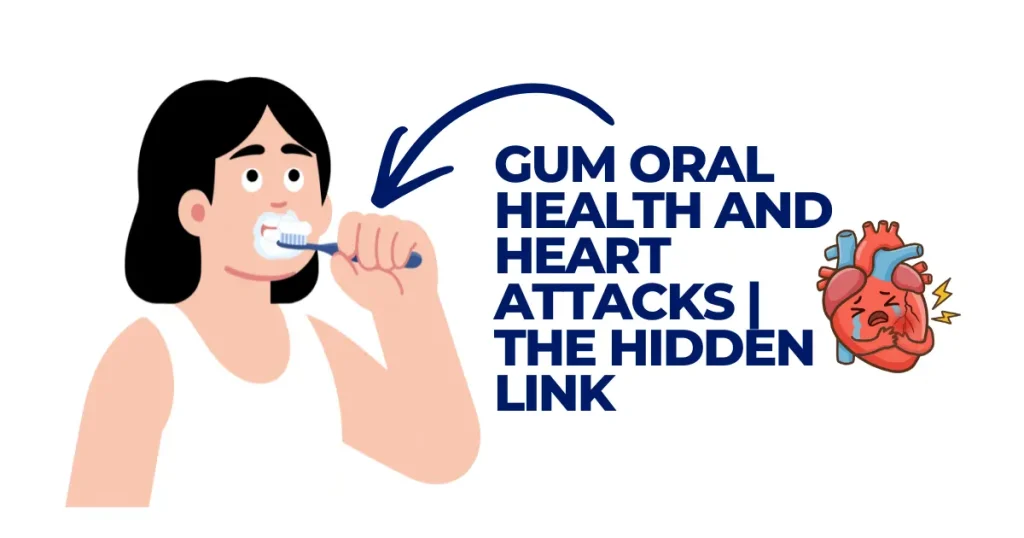
Recent clinical data released in early 2026 has confirmed a startling statistic: Chronic gum inflammation (periodontitis) increases the risk of heart disease by at least 20%. This isn’t just a coincidence or a matter of “unhealthy people having bad teeth.” This is a direct biological pathway. When your gums bleed or stay inflamed, they act as a broken barrier. Your mouth is home to billions of bacteria; when that “fence” is down, those bacteria leak directly into your bloodstream. Once they are in your blood, they don’t just disappear—they travel straight to your heart.
How Bacteria “Travel” from Teeth to Arteries For Oral Health
Think of your bloodstream as a highway. When you have gum disease, you are essentially letting “hitchhiker” bacteria onto that highway. Specifically, a type of bacteria called Porphyromonas gingivalis has been found inside the fatty plaques of clogged human arteries.
Once these bacteria reach the heart, they cause systemic inflammation. They irritate the lining of the blood vessels, causing them to narrow and harden (atherosclerosis). In simple terms: the same germ that causes your gums to bleed can eventually cause your arteries to block.
Inflammation: The Common Enemy
If there is one word that defines modern medicine in 2026, it is Inflammation.
Chronic inflammation is like a low-grade fire burning in the body. When your gums are red and swollen, that fire is “on.” Your immune system is constantly working to fight the infection in your mouth, which keeps your entire body in a state of high alert. This constant stress on the immune system accelerates the aging of your heart and blood vessels. By treating the inflammation in your mouth, you are effectively “putting out the fire” before it spreads to your cardiac tissues.
Why “Brush Only” Isn’t Enough For Oral Health
I hear it every day: “But I brush twice a day!” Brushing is great, but it only cleans about 60% of your tooth’s surface. The spaces between your teeth—where the toothbrush bristles can’t reach—are the primary breeding grounds for the bacteria that trigger the oral-heart link. This is where biofilm (a fancy word for a colony of germs) builds up. Without flossing or using interdental cleaners, that biofilm remains undisturbed, allowing bacteria to enter the bloodstream 24/7.
The “2-Minute” Life Hack for Longevity
In 2026, we are moving away from “extreme” health fixes and toward micro-habits.
Committing to two minutes of flossing today is arguably the most cost-effective heart insurance you can buy. It’s a physical act of detoxifying your blood. When you floss, you are manually breaking up the bacterial colonies that would otherwise migrate to your heart valves. It is the ultimate “low-tech” solution to a “high-stakes” problem.
Daily Action Plan: Your Heart-Healthy Routine
To celebrate American Heart Month, I’m asking my patients to adopt the “Mouth-Heart Protocol”:
- The 2-Minute Rule: Floss once a day, preferably before bed, to ensure bacteria don’t sit in your gums overnight.
- Watch for “Pink in the Sink”: Bleeding gums are not normal; they are an open wound. If you see blood when brushing, it’s a sign of active inflammation.
- Hydrate: Water helps wash away food particles and neutralizes acid that weakens the gum line.
- Professional Cleanings: See your dental professional twice a year. They can reach the hardened plaque (tartar) that you can’t remove at home.
The Healthcare Professional’s Perspective
We used to treat the heart and the mouth as two separate silos. The cardiologist worked on one end, and the dentist worked on the other. In 2026, those walls have come down. We now realize that a healthy smile is a prerequisite for a strong heart.
When you take care of your gums, you aren’t just saving your teeth—you are quite literally protecting the pump that keeps you alive. This American Heart Month, remember: your heart health starts in your mouth.
Sources & References
- American Heart Association – Oral Health & Risk,
- Journal of Periodontology 2026 Update,
- Mayo Clinic: Heart Disease Prevention,
- CDC Oral Health Division .
Health Disclaimer
This content is for educational and informational purposes only and does not constitute professional medical advice, diagnosis, or treatment. Always seek the advice of your physician, dentist, or other qualified health provider with any questions you may have regarding a medical condition. Never disregard professional medical advice or delay in seeking it because of something you have read here. DrugsArea
People Also Ask
1. How can flossing my teeth actually protect my heart?
It’s all about inflammation. When you don’t floss, bacteria build up under the gumline, causing chronic inflammation (gingivitis or periodontitis). This inflammation doesn’t stay in your mouth; it releases inflammatory markers into your bloodstream that can irritate your arteries, contribute to plaque buildup, and increase the risk of a heart attack. Essentially, a clean mouth means a calmer cardiovascular system.
2. Is there a specific type of bacteria in the mouth that causes heart disease?
Yes, researchers have identified specific “periodontal pathogens,” like Porphyromonas gingivalis, in the fatty plaques of people with heart disease. These bacteria can travel from infected gums directly into the circulatory system, where they attach to the walls of blood vessels and trigger the narrowing of arteries (atherosclerosis).
3. Does bleeding gums mean I’m at a higher risk for a stroke?
While bleeding gums don’t guarantee a stroke, they are a major red flag. Chronic gum disease is a sign of systemic inflammation, which is a known risk factor for stroke. In 2026, cardiologists are increasingly looking at “oral fitness” as a key indicator of vascular health—if your gums are bleeding, your body is essentially in a state of constant “low-grade” infection.
4. Why is flossing called “cardio” in 2026?
It’s a bit of a health metaphor! While flossing doesn’t raise your heart rate like a treadmill, it “exercises” preventative maintenance for your heart. By reducing the bacterial load and inflammatory stress on your heart every single day, you are performing a vital cardiovascular intervention that is just as consistent and necessary as a morning jog.
5. If I have a heart condition, should I tell my dentist?
Absolutely. People with certain heart conditions, like artificial heart valves or a history of endocarditis, are at a higher risk if oral bacteria enter the bloodstream during dental procedures. Your dentist and cardiologist need to coordinate, as you might even need a “pre-med” dose of antibiotics before a deep cleaning to keep your heart safe.
6. Can a water flosser protect my heart as well as traditional string floss?
Current 2026 dental standards suggest that consistency matters more than the tool. Whether you use a water flosser, interdental brushes, or traditional string, the goal is to disrupt the biofilm (plaque) between teeth where a toothbrush can’t reach. If a water flosser is the only tool you’ll actually use every day, then yes, it is your best cardio “workout” for your heart.
7. What are the early warning signs of the “heart-mouth” connection?
Look out for “The Big Three”: persistent bad breath (halitosis) that won’t go away, gums that look red or swollen, and any bleeding when you brush or floss. If you’re experiencing these, your body is dealing with an infection that your heart is likely feeling the effects of as well.
8. Is the link between gum disease and heart disease scientifically proven?
While scientists are still debating whether gum disease causes heart disease or if they simply share the same risk factors (like smoking and poor diet), the correlation is undeniable. Major health organizations now agree that treating periodontal disease can significantly lower levels of C-reactive protein (CRP), a marker for heart-damaging inflammation.
9. How many times a week do I need to floss to see heart health benefits?
The “gold standard” remains once a day. Skipping days allows bacteria to harden into tartar (calculus), which can’t be removed by flossing and requires a professional cleaning. To treat flossing as “cardio,” you have to treat it like a training regimen—daily repetition is what keeps the inflammation levels low.
10. Can improving my oral hygiene reverse existing heart damage?
Good oral hygiene can’t “undo” structural heart damage or clear out existing arterial blockages, but it can stop the “fuel” from being added to the fire. By eliminating a major source of systemic inflammation, you give your heart a better environment to heal and reduce the likelihood of future cardiovascular events.