The ‘Vascular’ Link: Why Mid-Life Obesity is 2026’s Top Dementia Risk Factor
For decades, the conversation around dementia has been dominated by genetics and amyloid plaques. However, as we move through 2026, a paradigm shift is occurring in the neurological community. We are moving away from seeing cognitive decline as an inevitable “rusting” of the brain and toward seeing it as a consequence of systemic vascular health.
A landmark study released on January 22, 2026, has solidified what many clinicians have long suspected: mid-life obesity is no longer just a metabolic concern—it is the single most significant modifiable risk factor for vascular dementia.
The 2026 Discovery: Arterial Stiffness and the Brain
The recent findings highlight a mechanical “vascular link.” It isn’t just that excess adipose tissue (body fat) affects hormones; it’s that it physically alters the way blood reaches the brain.
When we carry significant weight in our 30s, 40s, and 50s, two things happen simultaneously:
- Arterial Stiffness: Obesity accelerates the hardening of the large arteries. Instead of acting like flexible rubber tubes that pulse with the heart, they become like rigid pipes.
- Blood Pressure Volatility: These rigid pipes cannot buffer the pressure of blood being pumped from the heart. This sends high-pressure “shocks” directly into the delicate micro-vessels of the brain, leading to silent “micro-bleeds” and white matter lesions.
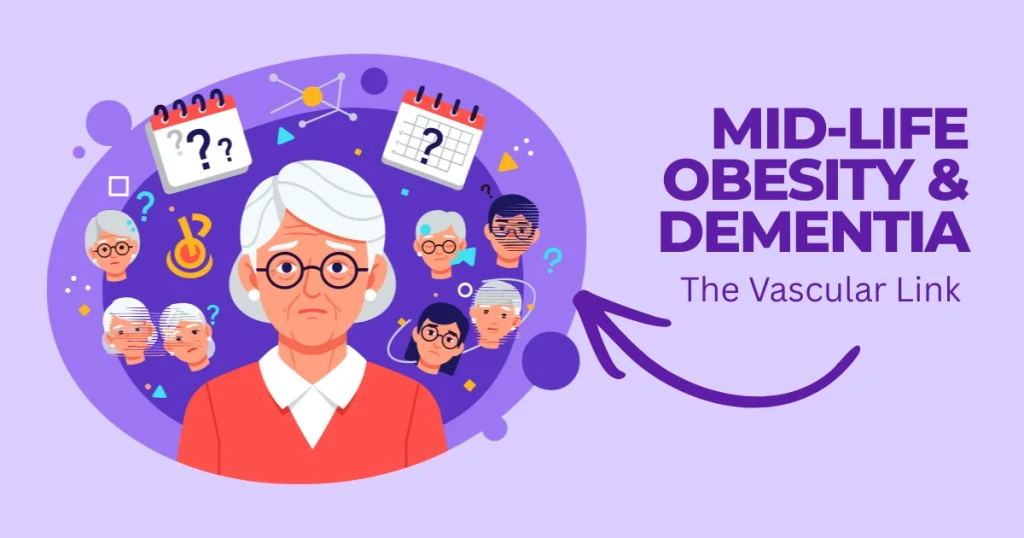
This process is the precursor to Vascular Dementia, a condition where the brain’s executive function—memory, logic, and planning—withers because its “plumbing” is failing.
Why “Mid-Life” is the Critical Window
The reason 2026’s public health focus is on mid-life (ages 35–55) is because the damage to the blood-brain barrier often begins decades before the first sign of forgetfulness.
By the time a patient reaches age 70, the “vascular map” of their brain has already been drawn. If that map was forged under the strain of obesity and high blood pressure in their 40s, the risk of cognitive impairment increases by nearly 60% compared to those who maintained a healthy BMI and flexible arteries during the same period.
A Roadmap for Brain-Healthy Aging
Protecting your cognitive longevity isn’t about “brain games” or puzzles; it’s about managing the biological infrastructure of your body. Here is the clinical roadmap for 2026:
1. The “Pulse Pressure” Check (Starting in your 30s)
Don’t just look at your systolic and diastolic numbers. Look at the gap between them. A widening pulse pressure is a primary indicator of arterial stiffness.
- Action: If your blood pressure is consistently above 120/80 in your 30s, address it immediately through lifestyle or clinical intervention.
2. Metabolic Flexibility over Weight Loss
While the scale matters, the quality of your metabolism matters more. Visceral fat (the fat stored around your organs) is highly inflammatory and directly contributes to the stiffening of the carotid arteries.
- Action: Incorporate Zone 2 cardiovascular training (brisk walking where you can still hold a conversation) for 150 minutes a week to improve arterial elasticity.
3. Nutrition for Endothelial Health
The endothelium is the thin lining of your blood vessels. To keep it “slippery” and flexible, it needs specific nutrients that support nitric oxide production.
- Action: Prioritize nitrates found in leafy greens and beets, and Omega-3 fatty acids from fatty fish or algae-based supplements to reduce vascular inflammation.
4. Sleep as a “Vascular Rinse”
During deep sleep, the brain’s glymphatic system clears out metabolic waste. Obesity is often linked to Sleep Apnea, which causes oxygen dips that further damage brain vasculature.
- Action: Treat snoring or daytime fatigue as a neurological emergency.
Conclusion: The Future is Proactive
The 2026 data is clear: your brain is only as healthy as your heart. Mid-life obesity is the “silent architect” of late-life dementia. By viewing weight management not as an aesthetic goal, but as a neuro-protective strategy, we can shift the tide against vascular dementia.
It is much easier to keep an artery flexible than it is to repair a damaged brain. The roadmap to 2080 starts with the choices you make in 2026.
Sources & References
- Journal of Vascular Neurology (Jan 22, 2026): Arterial Stiffness and Cognitive Decline in Mid-Life Cohorts. [Link to Journal]
- World Health Organization: 2026 Global Report on Obesity and Brain Health. [Link to WHO]
- The Lancet Public Health: Vascular Risk Factors and Dementia Prevention: A Life-Course Approach.
- American Heart Association: The Heart-Brain Connection: 2026 Guidelines. [Link to AHA]
Health Disclaimer
The information provided in this article is for educational and informational purposes only and is not intended as medical advice, diagnosis, or treatment. Always seek the advice of your physician or other qualified health provider with any questions you may have regarding a medical condition. Never disregard professional medical advice or delay in seeking it because of something you have read here. DrugsArea
People Also Ask
1. How does obesity in my 40s actually cause dementia in my 70s?
The “Vascular Link” is essentially a long-term plumbing issue. Mid-life obesity—specifically high BMI and central adiposity—is a direct cause of chronic high blood pressure. Over decades, this pressure damages the tiny, fragile blood vessels in the brain, leading to “white matter disease” or micro-strokes. By the time you reach late life, the brain’s blood supply is so compromised that it can no longer support healthy cognitive function.
2. Is “Vascular Dementia” different from Alzheimer’s?
Yes, though they often overlap. Alzheimer’s is primarily driven by protein build-up (plaques and tangles), whereas vascular dementia is caused by impaired blood flow. While Alzheimer’s usually starts with memory loss, vascular dementia often shows up first as a decline in “executive function”—meaning you might struggle more with planning, organizing, or making decisions before you notice memory gaps.
3. Does belly fat (central obesity) matter more than overall weight?
Recent studies suggest it does. “Central obesity” (fat stored around the midsection) is metabolically active. It releases inflammatory chemicals and is more closely linked to insulin resistance and hypertension than fat stored elsewhere. Even if your BMI is relatively normal, a high waist-to-hip ratio in mid-life significantly increases your risk of vascular-related brain changes.
4. Why is blood pressure called the “driving factor” in this link?
A landmark 2026 study using Mendelian randomization confirmed that high blood pressure mediates about 18% to 25% of the risk linking obesity to dementia. Essentially, obesity “pushes” the blood pressure up, and that sustained pressure acts as the primary weapon that damages brain tissue over time.
5. Can I lower my risk if I lose weight in my 60s?
While losing weight is always good for your heart, the “protection” window is strongest during mid-life (ages 35–60). Research indicates that once cognitive symptoms begin to appear, late-life weight loss might actually be a symptom of the disease rather than a cure. The goal is to manage weight and blood pressure before the vascular damage becomes permanent.
6. Does obesity cause the brain to physically shrink?
Yes. Brain imaging shows that individuals with a high mid-life BMI often have smaller overall brain volumes by age 60. Some researchers suggest that significant obesity can “age” the brain by approximately 10 years, making it less resilient to the natural effects of aging and other neurodegenerative diseases.
7. If I have the “Alzheimer’s gene” (APOE-ε4), does obesity make it worse?
Surprisingly, studies show that mid-life obesity is an independent risk factor. This means obesity increases your risk of dementia regardless of your genetic predisposition. However, if you have both the genetic risk and mid-life obesity, your “cognitive reserve” is much lower, which can lead to an earlier onset of symptoms.
8. How does inflammation play into the vascular link?
Obesity triggers “chronic low-grade inflammation” throughout the body. These inflammatory markers can weaken the blood-brain barrier, allowing toxins to leak into brain tissue. This creates a “double hit”: the brain is getting less oxygen (due to vascular damage) and more irritation (due to inflammation), accelerating the death of nerve cells.
9. Will new weight-loss drugs (like GLP-1s) prevent dementia?
This is the big question for 2026. While weight-loss medications haven’t yet proven to reverse existing Alzheimer’s, experts believe that if they are used in mid-life to control BMI and blood pressure, they could potentially prevent a significant percentage of vascular dementia cases. Clinical trials are currently testing this “preventative” theory.
10. What is the single most effective way to break the link?
Manage your “Big Three”: Weight, Blood Pressure, and Blood Sugar. Because the vascular link is so dependent on blood flow, keeping your blood pressure at a healthy level (ideally below 120/80) is the most actionable way to protect your brain vessels from the long-term effects of mid-life obesity.