The Cold Truth: Does “Ice Water Therapy” Actually Burn Fat While You Sleep
Introduction: Chilling Out the Viral Hype
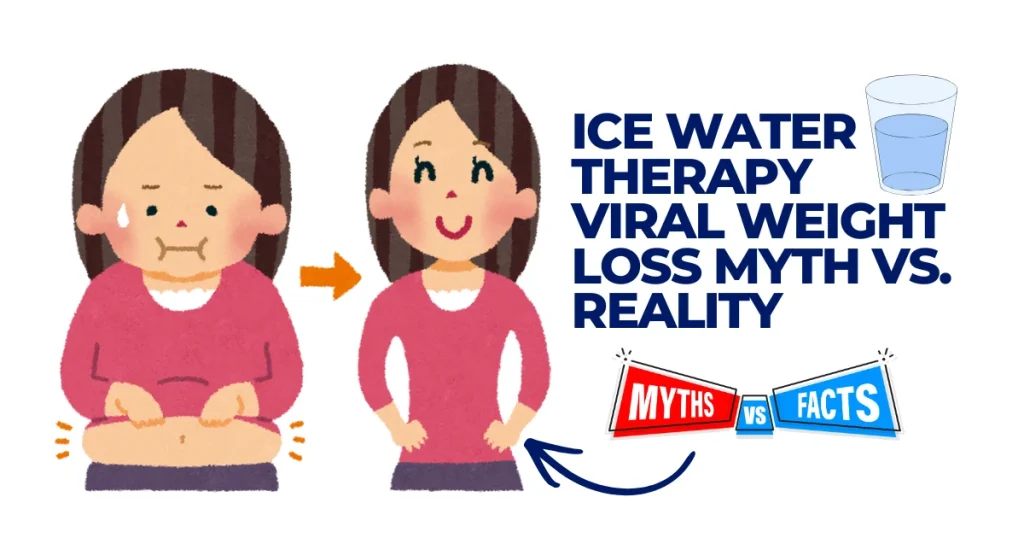
If you’ve spent more than five minutes on social media this February, you’ve likely seen the “Ice Water Therapy” trend. Influencers are claiming that drinking a gallon of ice-cold water before bed—or even plunging into an ice bath—will “melt” fat while you sleep.
As a health professional who looks at metabolic data every day, I’m here to tell you: The science is being stretched thinner than a yoga band. While there is a tiny grain of truth regarding how our bodies react to cold, the idea that a glass of water is a substitute for metabolic health is a myth that needs to be “thawed.” Let’s break down the 2026 obsession with cold exposure and look at what actually moves the needle for your health.
The Theory: What is Thermogenesis?
The trend is based on a biological process called thermogenesis. Your body is like a furnace; it wants to keep your internal temperature at roughly 98.6°F (37°C).
When you drink ice water or sit in a cold room, your body has to work to “heat up” that water or maintain your core temperature. To create that heat, your body burns calories.
- The Claim: Drink ice water Body gets cold Body burns fat to get warm.
- The Reality: While this technically happens, the amount of energy required is incredibly small.
The Math: Why Ice Water Isn’t a “Fat Melter”
Let’s look at the numbers. To raise the temperature of 16 ounces of ice water to body temperature, your body burns roughly 8 to 15 calories.
To lose just one pound of fat, you need a deficit of approximately 3,500 calories. You would have to drink hundreds of glasses of brain-freezing water to see any significant weight change. Drinking ice water is great for hydration, but as a weight-loss strategy? It’s like trying to empty the ocean with a teaspoon.
Does Cold Exposure Work While You Sleep?
Some 2026 “wellness gurus” suggest sleeping in a freezing room to activate Brown Adipose Tissue (BAT), or “brown fat.” Brown fat is a special type of fat that burns energy to produce heat.
While sleeping in a cool room (around 65°F or 18°C) can slightly improve sleep quality and metabolic markers, it isn’t a magic fat-burning furnace. If you are shivering under your covers, you aren’t “biohacking”—you’re just sleep-deprived and uncomfortable. High-quality sleep is more important for weight loss than being cold, because sleep regulates the hormones (ghrelin and leptin) that control your hunger.
The Real Hero: NEAT (Non-Exercise Activity Thermogenesis)
If you want to actually boost your metabolism without a gym membership, stop looking at the ice tray and start looking at NEAT.
NEAT stands for Non-Exercise Activity Thermogenesis. This is the energy you burn doing everything except sleeping, eating, or intentional sports. It’s the “hidden” metabolism.
In 2026, our lifestyles are more sedentary than ever. We spend hours “tech-necking” over screens. Research shows that focusing on NEAT is 5x more effective for metabolic health than any “ice water hack.”
Simple Ways to Boost NEAT Today
Instead of freezing yourself, try these high-impact, low-effort movements:
- The 10-Minute Stand: For every hour you sit, stand for 10 minutes. This small shift engages your core and leg muscles, improving insulin sensitivity.
- The “Crisp Air” Walk: Taking a brisk walk in the cool February air for 15 minutes is far more effective than drinking cold water. The combination of movement and mild cold exposure stimulates the body much better.
- Fidgeting and Pace: People who pace while talking on the phone or tap their feet while working naturally have a higher metabolic rate than those who stay perfectly still.
Is “Ice Water Therapy” Dangerous?
For most healthy people, drinking cold water is perfectly fine. However, “extreme” versions of this trend—like consuming massive amounts of water in a short time—can lead to hyponatremia (water intoxication), which is a dangerous imbalance of electrolytes.
Furthermore, extreme cold plunges without supervision can put a massive strain on the heart. Always listen to your body over a viral video.
The Importance of Hydration (The Boring Truth)
Water does help with weight loss, but not because of its temperature.
- Appetite Control: Often, our brains confuse thirst for hunger. Drinking water keeps you full.
- Kidney Function: Water helps your kidneys filter toxins, which keeps your metabolic processes running smoothly.
- Muscle Efficiency: Dehydrated muscles don’t burn energy as efficiently.
Why We Love “Quick Fixes” in 2026
In an era of instant gratification, we want the “Holy Grail” of health. “Ice Water Therapy” sounds easy because it doesn’t require effort. But real metabolic health is a slow, steady build. It’s about how you move your body throughout the day, not what you put in your glass at 11 PM.
Comparing the “Burn” (Table)
| Activity | Estimated Calories Burned | Effort Level |
|---|---|---|
| Drinking 16oz Ice Water | 10 Calories | Very Low |
| Standing for 10 mins/hour | 150-200 Calories/day | Low |
| 15-min Brisk Walk | 80-100 Calories | Moderate |
| Fidgeting/Moving while working | 300+ Calories/day | Passive |
Conclusion: Keep the Ice for Your Smoothies
By all means, enjoy a cold glass of water! It’s refreshing and essential for your health. But don’t expect it to do the heavy lifting for your metabolism.
If you want a “metabolic edge” this year, put down the ice cubes and pick up the pace. Walk to the mailbox, stand during your Zoom calls, and breathe in the fresh air. Your body will thank you much more than a brain freeze ever could.
Health Disclaimer
This content is intended for educational purposes only. It is not a substitute for professional medical advice, diagnosis, or treatment. Always seek the advice of your physician or other qualified health provider with any questions you may have regarding a medical condition or weight loss plan. Never disregard professional medical advice because of something you have read online. DrugsArea
Sources & References
- Mayo Clinic – Metabolism and Weight Loss Myths,
- Journal of Clinical Endocrinology & Metabolism,
- Harvard Health – The Truth About NEAT,
- CDC – Hydration and Health Guidelines.
People Also Ask
1. Does drinking ice water before bed actually boost your metabolism?
Technically, yes, but don’t cancel your gym membership just yet. When you drink ice-cold water, your body has to expend energy (calories) to heat that liquid up to your internal body temperature (°C). While this does create a tiny metabolic spike known as thermogenesis, the total burn is usually only about 8 to 15 calories per glass—hardly enough to melt away significant fat overnight.
2. Can ice water therapy help you lose weight while you sleep?
The “cold truth” is that the effect is indirect. While the calorie burn from heating the water is minimal, staying hydrated is a proven way to support fat oxidation and keep you feeling full. If drinking ice water prevents you from late-night snacking, that’s where the real “weight loss while you sleep” actually happens.
3. What is the “Ice Water Hack” everyone is talking about?
The “hack” usually refers to the theory that exposing your body to extreme cold (through drinking ice water or cold showers) activates “brown fat.” Unlike regular white fat, brown fat burns energy to produce heat. While the science is real, simply drinking a glass of cold water isn’t a shortcut to massive fat loss; it’s just one small tool in a much larger health toolkit.
4. Is it safe to drink ice-cold water right before going to sleep?
For most people, it’s perfectly safe, but there are two “bedtime” catches. First, the shock of the cold can occasionally stimulate the nervous system, making it harder for some people to fall asleep. Second, drinking a large amount of any liquid before bed increases the chances of “nocturia” (waking up in the middle of the night to use the bathroom), which can ruin your sleep quality.
5. How many calories do you burn by drinking 8 glasses of ice water a day?
If you drink roughly liters of ice-cold water a day, your body burns approximately 60 to 70 extra calories to warm it up. Over a full week, that’s about 490 calories. To put that in perspective, you’d need to do this for about five weeks just to burn off the equivalent of one pound of fat ( calories).
6. Does ice water therapy reduce belly fat specifically?
Unfortunately, no. There is no such thing as “spot reduction” for fat. Drinking ice water or taking cold plunges creates a systemic (whole-body) metabolic response. Your body will pull energy from fat stores wherever it chooses—usually based on your genetics—rather than targeting the stomach area specifically.
7. Can “Cold Thermogenesis” really activate brown adipose tissue (BAT)?
Yes, but it usually requires more than just a cold drink. Significant brown fat activation typically happens through prolonged cold exposure, like a cold room or a specialized vest. While ice water therapy contributes a tiny bit to this process, it’s not a primary “fat-burning” engine on its own.
8. Does drinking cold water slow down your digestion at night?
This is a common myth. Some believe cold water “solidifies” fats in your stomach, but your body is incredibly efficient at regulating internal temperature. By the time the water reaches your digestive tract, it’s already being warmed up. It won’t stop your digestion, but for some with sensitive stomachs, it might cause mild cramping.
9. Is it better to drink room temperature or ice water for weight loss?
Ice water has a slight edge because of the thermogenic “warming” effect mentioned earlier. However, the best temperature is whichever one encourages you to drink more water. If room temperature water helps you stay hydrated and avoid sugary sodas, that will always be better for your long-term weight loss goals.
10. Are there any side effects to the “Ice Water Therapy” trend?
The biggest “side effect” is usually just increased urination. However, people with sensitive teeth (dentin hypersensitivity) or those with certain heart conditions or Raynaud’s disease should be cautious with extreme cold. Always listen to your body—if the “cold truth” feels like too much of a shock, stick to cool water instead.