Digital Quiet Hours: The 2026 Nervous System Reset for Daily Stress
The 2026 Wellness Shift: From Fitness to Hygiene
As a health professional, I’ve seen the “hot” wellness trends change every year. We’ve gone from counting calories to counting steps, and then to tracking every second of our sleep. But in 2026, the conversation has shifted toward something much deeper: Nervous System Hygiene.
We live in an age of “hyper-connectivity.” Our brains weren’t designed to process thousands of notifications, headlines, and blue-light stimulations every single hour. This constant state of “alert” keeps our bodies trapped in a low-grade fight-or-flight response. The solution isn’t another expensive supplement; it’s a simple, free, and incredibly effective practice called Digital Quiet Hours.
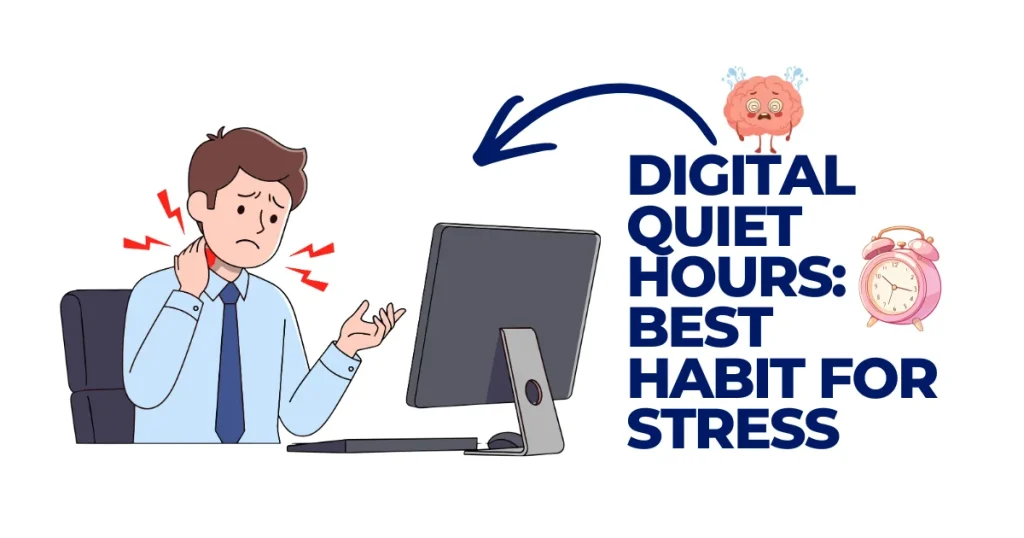
What Are “Digital Quiet Hours”?
Think of Digital Quiet Hours as a “Digital Sunset.” Just as the sun fades to allow the earth to cool and rest, your brain needs a period of fading stimulation to prepare for deep repair.
In practice, this means a 60-minute “Digital Blackout” before you head to bed. No smartphones, no tablets, no work emails, and no dopamine-chasing social media scrolls. It is a dedicated hour where you return to the “analog” world.
The Science: Why Your Nervous System is Craving This
Recent 2026 research has brought us a startlingly clear statistic: A dedicated 60-minute digital blackout before bed can reduce cortisol (the stress hormone) by an average of 18%.
When you scroll through a feed, two things happen:
- The Blue Light Factor: Blue light suppresses melatonin, the hormone that tells your body it’s time to sleep.
- The Cognitive Load: Every piece of content you see—a piece of news, a work ping, or even a funny video—requires your brain to process an emotion. This keeps your nervous system “up-regulated” or “on guard.”
By implementing Digital Quiet Hours, you allow your parasympathetic nervous system (the “rest and digest” mode) to take the wheel. This is the only state in which your body truly heals, digests food properly, and cleanses toxins from the brain.
How to Set Your “Digital Sunset” Today
Transitioning to a digital-free hour doesn’t have to feel like a chore. Here is a step-by-step guide to making it stick:
Step 1: The Hard Cut-Off
Choose a time. If you want to be asleep by 10:30 PM, your Digital Sunset begins at 9:30 PM. Set an alarm on your phone labeled “Sunset Starts.”
Step 2: The Charging Station
Physically move your devices. Charge your phone in the kitchen or the bathroom—anywhere but the nightstand. If your phone is within arm’s reach, your nervous system remains subconsciously tethered to it.
Step 3: Choose Your Analog Anchor
Nature abhors a vacuum. If you just sit in the dark, you’ll reach for your phone. Replace the scroll with:
- Reading a physical book: (Paperbacks don’t have notifications).
- Journaling: Dumping your “brain clutter” onto paper.
- Light Stretching: Helping the physical body release the day’s tension.
- Listening to Music: High-quality audio without a screen.
The Benefits: What Happens After 7 Days?
If you commit to this for just one week, the changes are usually profound. Most of my patients report:
- Faster Sleep Onset: Falling asleep in 10-15 minutes rather than an hour.
- Reduced Morning Anxiety: You wake up feeling “even-keeled” because you didn’t end your night in a state of comparison or stress.
- Better Focus: Your attention span begins to heal from the “micro-content” damage of social media.
- Restorative Sleep: You spend more time in REM and Deep Sleep cycles, which are vital for long-term health.
Common 2026 Roadblocks (and how to fix them)
“But I use my phone as an alarm clock!”
In 2026, the best health investment you can make is a $15 analog alarm clock. Removing the “portal to the world” from your bedside is essential for nervous system safety.
“I need to be reachable for emergencies.”
Most modern smartphones have a “Focus Mode.” You can set it so that only specific family members can call through, while all other apps and notifications remain silent.
The Health Professional’s Final Word
Deep, restorative sleep is the foundation of every other health goal. You can eat perfectly and exercise daily, but if your nervous system is “fried” from digital overstimulation, your body will struggle to maintain hormonal balance.
Digital Quiet Hours isn’t about being “anti-tech.” It’s about being “pro-human.” It’s about reclaiming the final hour of your day for yourself, rather than giving it away to an algorithm. Start tonight. Your nervous system will thank you.
Health Disclaimer:
This content is for educational purposes and is not a substitute for professional medical advice, diagnosis, or treatment. Always seek the advice of your physician or other qualified health provider with any questions you may have regarding a medical condition or your nervous system health. DrugsArea
Sources & References
- Harvard Health: Blue Light and Sleep, Mayo Clinic: Stress Management & The Nervous System, Journal of Clinical Sleep Medicine – 2026 Cortisol Study, Sleep Foundation: Digital Detox Guide
People Also Ask
1. What are “Digital Quiet Hours” and how do they differ from a digital detox?
Think of a digital detox as a “crash diet” and Digital Quiet Hours as “intermittent fasting” for your brain. While a detox is a one-time break, Quiet Hours are daily, scheduled windows—typically 1–2 hours before bed or the first hour of the morning—where all non-essential digital input stops. The goal isn’t to quit tech, but to give your nervous system a predictable “safe zone” to downshift from fight-or-flight into rest-and-digest mode.
2. How do Digital Quiet Hours actually “reset” the nervous system?
Every notification and scroll triggers a micro-spike of cortisol and dopamine. Over time, this keeps your amygdala (the brain’s alarm center) on high alert. By enforcing digital silence, you lower your baseline stress hormones. This allows the vagus nerve to “tune” itself, slowing your heart rate and signaling to your body that it is safe to recover, which physically rewires your stress response over time.
3. Will an hour of “Digital Quiet” really lower my daily stress?
Yes, and the science is cumulative. Research shows that just two minutes of intentional silence can be more relaxing than listening to “calming” music. By the one-hour mark, your brain shifts from fast “Beta” waves (active/anxious) to slower “Alpha” waves (calm/creative). Doing this daily prevents the “stress stacking” that usually leads to Friday afternoon burnout.
4. What is the “Digital Sunset” rule for 2026?
The Digital Sunset is the most popular implementation of Quiet Hours. It involves “setting” your devices 60 to 90 minutes before sleep. Beyond avoiding blue light, it’s about stopping the emotional input—no news, no work emails, and no social comparison. This allows your natural melatonin to rise and prevents “revenge bedtime procrastination.”
5. Can I use a Kindle or E-reader during Digital Quiet Hours?
If the device is e-ink (non-backlit) and disconnected from the internet, it’s generally “Quiet Hour approved.” The key isn’t just the screen; it’s the connectivity. If your e-reader allows you to jump into a browser or receive a text, it’s a distraction risk. Stick to analog books or dedicated e-ink devices in “Airplane Mode” to keep the nervous system settled.
6. How do I handle work emergencies during my Quiet Hours?
This is where “Friction Management” comes in. In 2026, most SEO and productivity experts recommend using “Focus Modes” on your phone. You can whitelist only “Emergency” contacts (like a spouse or a specific work line) while silencing everything else. This provides “psychological safety”—the peace of mind that you’ll be reached if it truly matters, without the temptation to “just check” your inbox.
7. What should I do with my hands/mind during these hours?
The most successful “resets” replace scrolling with somatic (body-based) activities. Instead of “thinking” your way to calm, try gentle stretching, a magnesium bath, journaling, or “analog play” like Legos or puzzles. These activities ground you in the physical world, which is the fastest way to pull a racing mind back into a regulated body.
8. Why do I feel more anxious when I first start Digital Quiet Hours?
This is known as “Digital Withdrawal.” Your brain is used to a high-dopamine environment, and sudden silence can feel like a “void” that your brain tries to fill with anxious thoughts. It usually takes about 3–4 days for the nervous system to stop “hunting” for stimulation. Once you push past this, the silence begins to feel replenishing rather than empty.
9. Is it better to do Digital Quiet Hours in the morning or evening?
Both have unique benefits. Morning Quiet Hours (the “First Hour” rule) prevent you from starting your day in a reactive state. Evening Quiet Hours are better for sleep quality and long-term hormonal balance. If you have to choose, start with the evening; a regulated night’s sleep is the foundation for a regulated day.
10. Can “Digital Quiet” help with physical symptoms like headaches or gut issues?
Absolutely. Your gut and brain are connected via the vagus nerve. When digital overload keeps you in a state of “low-grade alarm,” your body deprioritizes digestion and muscle repair. Many people find that consistent Digital Quiet Hours lead to fewer tension headaches, better digestion, and less “brain fog” because the body finally has the resources to perform basic maintenance.
Would you like me to create a “Nervous System Reset Checklist” or a customized “Digital Sunset” schedule for your 2026 wellness goals?