
The “Aurelia” Success: AI Monitoring Reduces Pre-Eclampsia Deaths by 40%
A Revolution in the Delivery Room: The Aurelia Trial Breakthrough
As a pharmacist, I usually deal with medications, but in 2026, the best “prescription” for safety isn’t a pill; it’s a wearable. The results of the Aurelia Maternal Health trial (April 2026) are in, and they are nothing short of a miracle for pregnant women.
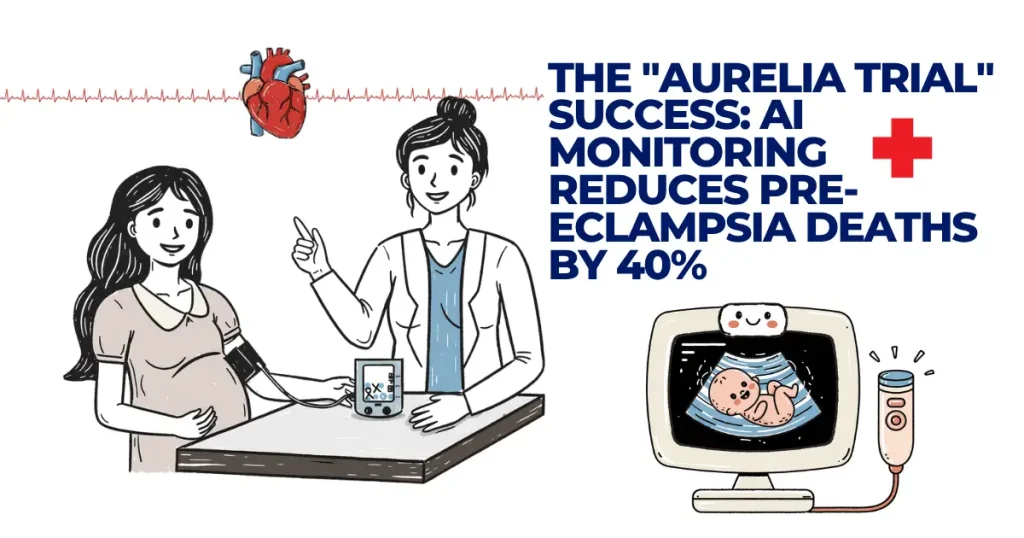
Pre-eclampsia has been a quiet thief for years, and doctors often only find it when a mother’s blood pressure gets too high or when damage to her organs has already started. The Aurelia study has changed the story. The trial found that using a cheap wearable device with advanced AI led to a shocking 40% drop in deaths related to pre-eclampsia.
Predicting the Unpredictable: How It Works Aurelia Trial
The “Aurelia” device is a thin, discreet wearable that does more than just count steps. It keeps an eye on two important pieces of information all the time: the systolic and diastolic blood pressure and the baby’s movement patterns.
These may look like normal tests you would get at your OB-GYN’s office, but the AI is what makes them special. The algorithm looks at “Remote Biomarkers,” which are small changes in heart rate variability and pressure spikes that the human eye might miss. Aurelia Trial
What was the best part? The AI can tell when pre-eclampsia will start up to 48 hours before any clinical symptoms, such as swelling, headaches, or blurry vision, show up. This 48-hour period is a “Golden Window” for healthcare workers. It lets us give magnesium sulfate or blood pressure stabilizers early, which could stop the seizures and strokes that can happen with eclampsia.
The End of “Wait and See” Medicine
In the past, pregnant women had to go to the doctor once a month or every two weeks. If blood pressure went up between visits, it usually went unnoticed until it became an emergency.
We are moving away from “reactive” care and toward Real-Time Monitoring in 2026. “Remote Biomarker Monitoring” is the most important thing you can learn today if you are currently pregnant or planning to be. This technology takes the guesswork out of it. The wearable will send an alert to both the patient’s smartphone and the care team’s dashboard right away if it finds a dangerous trend. As a pharmacist, I think this is a big step forward for making sure people take their medications. We can see exactly how a patient is responding to treatments in their natural environment—at home, at work, or while sleeping—not just in the stressful environment of a clinic. Aurelia Trial
Why This Matters for Every Mother
One of the best things about the Aurelia trial is that the wearable used is cheap. People who don’t have the best health insurance shouldn’t have to pay for high-tech health care. The goal for the rest of 2026 is to make sure that these devices are included in all standard prenatal care packages around the world.
The trial showed that giving mothers control over their own data leads to better results. A mother’s stress levels go down when she knows that an AI “guardian angel” is keeping an eye on her “numbers.” This is good for controlling blood pressure on its own. Aurelia Trial
The Pharmacist’s Perspective: What You Should Do
If you’re pregnant this year, don’t wait until your next appointment to talk about safety. Here is what I think you should do:
- Ask about tech that looks like Aurelia: Ask your doctor or midwife about ways to wear something that will help you keep track of your blood pressure.
- Know about the “Golden Window”: AI can give you a two-day head start on a problem, which should make you feel much better.
- Stay Connected: Make sure your care team has a way to upload and look at your data from afar.
We don’t have to wait for a hospital visit to look for signs of high risk anymore. The success of “Aurelia” sets a new standard for maternal safety that is always present, digital, and, most importantly, preventative. Aurelia Trial
Health Disclaimer
I am a pharmacist, but I am not your pharmacist or doctor. This article is for informational purposes only. Wearable technology is a tool to assist in care, not a replacement for regular prenatal visits. If you experience sudden swelling, severe headaches, or vision changes during pregnancy, seek emergency medical attention immediately regardless of what a wearable device indicates. DrugsArea
Sources & References
- World Health Organization – Maternal Health Innovations,
- Journal of Clinical AI – Aurelia Trial Results April 2026,
- International Society for the Study of Hypertension in Pregnancy,
- Maternal Health Hub – Wearable Tech Studies
