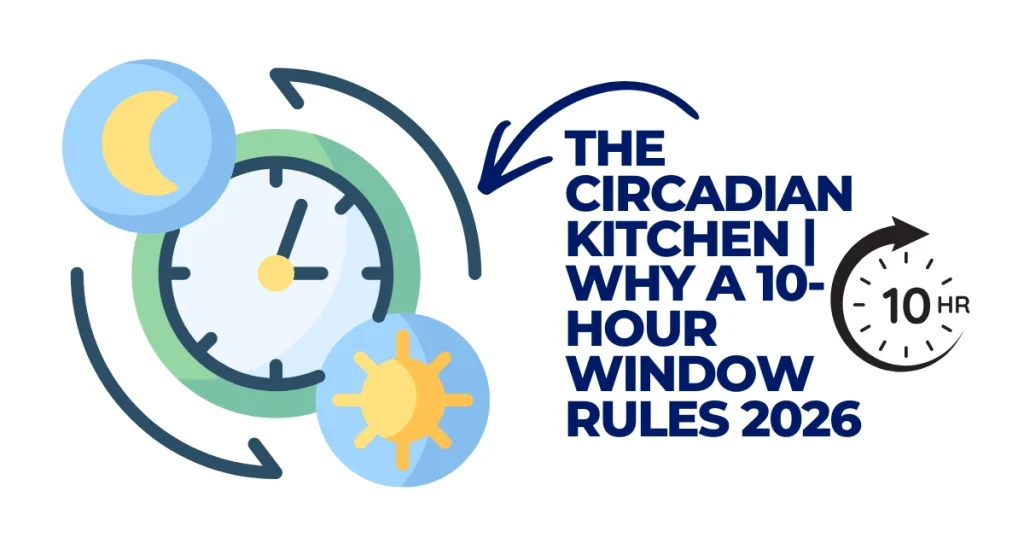
The Circadian Kitchen: Why 2026 is the Year of the 10-Hour Eating Window
The Shift Toward Time-Aligned Nutrition
In the world of wellness, 2026 has officially moved past the era of “what” we eat and into the sophisticated science of when we eat. As a health professional, I’ve seen countless diets come and go, but the emergence of the “Circadian Kitchen” is different. It isn’t a restrictive fad; it’s a lifestyle rooted in Chronobiology—the study of how our internal biological clocks regulate every system in our bodies.
New research this year confirms that our bodies aren’t designed to process fuel 24/7. Instead, our digestive enzymes, insulin sensitivity, and gut motility follow a strict rhythmic schedule. By aligning our meals with these natural peaks, we can transform our metabolic health without necessarily changing a single ingredient on our plates.
Understanding the “10-Hour Anchor”
The core of the Circadian Kitchen is the 10-Hour Eating Window. Unlike more aggressive intermittent fasting schedules, the 10-hour window is designed to be sustainable, social, and scientifically optimized.
Current studies suggest that human digestive enzymes—the workers that break down your food—are at their most active starting roughly two hours after you wake up. This “peak performance” window lasts for about ten hours. When we eat outside of this timeframe, we are essentially asking our body to work “overtime” when the “cleaning crew” should be taking over.
How to Start the 10-Hour Anchor:
- Wait for the Wake-Up: Give your body 90 to 120 minutes to fully “boot up” before your first meal.
- Set the Clock: If you have breakfast at 8:00 AM, your goal is to finish your final bite by 6:00 PM.
- The Fasted Night: From 6:00 PM until 8:00 AM the next day, your body transitions from “digestion mode” to “repair mode.”
The Science of Nightly “Cellular Cleanup”
Why is that 14-hour break so critical? It all comes down to a process called Autophagy.
Think of autophagy as your body’s internal recycling program. When your liver and gut are no longer busy processing new calories, they can turn their attention to “cellular housekeeping.” During the night, your body identifies damaged proteins and old cell parts, breaks them down, and turns them into energy or new, healthy components.
If we eat a late-night snack at 10:00 PM, we force the liver to stay in “storage mode.” This prevents the deep cleaning needed for metabolic health. Over time, missing out on this nightly cleanup can lead to sluggishness, weight creep, and brain fog. By sticking to the 10-hour window, you ensure your “cleaning crew” has the 14-hour shift they need to keep you feeling youthful.
Benefits Beyond the Scale
While many people adopt the Circadian Kitchen for weight management, the benefits go much deeper:
- Better Sleep: Digestion generates heat. By finishing your meals 3–4 hours before bed, your core temperature can drop naturally, signaling your brain it’s time for deep, restorative sleep.
- Stable Energy: Aligning food with your natural insulin peaks prevents the mid-afternoon “sugar crash.”
- Gut Health: Your gut microbiome has its own circadian rhythm. Giving it a predictable rest period allows beneficial bacteria to thrive and lowers systemic inflammation.
Conclusion: A Gentle Approach to Longevity
The beauty of the 10-hour eating window is its simplicity. It respects the body’s natural pace rather than fighting against it. In 2026, we are learning that health isn’t about intensity; it’s about rhythm.
By closing the kitchen at 6:00 PM or 7:00 PM, you aren’t just “fasting”—you are honoring the biological clock that has governed human health for millennia. It is a small change that offers massive rewards for your heart, your brain, and your longevity.
Health Disclaimer
This information is for educational purposes and is not a substitute for professional medical advice. Always consult with a doctor or registered dietitian before beginning a new fasting routine, especially if you are pregnant, breastfeeding, have a history of disordered eating, or are managing a chronic condition like diabetes. DrugsArea
Sources & References
- Nature: Circadian Rhythms and Metabolic Health,
- Cell Metabolism: Time-Restricted Eating Studies,
- Stanford University: Chronobiology in 2026,
- Harvard Health: The Science of Autophagy