The Empathy Interval: Why Group Fitness is 2026’s Secret to Consistency
Introduction: Why Your Solo Workout Feels So Hard
If you’ve ever stared at your treadmill in the garage and felt a wave of exhaustion before you even pressed “Start,” you aren’t alone. As a health professional, I’ve spent years analyzing why some people stick to their routines while others burn out by February.
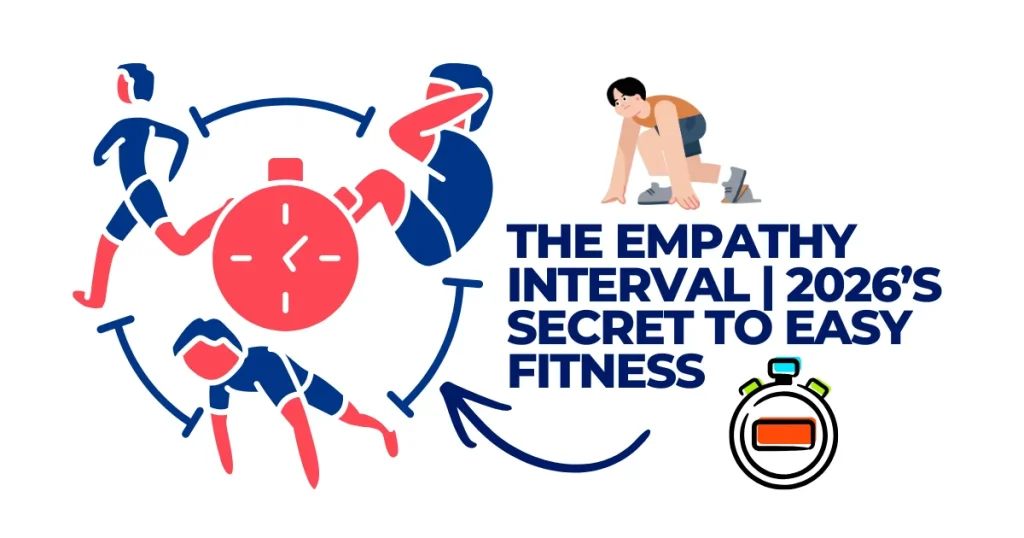
In 2026, the data is finally in, and it points to something we call the “Empathy Interval.”
For a long time, we thought fitness was a solo mission—a test of “willpower” against the machine. But new research into human physiology shows that we are actually “wired” to move together. If you want to work harder, stay consistent, and—most importantly—actually enjoy your workout, the secret isn’t a new supplement or a fancy smart watch. It’s other people.
1. What is “Co-Regulation” in Fitness?
In 2026, the buzzword in clinical sports psychology is Co-Regulation. Biologically, humans are social mammals. When we exercise in the physical presence of others, our nervous systems begin to “sync up.” If you are running next to someone who is breathing steadily and pushing through the challenge, your brain picks up on their cues.
This creates a “calming” effect on your own nervous system. Even though your heart rate is high, your brain doesn’t perceive it as a “threat.” This is why a 45-minute spin class feels like it flies by, while 45 minutes on a solo stationary bike feels like an eternity.
2. The Science: Lower Perceived Exertion
Data from 2026 fitness studies shows a fascinating trend: people training in groups report a lower Rate of Perceived Exertion (RPE).
In simple terms? You are doing the same amount of work—burning the same calories and building the same muscle—but it feels easier. When you are part of a “pack,” your body releases a higher dose of endorphins and endocannabinoids. These are the body’s natural painkillers. They mask the “burn” in your lungs and the ache in your legs, allowing you to push past your normal plateaus without the mental struggle.
3. Why the “Shared Vibe” Beats the “Solo Grind”
We’ve all heard the phrase “vibe,” but in a medical context, we refer to this as Collective Effervescence. This is the synchronized energy that happens during a local park run, a CrossFit WOD, or even a group yoga session.
When you train alone, you are stuck inside your own head. You hear every heavy breath and every doubt. In a group, the “empathy interval” kicks in. You feed off the collective rhythm. Your heart benefits more from this shared experience because the stress hormone cortisol stays lower than it would during a high-stress solo session. You get the cardiovascular gains without the “fight-or-flight” mental exhaustion.
How to Use the Empathy Interval Today
You don’t need to join an expensive boutique gym to get these benefits. Here is how you can apply the 2026 “Co-Regulation” data to your life right now:
- Join a Local Park Run: There is no barrier to entry, and the physical presence of hundreds of other movers will naturally pull you along.
- Swap One Solo Session: If you usually hit the gym five days a week alone, swap Wednesday for a group class. Notice how you feel afterward—usually, you’ll feel “recharged” rather than “drained.”
- Find a “Pace Partner”: Even just one other person helps. Meeting a friend for a brisk walk or a weight session creates an accountability loop that solo apps just can’t replicate.
The Health Professional’s Perspective
As a healthcare provider, I see fitness as more than just “burning calories.” It is about longevity and mental health. The biggest threat to your health isn’t a slow 5k time; it’s loneliness and inconsistency. By leaning into the Empathy Interval, you solve both. You build a social community that supports your mental well-being, and you find a routine that you actually look forward to.
In 2026, we’ve moved past the “no pain, no gain” era. We are now in the “together is better” era. Your body wants to move, but your heart wants to belong. Give it both.
Health Disclaimer
This content is for educational purposes only. Before starting any new high-intensity exercise program, please consult with a healthcare professional to ensure the activity is safe for your specific cardiovascular and physical condition. Listen to your body—while group energy is great, never push past a sharp pain or severe dizziness. DrugsArea
Sources & References
- Harvard Health – The Power of Group Exercise, Journal of Social Sciences – Synchronized Movement Study, Mayo Clinic – Benefits of Community Fitness, Sports Medicine 2026: The Co-Regulation Report
People Also Ask
1. What is “The Empathy Interval” in group fitness?
The Empathy Interval is a training concept where the “rest periods” between physical sets are used for social connection and emotional support. Instead of staring at your phone or the floor during a 60-second break, you’re engaging with the person next to you. It’s the shift from working out near people to working out with them, using shared struggle to build a psychological “buffer” against quitting.
2. Why is group fitness becoming the top hack for consistency in 2026?
In a world that’s increasingly digital and isolated, the “loneliness epidemic” has made traditional solo gym sessions feel like a chore. Group fitness provides extrinsic accountability—meaning you show up because people expect you there—and intrinsic joy from the communal energy. When your workout doubles as your social life, you don’t have to “find time” for it; you prioritize it.
3. How does “social mirroring” help me work out harder?
It’s a psychological phenomenon where we unconsciously mimic the effort of those around us. If the person to your left is pushing through a tough sprint, your brain signals that you can do it too. This “empathy” for their effort actually lowers your own perceived exertion, making a high-intensity workout feel more manageable than if you were doing it alone in your garage.
4. Can introverts benefit from the Empathy Interval?
Absolutely. The Empathy Interval isn’t about forced small talk; it’s about shared presence. For introverts, the “empathy” comes from being in a space where everyone is focused on a common goal. You get the benefits of human “vibe” and collective energy without the pressure of a 1-on-1 social interaction. It’s “parallel play” for adults.
5. Does the Empathy Interval actually improve physical results?
Yes, because consistency is the biggest driver of physical change. The science shows that people in high-empathy group environments have lower levels of cortisol (stress hormone) and higher levels of endorphins and oxytocin. This chemical cocktail helps with recovery and keeps you coming back, which is the only way to see long-term muscle growth or fat loss.
6. What’s the difference between a “Standard Class” and an “Empathy-Led” class?
A standard class is focused solely on the movements: “Do 20 squats.” An empathy-led class focuses on the collective experience: “We’re all feeling the burn in those last 5 reps; look at your neighbor and let’s finish together.” The instructor acts more like a community builder than just a timer-manager.
7. How does the “Empathy Interval” prevent gym burnout?
Burnout usually happens when exercise feels like a lonely “must-do” on a checklist. By adding a social interval, the gym becomes a place of emotional refill rather than just physical output. You leave feeling mentally lighter because you’ve connected with others, which prevents the mental fatigue that leads to quitting.
8. Is the “Empathy Interval” just a trend, or is it backed by science?
It’s rooted in the Köhler Effect, a long-standing psychological principle that states individuals work harder when they are part of a group than when they are alone. 2026 has simply rebranded this for the modern era to include the emotional and mental health benefits that were previously overlooked in “grind culture” fitness.
9. How do I find a gym that uses the Empathy Interval method?
Look for “community-first” studios rather than “big box” gyms. Check their social media for photos of people interacting, not just posing. Words like “inclusive,” “collaborative,” and “community-driven” in their mission statement are green flags. If the instructor knows everyone’s name, you’ve likely found an empathy-led space.
10. Will group fitness still be effective if I’m at a different fitness level than the group?
That’s the beauty of the Empathy Interval—it’s about intensity, not numbers. If you’re giving 80% effort and the pro athlete next to you is giving 80% effort, you are sharing the same experience. The “empathy” comes from the shared struggle, regardless of how much weight is on the bar or how fast the treadmill is moving.