Is “Detoxing” Actually Necessary? Science-Based Facts vs. Marketing Myths
In the wellness industry, few words carry as much weight—and as much baggage—as “detox.” From celebrity-endorsed juice cleanses to tea-toxes promising a flatter stomach in 14 days, the global detoxification market was valued at over $50 billion in recent years. The premise is seductive: our modern lives are toxic, filled with processed foods and pollutants, and we require an external intervention to “scrub” our systems clean.
But does this premise hold up to scientific scrutiny? Does the human body actually accumulate “sludge” that requires expensive juices to remove?
The short answer is no. The long answer involves a complex interplay of biology, the placebo effect, and brilliant marketing. This article delves deep into the physiology of human filtration, the lack of evidence for commercial cleanses, and what you should actually do to support your health.
Part 1: The Biological Reality (How Your Body Actually Cleans Itself)
The fundamental flaw in the marketing of detox products is the assumption that the body is a stagnant vessel that accumulates toxins like a clogged pipe. Biologically, this is incorrect. The human body is a self-cleaning engine that runs 24/7.
The Liver: The Master Chemist
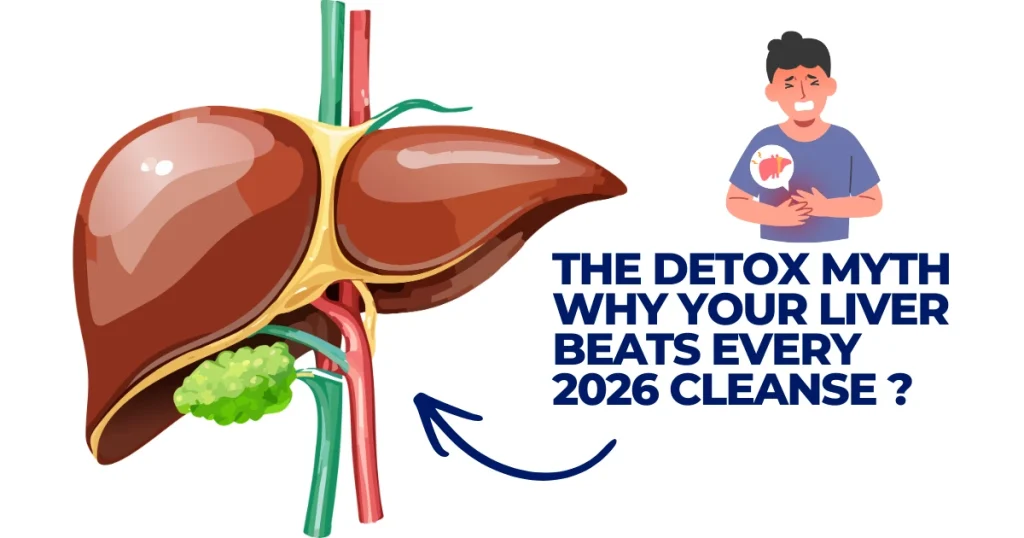
Your liver is the primary filtration system. It does not store toxins; it converts them. Through a process involving two specific phases, the liver handles everything from alcohol and medication to metabolic waste products.
- Phase I (Modification): The liver uses enzymes (primarily the Cytochrome P450 family) to oxidize, reduce, or hydrolyze toxins. This often makes the toxin more water-soluble so it can be handled by the next phase.
- Phase II (Conjugation): The liver attaches a chemical group (like sulfur or an amino acid) to the modified toxin. This neutralizes the substance and makes it fully water-soluble, allowing it to be excreted safely via bile or urine.
The Kidneys: The Filtration Plant
While the liver modifies chemicals, the kidneys filter the blood. They process approximately 200 quarts of fluid every 24 hours. They maintain homeostasis by balancing electrolytes (sodium, potassium) and removing urea and waste products via urine. If your kidneys stop “detoxing” your blood, no amount of green juice will save you—you would need immediate medical dialysis.
The Ancillary Systems
- The Lungs: Expel carbon dioxide (a metabolic waste product) with every exhale.
- The Skin: excretes some waste through sweat (though significantly less than the liver/kidneys).
- The Colon: Eliminates solid waste.
The Scientific Verdict: “Detox” is a legitimate medical term, but it refers to removing acute poisons (like alcohol or heavy metals) in a hospital setting. It does not refer to drinking lemon water to remove vague “impurities.”
Part 2: Deconstructing the Marketing Myths [Detox Myths Vs Science Facts]
If the biology is so clear, why is the marketing so effective? Wellness brands rely on fear and the “Appeal to Purity” fallacy. They create a problem (invisible toxins) and sell the only solution (their product).
Myth 1: “You have pounds of undigested waste rotting in your colon.”
The Claim: Many “teatox” brands claim the average person carries 5–20 pounds of toxic sludge in their intestines.
The Fact: Gastroenterologists refute this entirely. The colon is designed to move waste through. While constipation is a real medical issue, “toxic sludge” adhering to the intestinal walls is a fabrication designed to sell laxatives. Most “colon cleanse” teas contain Senna, a plant-based laxative that irritates the bowel lining to force expulsion. This doesn’t “detox” you; it dehydrates you.
Myth 2: “Juice cleanses reset your metabolism.”
The Claim: Drinking only vegetable and fruit juice for 3–7 days rests the digestive system and speeds up metabolism.
The Fact: Extreme calorie restriction (common in juice cleanses) actually slows metabolism. When the body detects a sudden drop in energy intake, it downregulates the Basal Metabolic Rate (BMR) to conserve energy—an evolutionary survival mechanism. furthermore, juices lack fiber, which is crucial for gut health and satiety.
Myth 3: “Sweating it out removes heavy metals.”
The Claim: Hot yoga or saunas can help you sweat out significant amounts of toxins.
The Fact: Sweat is 99% water and small amounts of salt and urea. While trace amounts of heavy metals can appear in sweat, the liver and kidneys are roughly 1,000 times more effective at heavy metal removal than sweat glands.
Part 3: The Evidence (Or Lack Thereof) [Detox Myths Vs Science Facts]
When analyzing the efficacy of commercial detoxes, we look for peer-reviewed clinical trials.
The “Toxin” Ambiguity
A 2009 investigation by widespread science networks contacted ten manufacturers of popular detox kits. When asked to name the specific toxins their products removed, not a single manufacturer could name one. This is the “Toxin Ambiguity” strategy. By leaving the “toxin” undefined, consumers project their own fears (sugar, pollution, bloating) onto the product.
Weight Loss vs. Fluid Loss
Many people report losing weight on a detox. This is undeniable, but it is not fat loss.
- Glycogen Depletion: When you stop eating carbohydrates (common in cleanses), your body burns through stored glycogen. Glycogen holds water (approx 3 grams of water per gram of glycogen). As you burn glycogen, you release that water.
- Laxative Effect: “Cleanses” often induce diarrhea, leading to massive fluid loss.
Once the user returns to a normal diet, glycogen stores replenish, and water weight returns immediately.
The Placebo Effect and “Halo of Health”
Scientific reviews suggest that the “feeling of lightness” reported by detoxers is psychological (the Placebo Effect) or simply the result of cutting out alcohol, processed foods, and added sugars for a week. It wasn’t the $80 juice that made you feel better; it was the absence of pizza and beer.
Part 4: The Hidden Dangers of Detoxing [Detox Myths Vs Science Facts]
Ironically, “detoxing” can be toxic. Unregulated supplements and extreme diets pose genuine risks.
1. Electrolyte Imbalance
The kidneys strictly regulate sodium and potassium. Excessive water intake (common in “water flushes”) or diuretic teas can wash out these electrolytes. This can lead to Hyponatremia (low sodium), which can cause confusion, seizures, and in severe cases, fatal brain swelling.
2. Oxalate Nephropathy (Green Smoothie Kidney Damage)
Spinach and beets are healthy, but they are high in oxalates. There are documented medical case studies of individuals consuming massive quantities of “green juices” (e.g., juicing 2lbs of spinach a day) and developing acute kidney failure due to calcium oxalate crystals blocking kidney tubules.
3. Nutrient Deficiencies
Long-term “cleansing” creates deficits in protein and fatty acids. The liver needs amino acids (from protein) to perform Phase II detoxification. By starving yourself of protein during a juice cleanse, you are essentially inhibiting the liver’s actual ability to detoxify.
Part 5: How to Actually Support Your Body’s Detox Pathways [Detox Myths Vs Science Facts]
If you want to “detox” in the medical sense—meaning, support your liver and kidneys—you don’t need a product. You need lifestyle adjustments that biological data supports.
1. Hydration (The Right Way)
Water is the transport medium for waste. The National Academies of Sciences, Engineering, and Medicine determines that an adequate daily fluid intake is about 15.5 cups (3.7 liters) for men and 11.5 cups (2.7 liters) for women. This keeps the kidneys filtering efficiently.
2. Sleep: The Brain’s Detox
A groundbreaking discovery in recent years is the “Glymphatic System.” During deep sleep, the space between brain cells increases, allowing cerebrospinal fluid to wash away proteins like beta-amyloid (associated with Alzheimer’s). This is a literal brain detox that only happens when you sleep. No tea can replicate this.
3. Glutathione Support
Glutathione is the body’s “master antioxidant,” essential for liver function. Rather than taking a pill, eat sulfur-rich foods that help the body synthesize it:
- Garlic and onions
- Cruciferous vegetables (broccoli, kale, cauliflower)
- Eggs and lean proteins
4. Reduce the “Toxic Load”
Instead of trying to remove toxins after the fact, reduce the intake:
- Limit Alcohol: Alcohol is a direct hepatotoxin (liver poison).
- Reduce Ultra-Processed Foods: These burden the liver with excess fructose and artificial additives.
- Fiber Intake: Soluble fiber binds to bile (which carries toxins) in the gut and helps excrete it. Without fiber, some toxins in bile can be reabsorbed into the blood.
Conclusion
The concept of a commercial “detox” is a triumph of marketing over physiology. There is no scientific evidence to support the idea that our bodies accumulate sludge that requires specific juices or supplements to remove. In fact, many of these protocols can hinder the body’s natural, highly sophisticated filtration systems.
If you feel sluggish, bloated, or “toxic,” the solution is not a 7-day cleanse. The solution is the unglamorous, free, and sustainable work of biology: sleeping 8 hours, drinking water, eating fiber-rich plants, and stopping the intake of alcohol and processed junk. Your liver has been evolving for millions of years to save your life; the best way to help it is simply to get out of its way. DrugsArea
Source
10 FAQs regarding the necessity, safety, and effectiveness of detoxing, based on current medical consensus.
1. Is it actually necessary to “detox” my body?
No. There is no scientific evidence that your body needs external help to get rid of toxins. Your body has built-in, highly effective detoxification systems—primarily your liver and kidneys, but also your lungs, skin, and digestive tract. These organs work 24/7 to filter out harmful substances (like alcohol, medication byproducts, and environmental chemicals) and eliminate them through urine, sweat, and stool.
2. Don’t toxins build up in my body over time?
Generally, no. Unless you have a specific medical condition (like kidney failure or liver disease) or have been poisoned by a high dose of a specific chemical (like mercury or lead), toxins do not “accumulate” in your organs in a way that a juice cleanse or tea can fix. Your body is designed to process and eliminate waste continuously, not store it for a future “cleanse.”
3. Will a detox diet help me lose weight?
Only temporarily. You will likely see the number on the scale drop, but this is almost entirely due to water weight and loss of intestinal bulk, not fat loss. Because most detox diets are severely low in calories, your body may also start breaking down muscle for energy. Once you resume eating normally, the weight typically returns rapidly.
4. Can I “cleanse” or “reset” my liver?
No. The liver does not act like a filter that gets clogged up like a vacuum cleaner. It is a chemical processing plant that transforms toxins into water-soluble substances so they can be flushed out. You cannot “scrub” it clean with juices. The best way to “help” your liver is simply to stop overburdening it with excessive alcohol, sugar, and processed foods.
5. Are detox teas and supplements safe?
Often, no. The supplement industry is largely unregulated. Many “detox” teas contain natural laxatives (like senna), which can cause dehydration, electrolyte imbalances, and dependency (meaning your bowels may eventually stop working properly without them). Some herbal detox supplements have even been linked to drug-induced liver injury.
6. Why do I feel “lighter” or “better” when I detox?
This is often the placebo effect combined with the removal of inflammatory foods. When you start a detox, you typically stop eating processed sugar, alcohol, fried foods, and refined carbs. Eliminating these triggers often reduces bloating and stabilizes energy levels, making you feel better—but it’s the absence of junk food, not the presence of a “magic juice,” that is responsible.
7. What are the side effects of going on a detox cleanse?
Common side effects include:
- Fatigue and irritability (due to low calorie/blood sugar).
- Headaches (often from caffeine withdrawal).
- Dehydration and electrolyte imbalance (from laxative effects).
- Muscle loss (due to insufficient protein intake).
8. Does sweating in a sauna release toxins?
Minimally. While small traces of heavy metals can be found in sweat, sweat is 99% water and salt. Its primary function is temperature regulation, not detoxification. Your liver and kidneys do the heavy lifting for toxin removal. Excessive sweating is more likely to cause dehydration than a meaningful “detox.”
9. What is the “medical” definition of detox?
In legitimate medicine, “detoxification” refers to a supervised medical intervention for people with life-threatening drug or alcohol addictions (e.g., managing withdrawal symptoms). It has been co-opted by the wellness industry to sell commercial products to healthy people.
10. How can I actually support my body’s natural detox system?
Instead of buying a cleanse, do these free things to keep your organs functioning optimally:
- Hydrate: Water is the vehicle your kidneys use to flush out waste.
- Eat Fiber: Fiber keeps your bowels moving, preventing waste from sitting in your colon.
- Sleep: Your brain has its own waste-clearance system (the glymphatic system) that only works while you sleep.
- Limit “Toxin” Intake: Reduce alcohol, smoking, and ultra-processed foods to lower the workload on your liver.