Workplace Health Crisis: 1 in 4 Young Men Now Facing Pre-Diabetes in India
I see dozens of prescriptions every day as a pharmacist, and over the past several years, I’ve seen a startling change. In the past, my “regular” patients for diabetes and blood pressure drugs were in their 50s and 60s. These days, I’m giving those identical vials and pills to more and more guys in their early 30s who are in the “prime” of their jobs but are aging more quickly due to biological aging. Pre-Diabetes
What many of us in the medical industry have feared is confirmed by the Employee Health Matters 2026 study, which was issued today: India is experiencing a secret metabolic emergency in the workplace.
The Startling Statistics: 1 in 4 People Under 40
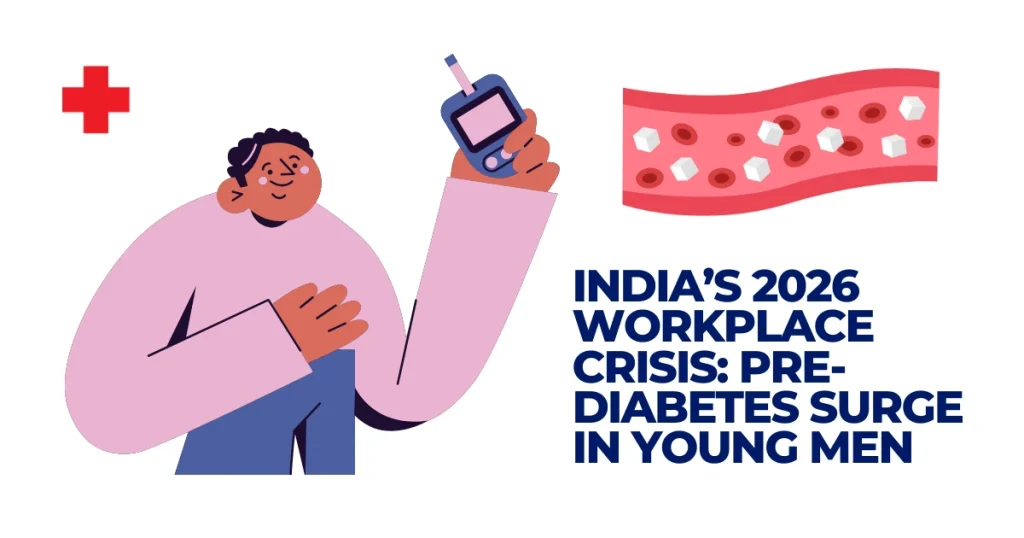
A systemic change in our country’s health is highlighted in the 2026 study. In particular, 25% of male workers between the ages of 31 and 35 already exhibit pre-diabetes and hypertension (high blood pressure). This is a serious workplace catastrophe rather than only a little “wellness” problem.
A 32-year-old who has an abnormal HbA1c result (the “three-month average” blood sugar test) is not just “at risk” since their body is already having trouble processing energy. The “check engine” light is blinking red for the 1 in 4 males mentioned in this study.
Why the New Danger Zone Is in the 30s Pre-Diabetes
Young professionals at my pharmacy frequently cite “long hours” or “stress” for their weariness. The paper finds a “perfect storm” specific to the contemporary Indian workplace, notwithstanding those factors:
Sedentary “Desk-Lock”: Sitting for eight to ten hours at a time lowers insulin sensitivity, which makes it more difficult for your muscles to remove blood sugar.
The “Silent” Nature: Pre-diabetes and high blood pressure seldom “hurt.” Until the damage is severe, you won’t be able to feel your blood sugar rising or your arteries hardening.
Hyper-processed “Quick” Meals: Because business meals are delivered via apps, excessive salt and hidden sugars are becoming a common occurrence.
The “Fast-Track” Method: Identifying the Unseen
You cannot afford to believe that you are exempt if you are younger than forty. The most important time to intervene is in your 30s. While treating a full-blown illness in your 40s requires lifetime medicine, reversing a tendency in your 30s is a question of lifestyle.
This week, I advise all professionals under 40 to get a Fast-Track Screening. There are three straightforward indicators rather than a lengthy, intricate hospital stay: Pre-Diabetes
The ideal blood pressure (BP) is 120/80 mmHg. In your 30s, anything persistently higher than 130/80 is a red flag.
The gold standard is blood glucose (HbA1c). You are considered pre-diabetic if your level is between 5.7% and 6.4%.
Lipid Profile (Cholesterol): Insulin resistance and high “bad” cholesterol (LDL) frequently go hand in hand.
Reversing the Risk: The Viewpoint of a Pharmacist
The good news? It is possible to reverse pre-diabetes. If you give your body the appropriate signals in your 30s, it can withstand a lot.
The 15-Minute Rule: A marathon is not necessary. After lunch and supper, a vigorous 15-minute exercise can considerably reduce glucose rises.
Fiber First: Have a small bowl of salad or sprouts before your main meal (the carbohydrates). The fiber slows down the absorption of sugar by forming a “mesh” in your stomach.
Sleep is a Metabolic Drug: Less than six hours of sleep increases cortisol, which instructs your liver to increase the amount of sugar in your blood.
In summary, don’t wait for the diagnosis.
I want to see you in my drugstore as a health professional for sunscreen and vitamins, not for managing chronic illnesses for the rest of my life. Though it’s not a definitive statement, the 2026 data serves as a warning. These hazards can be totally reversed before they become irreversible with early identification in your 30s. Pre-Diabetes
Your profession is only as powerful as the body that powers it, so take control of your health now.
Health Disclaimer:
This article is for informational and educational purposes only and is not a substitute for professional medical advice, diagnosis, or treatment. As a pharmacist, I advise you to consult with a registered medical practitioner before starting any new health protocol or interpreting laboratory results. DrugsArea
Sources & References:
- Business Standard: Workplace health crisis 2026,
- Pazcare: Employee Health Matters 2026 Handbook,
- Economic Times: AHA-ACC 2026 Cholesterol Guidelines,
- ICMR: India Diabetes Study (INDIAB)