The Rise of the Blue Mind in 2026
For decades, urban planners and psychologists championed “Green Spaces”—parks, forests, and gardens—as the primary antidote to the stressors of modern life. However, as we move through 2026, a new color is dominating the wellness landscape: Blue.
“Blue Spaces”—defined as environments featuring visible surface water, such as oceans, rivers, lakes, and even urban fountains—are now recognized as the most potent natural tool for psychological restoration. While the “Green Exercise” movement laid the groundwork, the Blue Space Movement has emerged as the definitive mental health frontier of the mid-2020s.
The Biophilia Hypothesis: Why We Seek the Shore
To understand why water is so effective, we must look at our evolutionary biology. The Biophilia Hypothesis suggests that humans possess an innate tendency to seek connections with nature and other forms of life.
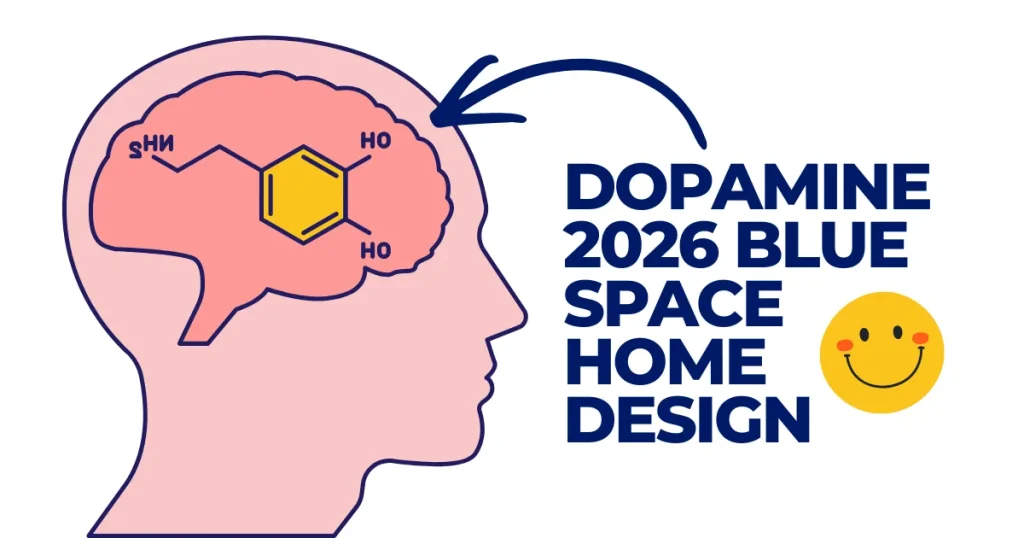
Water, specifically, signifies survival. Historically, proximity to water meant access to food, transport, and hygiene. In 2026, while we no longer need to camp by a river for physical survival, our brains are still hardwired to perceive water as a “safe zone.” This evolutionary comfort triggers an immediate neurochemical shift, lowering cortisol levels and stimulating the production of dopamine and serotonin.
The Three Pillars of Blue Space Science
Research led by environmental psychologists has identified three primary pathways through which water influences our mental well-being:
1. The Soft Fascination Effect
Unlike a busy city street that demands “directed attention” (which is cognitively exhausting), water provides soft fascination. The rhythmic movement of waves or the gentle flow of a stream captures our attention without requiring effort. This allows the brain’s “default mode network” to engage, fostering creativity and problem-solving while resting the prefrontal cortex.
2. Sensory Immersion and Air Quality
It isn’t just about what we see; it’s about what we breathe and hear.
- Negative Ions: Crashing waves and waterfalls create negative ions. Research in early 2025 confirmed that high concentrations of negative ions can act as natural antidepressants by increasing oxygen flow to the brain.
- Pink Noise: The sound of water is often classified as “pink noise,” which has a consistent frequency that masks jarring sounds and regulates brain waves, promoting deeper sleep and relaxation.
3. Physical Opportunity
Blue spaces naturally encourage physical activity. Whether it’s swimming, paddleboarding, or simply walking along a pier, water-based environments promote movement. In 2026, “Blue Health” prescriptions have become a standard medical recommendation for patients suffering from burnout and sedentary-related anxiety.
2.5 Years of Data: The 2026 Shift
Why is this a “2026” trend specifically? Following the “Global Burnout” of the early 2020s, public health data began showing a significant disparity in recovery rates. Individuals living within 1 kilometer of a coast or major body of water reported 25% lower levels of psychological distress than those in landlocked urban centers.
Comparative Wellness Benefits
| Feature | Green Spaces (Parks) | Blue Spaces (Water) |
| Primary Benefit | Physical activity & cooling | Cognitive restoration & mood regulation |
| Noise Profile | Birdsong/Wind (Variable) | Rhythmic/Pink Noise (Consistent) |
| Visual Stimuli | Fractal patterns in leaves | Reflective light & horizon expansion |
| 2026 Popularity | High | Extreme (The “New Luxury”) |
Urban “Blue-ing”: The Future of Cities
As we look at the architectural trends of 2026, “Blue Urbanism” is the buzzword. Cities like Singapore, Amsterdam, and New York are no longer just “greening” their rooftops; they are integrating water into the very fabric of the commute.
- Floating Offices: Modular aquatic workspaces are reducing employee turnover.
- Daylighting Streams: Cities are uncovering paved-over rivers to bring natural “blue veins” back into the concrete jungle.
- Indoor Blue Tech: For landlocked regions, 2026 has seen a surge in high-fidelity aquatic installations that use 4K projections and actual water sounds to simulate the blue space experience in hospitals and schools.
The “Blue Mind” at Work
The corporate world has pivoted toward the “Blue Mind” philosophy—a term popularized by the late Wallace J. Nichols and expanded upon by 2026 researchers. Companies are finding that “Blue Breaks”—even if just 15 minutes by a fountain—increase productivity by reducing the “brain fog” associated with digital fatigue.
“The Blue Mind is a mildly meditative state characterized by calm, peacefulness, unity, and a sense of general happiness and satisfaction with life in the moment.” — The 2026 Wellness Report
How to Integrate Blue Spaces Into Your Life
You don’t need to live on a private island to reap the benefits of the water revolution. Here is how experts suggest engaging with Blue Spaces in 2026:
- The 20-Minute Rule: Spend at least 20 minutes near water three times a week. This has been shown to significantly reset the nervous system.
- Visual Hydration: If you can’t get to water, look at it. High-quality images or videos of water have been proven to trigger similar (though slightly dampened) neural responses as the real thing.
- Hydrotherapy: Utilize local pools or even mindful showering. The sensation of water on the skin (mammalian dive reflex) can instantly lower a racing heart rate.
Conclusion: A Blue Future
As we navigate the complexities of 2026, the science is clear: we are water creatures living in a digital world. Our mental health depends on our ability to return to the water’s edge. By prioritizing “Blue Spaces,” we aren’t just following a trend—we are honoring a biological necessity. DrugsArea
The next time you feel the weight of the world, find a horizon where the sky meets the sea. Your brain will thank you.
Sources & References
- The Blue Mind Philosophy – Wallace J. Nichols
- Environmental Psychology and Blue Space – University of Exeter
- The Health Benefits of Water-Based Environments – PubMed/NIH
- Global Wellness Institute – 2026 Wellness Trends Report
- Urban Blue Spaces and Mental Health – World Health Organization (WHO)
🌊 The Science of Blue Spaces & Mental Health: FAQs
1. What exactly counts as a “Blue Space”?
In environmental science, a Blue Space is any outdoor environment—natural or man-made—that prominently features water. While we often think of oceans and beaches, the definition is actually much broader.
- Natural: Oceans, lakes, rivers, waterfalls, and wetlands.
- Urban/Man-made: Canals, harbors, fountains, splash pads, and even visible stormwater management systems.
- Key Takeaway: You don’t need a coastline to experience a blue space; a city river walk or a park fountain counts.
2. What is the “Blue Mind” theory?
Popularized by marine biologist Dr. Wallace J. Nichols, “Blue Mind” refers to the mildly meditative state our brains enter when we are near, in, on, or under water.
- The Shift: It is characterized by a shift from the “Red Mind” (an anxious, over-stimulated state of modern life) to a calm, peaceful clarity.
- The Chemistry: This state is associated with lower levels of cortisol (stress hormone) and higher levels of dopamine and serotonin (feel-good neurotransmitters).
3. How does the sound of water affect the brain?
The rhythmic crashing of waves or the babbling of a brook is often classified as Pink Noise. Unlike White Noise (which is static), Pink Noise has a consistent frequency that decreases in volume at higher octaves.
- Brain Synchronization: Research suggests that Pink Noise synchronizes with our brain waves to slow them down, reducing brain arousal and promoting deep relaxation.
- Sleep Aid: This is why rain sounds are a top choice for sleep apps—they physically signal the brain that there are no immediate threats, allowing the nervous system to downshift.
4. Is there a recommended “dosage” of Blue Space?
While individual needs vary, a landmark study led by the European Centre for Environment and Human Health suggests a “nature threshold” of 120 minutes (2 hours) per week.
- The Tipping Point: People who spent at least 120 minutes in nature (green or blue spaces) reported significantly higher levels of good health and well-being than those who didn’t.
- Frequency: Visits can be done in one long block or broken into shorter, frequent visits (e.g., a 20-minute walk by a canal daily).
5. Blue Space vs. Green Space: Is one better?
Both are vital, but some studies suggest Blue Spaces might have a slight edge in restoration.
- The Edge: A 2013 study found that while green spaces (parks/forests) are great for general well-being, blue spaces were more specifically associated with higher levels of stress reduction and mood restoration.
- Why? Water is dynamic; the light reflecting off the surface and the movement of the water creates a unique sensory input that captures attention more effectively than a static grass field.
6. What is “Soft Fascination”?
This is a concept from Attention Restoration Theory (ART). Modern life requires “Directed Attention” (focusing hard on work, screens, traffic), which drains us and leads to mental fatigue.
- The Water Effect: Water provides “Soft Fascination”—it is interesting enough to hold your attention (watching waves, ripples) but not so demanding that it requires focus.
- The Result: This allows the part of your brain responsible for intense focus to rest and recharge.
7. Can “Virtual” Blue Spaces (VR/Video) help?
Surprisingly, yes.
- The Evidence: Studies involving dental patients and stress tests have shown that watching high-definition videos of aquariums or beaches, or using VR headsets, can lower heart rate and reported pain levels.
- Limitations: While helpful for acute anxiety or those with limited mobility, virtual spaces lack the multisensory inputs (the smell of salt air, the temperature change, the wind) that make real blue spaces fully restorative.
8. Why do I feel happier living near the coast?
This is often called the “Blue Health” advantage. Large-scale census data from countries like England and Australia consistently show that people living closer to the coast report better physical and mental health.
- The “Protective Moat”: Interestingly, this effect is strongest in lower-income communities, suggesting that access to water acts as a buffer against life stresses that typically cause health inequalities.
- Active Living: Coastal living also naturally encourages higher physical activity (walking, swimming), which is a secondary driver of mental health.
9. What if I live in a landlocked city?
Urban planners are increasingly focusing on “Urban Blueing.”
- Urban Options: Canals, riverbanks, and decorative fountains in city squares provide similar “micro-restorative” moments.
- The “Micro-Dose”: Even stopping for 5 minutes to watch a fountain during a lunch break can trigger the “soft fascination” response and lower blood pressure, breaking the cycle of workday stress.
10. Does the color blue itself matter?
Psychologically, yes.
- Color Psychology: The color blue is universally the world’s “favorite color” and is linked to the parasympathetic nervous system (the “rest and digest” system).
- Evolutionary Theory: Evolutionarily, clear blue water signaled a source of clean, fresh drinking water, which may explain why our brains are hardwired to feel safety and pleasure when we see it.