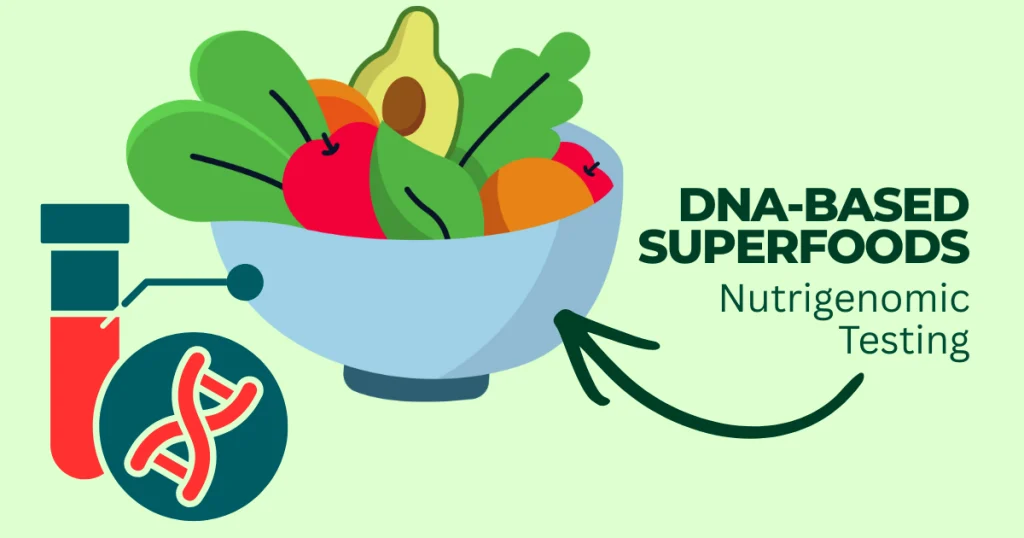
Nutrigenomic Testing: Why Your DNA Should Choose Your Daily Superfoods ?
As a health professional, I’ve spent years watching patients dutifully eat kale, swallow expensive turmeric capsules, and chug green tea, only to wonder why their energy levels remain stagnant or their inflammatory markers won’t budge. We’ve been operating under the “Golden Rule” of nutrition—that what is healthy for the population is healthy for the person.
But as we move into 2026, the clinical landscape has shifted. We are entering the era of Personalized Clinical Nutrition, powered by the latest “Nutri-Scans.” These aren’t just your standard ancestry tests; they are high-resolution genetic deep-dives that tell us one vital thing: just because a food is “super” doesn’t mean your body can actually process it.
The Myth of the Universal Superfood
The term “superfood” has always been a marketing label rather than a medical one. While blueberries and salmon are nutrient-dense, their “super” status is entirely dependent on your genetic expression.
Nutrigenomics is the study of how our genes and nutrients interact. Your DNA contains specific markers—Single Nucleotide Polymorphisms, or SNPs (pronounced “snips”)—that act as the “instruction manual” for your metabolic pathways. If you have a variation in a specific gene, a food that provides a massive health boost to your neighbor might literally be passing through your system unused, or worse, causing low-grade metabolic stress.
Enter the 2026 “Nutri-Scan”: Precision at the Cellular Level
The “Nutri-Scan” technology of 2026 represents a quantum leap from early nutrigenomic tests. Unlike older versions that only looked at broad categories like “caffeine sensitivity,” modern scans analyze the efficiency of transport proteins and enzymatic conversion.
Here is why your DNA is the only nutritionist you should truly trust:
1. Vitamin Absorption and Bioavailability
Many people carry the MTHFR gene mutation, which affects how the body processes folate (Vitamin B9). If you have this variant, eating stacks of spinach might not be enough; your body may require “methylated” versions of these nutrients to prevent fatigue and support heart health. Similarly, variations in the BCMO1 gene determine how efficiently you convert beta-carotene from carrots into active Vitamin A (retinol). If you’re a “poor converter,” that “healthy” carrot juice isn’t doing much for your immune system or vision.
2. The Omega-3 Paradox
We are often told to eat fatty fish for Omega-3s. However, the FADS1 and FADS2 genes regulate how your body converts plant-based ALA (from flax or chia) into the essential EPA and DHA your brain needs. A Nutri-Scan can tell you if you can thrive on a plant-based Omega-3 source or if your genetics demand a direct marine source to keep inflammation at bay.
3. Antioxidant Defense (The GSTM1 Marker)
The GSTM1 gene is responsible for producing enzymes that detoxify environmental pollutants and oxidative stress. If you have a “null” genotype (meaning the gene is missing), your body lacks its primary defense mechanism. For these individuals, specific “superfoods” like broccoli and Brussels sprouts aren’t just suggestions—they are biological necessities because they contain sulforaphane, which helps “kickstart” alternative detox pathways.
Moving Beyond General Advice to Clinical Precision
The traditional food pyramid is dead. In its place, we have Genetic Bio-Individuality.
“In 2026, clinical nutrition is no longer about ‘eating clean.’ It is about ‘eating for your architecture.’ A Nutri-Scan identifies the specific roadblocks in your metabolic highway, allowing us to prescribe food with the same precision as a pharmaceutical.”
How a Nutri-Scan Works
- Non-Invasive Collection: A simple buccal (cheek) swab or saliva sample is collected.
- Genomic Mapping: The lab sequences over 75+ specific nutritional markers.
- Bio-Feasibility Report: You receive a “Green, Yellow, Red” list of foods. “Green” foods are those your body is genetically optimized to absorb; “Red” foods are those you likely lack the enzymes to process effectively.
- Clinical Integration: A health professional translates these markers into a daily protocol.
The Benefits of a DNA-Driven Diet
- Stop Wasting Money: No more buying supplements your body can’t absorb.
- Targeted Energy: Identify the micronutrients (like B12 or Vitamin D) that your specific transport genes are “leaking.”
- Chronic Prevention: Use “Food as Medicine” to turn down the expression of genes linked to inflammation, obesity, and Type 2 diabetes.
Summary: Your Double Helix is Your Grocery List
The future of health is not found in a trendy diet book or a celebrity-endorsed cleanse. It is written in your code. By using Nutri-Scan technology to look under the hood of your own metabolism, you move from “guessing” to “knowing.”
Your body is a unique biological machine. It’s time you stopped fueling it with a generic manual.
Sources & References
- Nutrigenomics: DNA-Based Nutrition Explained, NutritionEd.org
- How to Use Nutrigenomic Testing to Personalize Your Patients Optimal Diet, Rupa Health
- Genetic Variants Shaping Inter-individual Differences in Response to Dietary Intakes, Frontiers in Nutrition
- Personalized Nutrition: Tailoring Dietary Recommendations through Genetic Insights, MDPI
- Five Key Health and Nutrition Trends for 2026, Kerry Health and Nutrition Institute
Health Disclaimer:
The information provided in this article is for educational and informational purposes only and is not intended as medical advice. Nutrigenomic testing and “Nutri-Scans” provide insights into genetic predispositions but do not diagnose or treat medical conditions. Genetic data is one piece of the health puzzle; environmental factors, lifestyle, and existing clinical markers must also be considered. Always consult with a qualified healthcare professional or a registered dietitian before making significant changes to your diet or starting any new supplementation protocol based on genetic results. DrugsArea
People Also Ask
1. What exactly is nutrigenomic testing?
Think of it as a manual for your specific biology. While traditional nutrition offers a “one size fits all” approach, nutrigenomic testing analyzes your DNA to see how your body responds to specific nutrients. It looks at genetic variations (SNPs) that affect how you metabolize fats, absorb vitamins, or react to things like caffeine and gluten.
2. Can a DNA test really tell me what “superfoods” to eat?
Yes, but with a caveat. It won’t give you a magical list of foods that grant immortality. Instead, it identifies which nutrients your body might be inefficient at processing. For example, if your DNA shows you struggle to convert beta-carotene into Vitamin A, your “personal superfood” might be beef liver or cod liver oil rather than just carrots.
3. Is nutrigenomic testing scientifically proven?
The field is grounded in solid science, but it’s still evolving. We know for a fact that genetics influence nutrient metabolism (like the well-studied MTHFR gene and folate). However, the “actionable” part—exactly how much of a specific food you need based on a gene—is where the research is still growing. It’s a tool for optimization, not a medical diagnosis.
4. How is this different from a standard blood test?
A blood test is a snapshot of right now (e.g., “You are currently low on Vitamin D”). A nutrigenomic test is your blueprint (e.g., “You have a genetic predisposition that makes it harder for your body to transport Vitamin D”). Blood tests tell you the status; DNA tests tell you the why.
5. Will I have to change my entire diet based on the results?
Rarely. For most people, the results offer “course corrections” rather than a total overhaul. You might find you need to swap your morning coffee for green tea because you’re a slow caffeine metabolizer, or that you should focus more on cruciferous vegetables to support your specific detoxification pathways.
6. Can these tests help with weight loss?
They can certainly take the guesswork out of it. Some people’s genetics make them more successful on a low-carb diet, while others thrive on low-fat. By understanding your FTO gene or insulin sensitivity markers, you can stop “diet hopping” and stick to the strategy that aligns with your biology.
7. Are there any privacy concerns with sharing my DNA?
This is a valid concern. Most reputable companies use de-identified data and high-level encryption. However, always read the fine print regarding whether they sell data to third parties. If privacy is your top priority, look for providers that allow you to request the deletion of your sample after processing.
8. What are the most common genes analyzed in these tests?
Most panels focus on a few “heavy hitters”:
- MTHFR: Folate activation and methylation.
- APOE: Cholesterol and fat metabolism.
- CYP1A2: Caffeine metabolism speed.
- GSTP1: Antioxidant requirements and detoxification.
9. Can I just use my 23andMe data for this?
Often, yes. Many specialized nutrigenomic platforms allow you to upload your “raw data” from 23andMe or AncestryDNA. They then run that data through their specific nutritional algorithms to give you a report without you needing to provide a new saliva sample.
10. Is it worth the cost?
If you are someone who is already invested in high-quality food and supplements, this is a great investment. It prevents you from wasting money on supplements your body doesn’t need and helps you focus your grocery budget on the “superfoods” that actually move the needle for your health.