Understanding the Nipah Virus: Symptoms, Risks, and Prevention
As a health professional who has monitored infectious disease outbreaks for years, I’ve seen how quickly fear can spread when a “zoonotic” virus—one that jumps from animals to humans—makes headlines. The Nipah virus (NiV) is one of those pathogens that demands our respect and vigilance, not our panic.
While it isn’t as globally widespread as seasonal influenza, its high fatality rate and the complexity of its transmission make it a significant priority for the World Health Organization (WHO) and healthcare systems worldwide. Let’s break down what you actually need to know about this virus, stripped of the sensationalism.
What Exactly is Nipah Virus?
Nipah virus was first identified in 1999 following an outbreak among pig farmers in Malaysia and Singapore. It is a member of the Henipavirus genus. Unlike common respiratory viruses, Nipah is primarily hosted by Pteropid bats (commonly known as fruit bats or flying foxes).
When the virus jumps to humans—either through direct contact with infected bats, infected pigs, or contaminated food—it can cause severe disease. What makes NiV particularly concerning to health experts is its incubation period, which can range from 4 to 14 days (and in rare cases, up to 45 days), allowing the virus to go undetected while a person remains asymptomatic.
How Does Transmission Occur?
Understanding how NiV spreads is the first step in prevention. There are three primary routes of infection:
- Animal-to-Human: Direct contact with infected animals, such as bats or pigs, or their body fluids (blood, urine, or saliva).
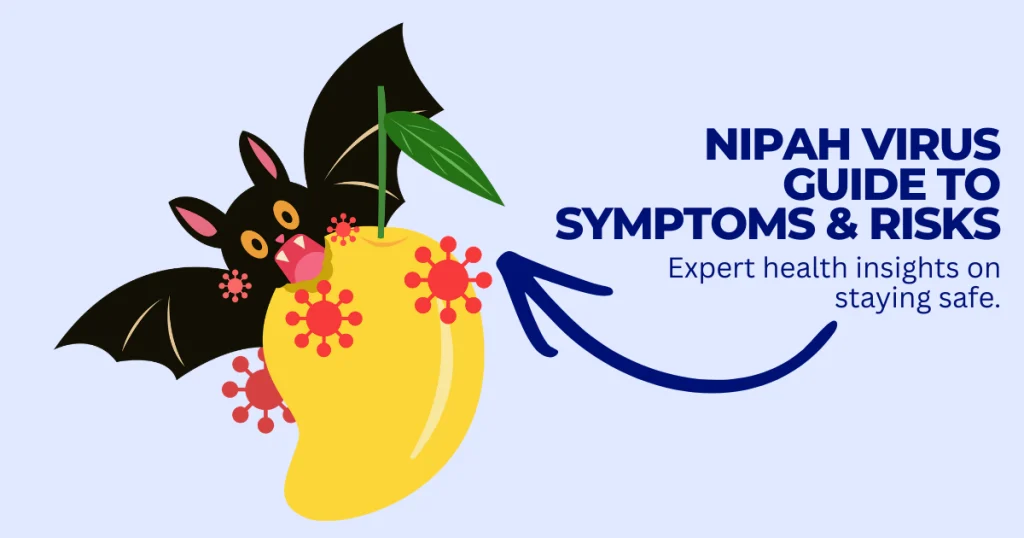
- Contaminated Food: Consuming food products that have been contaminated by the fluids of infected fruit bats. A common example in Southeast Asia is drinking raw date palm sap contaminated by bat droppings or saliva.
- Human-to-Human: This is usually seen in family or caregiving settings. Close contact with the secretions or excretions of an infected person can lead to transmission.
Identifying the Symptoms
In my clinical experience, the challenge with Nipah is that it often starts looking like a standard “bad flu.” However, it can progress rapidly.
Early Stage Symptoms:
- Fever and persistent headache.
- Muscle pain (myalgia).
- Sore throat and vomiting.
- Dizziness and disorientation.
Severe Stage Symptoms:
If the virus progresses to the brain (encephalitis), symptoms become neurological:
- Severe drowsiness or “altered consciousness.”
- Acute respiratory distress (difficulty breathing).
- Seizures.
- Coma within 24 to 48 hours.
The case fatality rate is estimated between 40% and 75%, depending on the local capability for surveillance and clinical management.
Diagnosis and Treatment: The Current Reality
Currently, there are no drugs or vaccines specifically targeted at Nipah virus. This is a sobering reality for healthcare providers.
How we diagnose it:
Doctors use Real-Time Polymerase Chain Reaction (RT-PCR) tests from bodily fluids and Enzyme-Linked Immunosorbent Assay (ELISA) to detect antibodies.
How we treat it:
Treatment is strictly supportive care. This means we focus on:
- Keeping the patient hydrated.
- Managing fever and pain.
- Using mechanical ventilation if respiratory failure occurs.
- Treating seizures with anti-epileptic medication.
While some monoclonal antibody treatments are in clinical trials, the mainstay of the battle against Nipah remains intensive nursing care and isolation.
Prevention: Practical Steps to Stay Safe
Prevention is our most powerful tool. Since there is no vaccine, we must focus on reducing the risk of exposure.
- Wash Your Fruit: Thoroughly wash and peel fruits before consumption. If a fruit looks like it has been bitten or “pecked” by an animal, discard it immediately.
- Avoid Raw Date Palm Sap: In areas where outbreaks occur, avoid drinking raw sap, as bats frequently visit these collection sites at night.
- Protective Gear: If you work with livestock (especially pigs) in endemic regions, use gloves, masks, and protective clothing.
- Hospital Hygiene: If you are visiting someone in a hospital in an outbreak zone, practice strict hand hygiene and follow all protocol provided by hospital staff.
The Global Outlook
The WHO has listed Nipah virus as a priority disease in the Research and Development Blueprint. This means it is recognized as having epidemic potential with no current countermeasures. Global health organizations are working tirelessly to develop a vaccine, but until then, public education and rapid response remain our best defenses.
If you live in or are traveling to regions where Nipah is endemic (such as parts of South and Southeast Asia), staying informed via official government health channels is vital.
Health Disclaimer
The information provided in this article is for educational and informational purposes only and is not intended as medical advice. Always seek the advice of a physician or other qualified health provider with any questions you may have regarding a medical condition or public health emergency. Never disregard professional medical advice or delay in seeking it because of something you have read here. DrugsArea
Sources & References
- World Health Organization (WHO): Nipah Virus Fact Sheet
- Centers for Disease Control and Prevention (CDC): About Nipah Virus
- Gavi, the Vaccine Alliance: The Next Pandemic? Nipah Virus
People Also Ask
1. What are the first signs of Nipah virus infection?
The early symptoms usually feel like a bad case of the flu. Between 4 to 14 days after exposure, most people experience a sudden high fever, severe headache, muscle pain, and a sore throat. Some may also experience a dry cough or mild breathing difficulties before the illness progresses.
2. How does the Nipah virus actually spread to humans?
It’s primarily a “spillover” virus from fruit bats. You can catch it by:
- Direct contact with infected animals (bats or pigs) and their bodily fluids.
- Contaminated food, especially drinking raw date palm sap or eating fruit that has been bitten or licked by an infected bat.
- Human-to-human transmission, which typically happens when family members or healthcare workers have close, unprotected contact with an infected person’s secretions.
3. Is there a vaccine for Nipah virus in 2026?
As of early 2026, there is no officially licensed or widely available vaccine for humans. While several candidates are in clinical trials and the WHO has labeled NiV a “priority pathogen” for research, prevention remains our best defense.
4. Can Nipah virus be spread through the air?
Nipah is not considered “airborne” in the same way as COVID-19 or the flu. However, it can spread through respiratory droplets (coughing or sneezing) in close-quarters. This is why hospital isolation and personal protective equipment (PPE) are strictly required for caregivers.
5. What is the mortality rate of Nipah virus?
Nipah is unfortunately very dangerous, with a fatality rate estimated between 40% and 75% depending on the outbreak and the quality of local medical care. This high rate is why health authorities take even single cases so seriously.
6. Why is raw date palm sap considered a major risk?
Fruit bats (the natural hosts) love the sweet sap collected from palm trees. They often drink from the collection pots at night, leaving behind saliva or urine. If a person drinks that sap raw the next morning, the virus enters their system directly. Boiling the sap makes it safe to consume.
7. How is Nipah virus diagnosed?
In the early stages, doctors use a RT-PCR test (similar to the one used for COVID) on throat swabs, blood, or urine to detect the virus’s genetic material. In later stages or after recovery, an ELISA test can look for specific antibodies.
8. Can you survive Nipah virus, and are there long-term effects?
Yes, many people survive, but the road to recovery can be long. Some survivors experience persistent fatigue or “smoldering” neurological issues, such as personality changes, seizures, or physical weakness, especially if they suffered from encephalitis (brain inflammation) during the peak of the illness.
9. Is it safe to eat fruits during a Nipah outbreak?
Generally, yes, but with strict precautions. Avoid any fruit that looks “nibbled,” has bird/animal peck marks, or was found on the ground. Always thoroughly wash and peel your fruit before eating it to remove any potential surface contamination.
10. What should I do if I think I’ve been exposed?
If you develop a fever and headache after traveling to a known outbreak area or having contact with bats/pigs, seek medical attention immediately. Do not wait for symptoms to worsen. Notify the clinic or hospital of your exposure history so they can take the necessary isolation precautions right away.
Would you like me to create a printable “Safety Checklist” for traveling to regions where Nipah is active?