Neuro Architectural Wellness: Your Home and Your Hormones
The Invisible Architecture of Stress
As a health professional, I spent years looking at blood panels and lifestyle diaries before I started looking at the walls surrounding my patients. We often think of “wellness” as something we do—a HIIT workout, a kale salad, or a meditation app. But what if the very geometry, lighting, and color of your living room are undoing your best health efforts?
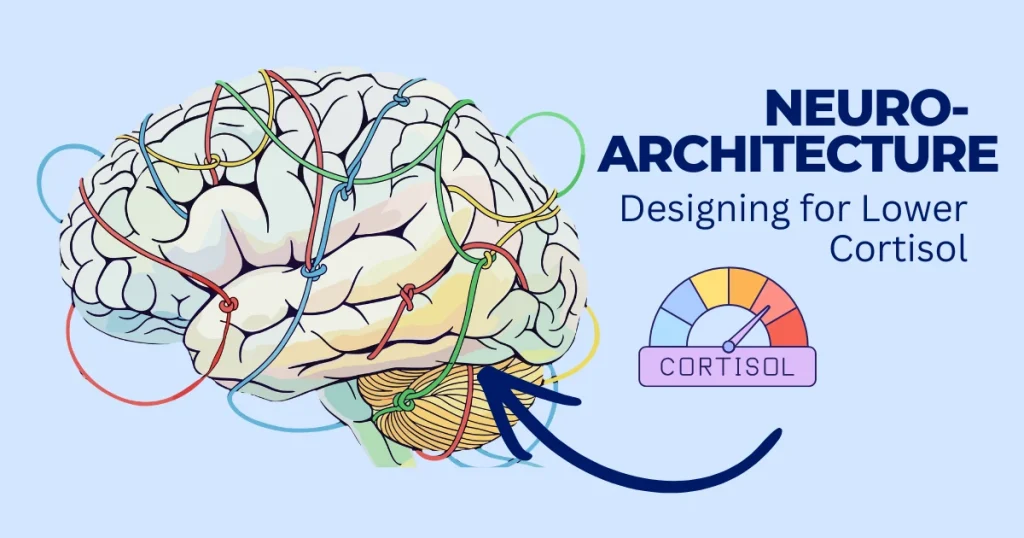
Welcome to the field of Neuro-architecture. This isn’t just “interior design with a fancy name.” It is the study of how the built environment modulates our brain chemistry—specifically, our production of cortisol.
In this deep dive, we’ll explore how your home environment acts as a silent endocrine disruptor or a powerful healing tool.
1. The Cortisol Connection: Why Your Brain Hates Your Hallway
Cortisol is our primary stress hormone. In a state of nature, it helps us run from predators. In a modern apartment, it responds to “environmental stressors” like poor lighting, clutter, and acoustic pollution.
When your brain perceives a space as “threatening” or “unnatural,” the hypothalamus triggers the adrenal glands. Chronic elevation of cortisol leads to:
- Weight gain (specifically visceral adiposity)
- Impaired cognitive function (“brain fog”)
- Suppressed immune response
- Disrupted sleep cycles
2. Lighting: The Circadian Rhythm Master Key
The most significant neuro-architectural impact on cortisol is lighting. Our bodies operate on a 24-hour biological clock governed by the suprachiasmatic nucleus (SCN).
The Blue Light Trap
Most modern homes are flooded with “cool” blue-spectrum light from LEDs and screens after sunset. This suppresses melatonin and keeps cortisol levels artificially high, signaling to your brain that it’s high noon when it’s actually 10:00 PM.
The Solution: Human-Centric Lighting
- Morning: Seek 10,000 lux of natural sunlight within 30 minutes of waking to “reset” your cortisol awakening response (CAR).
- Evening: Transition to warm, amber-toned lighting (2700K or lower). This mimics the sunset and allows cortisol to drop naturally.
3. Biophilic Design: Evolution Doesn’t Like Drywall
Humans evolved in the African savanna, not in grey cubicles. Biophilia—our innate tendency to seek connections with nature—is a cornerstone of neuro-architectural wellness.
The Power of Greenery
Research consistently shows that the presence of indoor plants reduces sympathetic nervous system activity. A study published in the Journal of Physiological Anthropology found that active interaction with indoor plants (like pruning or repotting) can reduce physiological and psychological stress compared to mental work.
Fractal Patterns
Our brains find “fractals”—self-repeating patterns found in trees, waves, and clouds—naturally soothing. Incorporating wood grains, stone textures, or botanical prints can actually lower heart rate variability and cortisol output.
4. The Geometry of Anxiety: Sharp Edges vs. Curves
Neuroscience tells us that our amygdala (the brain’s fear center) reacts more strongly to sharp angles and jagged edges. This is an evolutionary hangover; sharp things in nature (thorns, teeth, jagged rocks) represent danger.
The “Curvature Effect”
Studies using fMRI have shown that people are more likely to judge a room as “pleasant” and feel relaxed when it contains curved furniture and rounded architectural arches.
Pro-Tip: If you have a boxy room, soften the “visual noise” with round rugs, circular coffee tables, or draped fabrics to signal safety to your nervous system.
5. Acoustic Comfort and the “Hum” of Stress
We often overlook what we hear. Low-frequency “hum” from refrigerators, HVAC systems, or distant traffic can keep the body in a state of low-grade “high alert.” This is known as acoustic stress.
Chronic noise exposure is directly linked to elevated evening cortisol. To combat this:
- Use soft furnishings (heavy curtains, acoustic panels) to dampen echoes.
- Introduce pink noise or water features to mask disruptive sounds with soothing, natural frequencies.
6. Clutter as Visual Overload
To your brain, clutter is a “to-do” list that never ends. Every object in your field of vision requires “attentional resources.” When your environment is over-stimulated, your brain stays in a state of hyper-vigilance.
The Cortisol-Clutter Loop
A famous study by UCLA’s Center on Everyday Lives of Families (CELF) discovered a direct correlation between the density of household objects and the cortisol levels of the mothers in those homes. Reducing visual “static” is perhaps the fastest way to lower your baseline stress.
7. Actionable Audit: How to Lower Your Cortisol Today
| Element | The Stressor | The Wellness Fix |
|---|---|---|
| Windows | Blocked views/darkness | Clear the sills; maximize “Borrowed Light.” |
| Ceilings | Very low ceilings (cramped) | Use vertical art or floor-to-ceiling drapes to create “volume.” |
| Color | High-contrast reds/yellows | Use “Earth tones” (sage, terracotta, sand) for calmness. |
| Scent | Synthetic air fresheners | Use essential oils like Lavender or Bergamot (proven to lower cortisol). |
Conclusion: Healing by Design
Your home is more than a shelter; it is an extension of your nervous system. By applying the principles of neuro-architecture—optimizing light, embracing biophilia, and softening our geometry—we can create “restorative environments” that actively lower our cortisol and support our long-term health.
Small changes, like swapping a lightbulb or adding a plant, aren’t just about aesthetics. They are medical interventions for your home.
Medical Disclaimer
The information provided in this article is for educational purposes only and does not constitute medical advice, diagnosis, or treatment. Always seek the advice of your physician or other qualified health provider with any questions you may have regarding a medical condition or hormonal imbalances. DrugsArea
Sources & References
- Academy of Neuroscience for Architecture (ANFA)
- The Curvature Effect in Interior Design – Frontiers in Psychology
- Interaction with Indoor Plants – Journal of Physiological Anthropology
- CELF UCLA Study on Clutter and Cortisol
People Also Ask
1. What exactly is neuro-architecture and how does it affect stress?
Neuro-architecture is the study of how the built environment—the buildings we live and work in—impacts our brain and body. By understanding how certain spatial elements like light, ceiling height, and materials trigger neurological responses, designers can create spaces that physically lower cortisol (the stress hormone), reduce heart rates, and foster a sense of psychological safety.
2. Can interior design really lower my cortisol levels?
Yes. Studies show that specific design choices, such as maximizing natural light and incorporating “biophilic” elements like indoor plants, can reduce cortisol levels by up to 15%. When your environment mimics natural patterns, your nervous system moves from a “fight-or-flight” state (sympathetic) to a “rest-and-digest” state (parasympathetic), leading to measurable biological relaxation.
3. What are the best colors for reducing anxiety in a room?
Soft, cool tones like sage greens and sky blues are the heavy hitters for stress reduction. These colors are processed by the brain as calming and “safe,” unlike high-energy reds or oranges which can inadvertently spike arousal. Neutral, earthy palettes that include wood grains also help ground the occupant, lowering the cognitive load required to process the space.
4. How does ceiling height impact the way I think and feel?
Interestingly, ceiling height changes your cognitive “mode.” High ceilings (3 meters or more) tend to promote abstract, creative thinking and a sense of freedom, which can reduce the feeling of being “trapped” or stressed. Conversely, lower ceilings are better for task-oriented focus and can provide a “womb-like” sense of security that lowers anxiety in high-pressure environments.
5. What role does “Biophilic Design” play in neuro-architecture?
Biophilic design is a core pillar of neuro-architecture. It’s the practice of bringing the outdoors in. Research indicates that just looking at a view of greenery or having indoor plants can lower blood pressure and speed up recovery from mental fatigue. It works because humans are biologically hardwired to find comfort in nature, a concept known as “biophilia.”
6. Why does clutter increase my stress according to neuroscience?
To your brain, clutter represents “unfinished business.” Excessive visual stimuli compete for your attention, leading to sensory overload and a constant, low-level release of cortisol. Neuro-architecture emphasizes “visual order” and hidden storage to reduce this cognitive friction, allowing the brain to focus and enter a restorative state more easily.
7. Does the shape of furniture affect my mood?
Absolutely. Humans have a natural, evolutionary aversion to sharp edges and jagged angles (which the brain perceives as potential threats). Incorporating curved furniture and organic shapes activates the subcortical part of the brain associated with safety and pleasure, leading to a much more relaxed and inviting atmosphere.
8. How can I use lighting to regulate my circadian rhythm?
Light is the primary “zeitgeber” (time-giver) for your internal clock. Neuro-architecture suggests using “human-centric lighting” that mimics the sun’s natural cycle: bright, blue-enriched light in the morning to boost alertness, and warm, dim lighting in the evening to trigger melatonin production. This prevents the “social jetlag” that often keeps cortisol levels high at night.
9. What is “Acoustic Comfort” and why does it matter for mental health?
Your brain never truly “turns off” its hearing. Constant background noise, like humming HVAC systems or street traffic, keeps your amygdala (the brain’s alarm center) on high alert. Using sound-absorbing materials like cork, felt, or heavy textiles creates “acoustic zoning” that allows your nervous system to finally power down and recover.
10. Can I apply neuro-architecture to a small home office?
You don’t need a mansion to see results. Small shifts like positioning your desk near a window (natural light), adding two or three leafy plants (biophilia), and using a warm-toned desk lamp (circadian support) can transform a cramped workspace into a high-performance, low-cortisol sanctuary.