The Microplastic Audit: Is Invisible Plastic Silently Damaging Your Cells?
From the Viewpoint of a Pharmacist: The Increasing “Bio-Load” Crisis
As a pharmacist, I’ve spent my career focusing on how chemicals interact with your body. Usually, we talk about life-saving medications. But in 2026, the conversation has shifted toward a different kind of chemical interaction: the “Microplastic Audit.” Recent clinical studies have confirmed what we’ve long suspected—microplastics (tiny particles less than 5mm) and even smaller nanoplastics are no longer just “out there” in the ocean. They are inside us. They’ve been detected in human blood, lung tissue, and even the placenta. For someone behind the pharmacy counter, this is a red flag for cellular health, particularly concerning how these particles act as “Trojan Horses” for toxins.
The Science: Gut Inflammation and Endocrine Disturbances
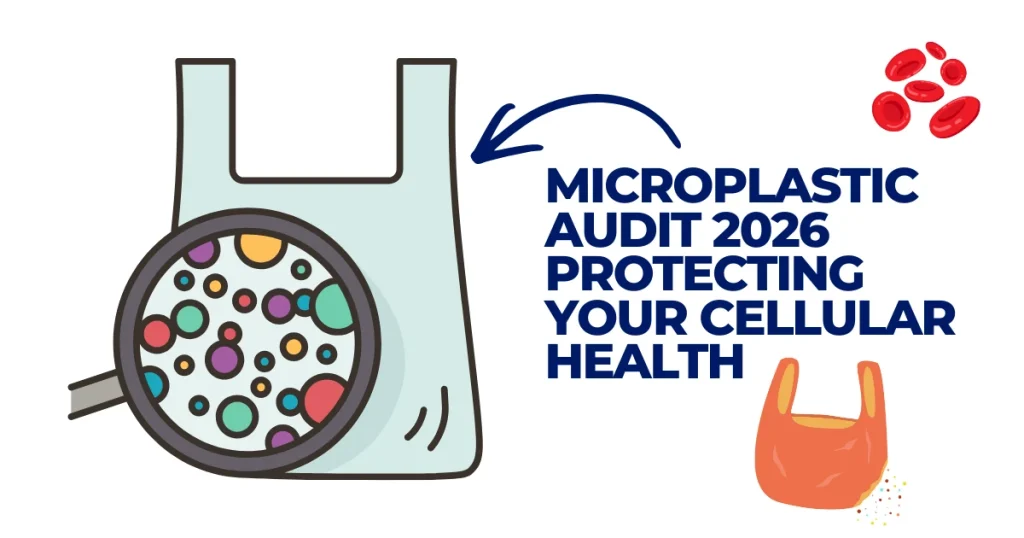
In 2026, the discussion will center on the effects of plastic on our inside systems rather than merely its existence.
Hormonal Chaos (Endocrine Disruption): BPA and phthalates are among the chemicals found in many plastics. Endocrine disruptors are what they are known to be. They send misleading signals to your body by “locking” into receptors and imitating your natural hormones. Problems with mood, metabolism, and reproductive health may result from this.
The Leaky Gut Connection: According to recent studies, consumed microplastics may mechanically harm the gut’s fragile lining. Chronic inflammation and oxidative stress are brought on by this. An irritated stomach makes it difficult for your body to absorb nutrients from meals and can lead to systemic “bio-load” problems.
Cellular Toxicity: These particles can pass through cell membranes due to their tiny size. After they’re inside, they can interfere with the “powerhouse” of your cells, the mitochondria, which can cause weariness and a compromised immune system.
Three Steps to Reduce Your Daily “Microplastic Audit”
To begin lowering your exposure, a lab is not necessary. I advise beginning with these three high-impact substitutions right now as a health professional:
The Bottle Swap: Give up using single-use plastic water bottles. When plastics are exposed to heat or light, even “BPA-free” plastics can release toxins. Use glass or stainless steel that is suitable for food. Thousands of plastic particles can be avoided annually by adopting just one practice.
The Heat Rule states that food in plastic containers should never be microwaved. Heat causes polymers to break down more quickly, enabling chemicals to enter your food directly. Instead, move your leftovers on a glass or ceramic platter.
The Dust Defense: It may surprise you to learn that breathing in home dust from synthetic carpets and garments contributes significantly to the amount of microplastics in our bodies. Your respiratory bio-load can be considerably reduced by using a vacuum with a HEPA filter and by regularly damp-dusting.
Little Adjustments, Huge Cellular Victories
I frequently remind my patients that although their bodies are extremely tough, they have a limit. Not only are you being “eco-friendly” by doing a “Microplastic Audit” of your kitchen and daily routine, but you are also actively lowering the inflammatory stress on your cells.
The goal of forming a “Plastic-Free” lifestyle is decrease, not perfection. You are providing your endocrine system with a much-needed respite each time you select a hardwood cutting board or a stainless steel bottle over a plastic one.
Health Disclaimer:
The information provided is for educational purposes and does not replace professional medical advice. If you are experiencing chronic inflammation or hormonal issues, please consult with your healthcare provider for a personalized diagnostic plan. DrugsArea
Sources & References
- MDPI – Microplastics and Endocrine Stress (2026),
- PMC – Gut-Brain Axis and Plastic Disruption,
- Stanford Medicine – Microplastics in Human Tissue,
- Imperial College London – Forensic Detection of Plastics (2026)