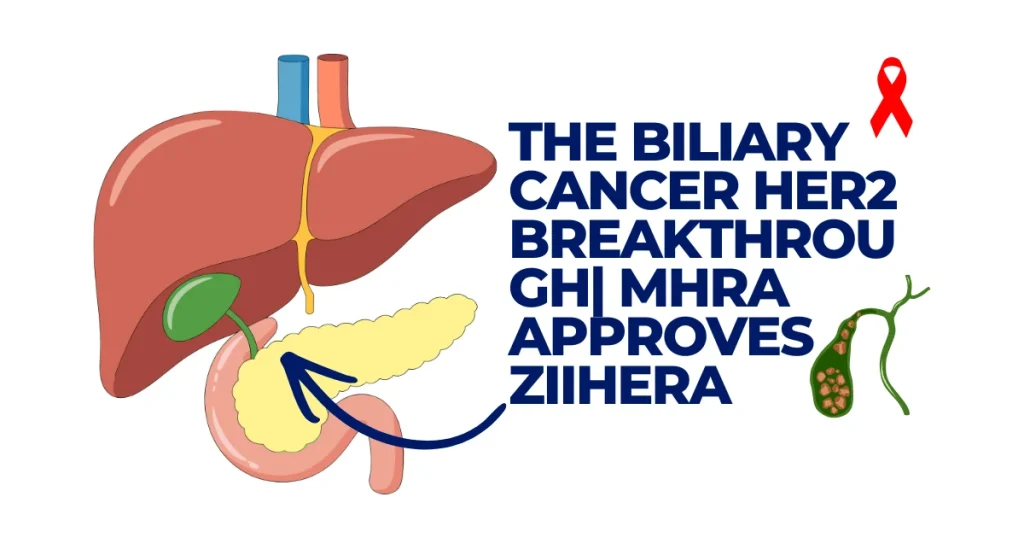
Biliary Cancer Breakthrough: MHRA Approves Zanidatamab (Ziihera)
A Major Win in the Fight Against Biliary Tract Cancer Biliary Cancer
As a healthcare professional, I often have to share difficult news with families facing biliary tract cancer (BTC). Historically, this group of cancers—which includes gallbladder cancer and bile duct cancer—has been incredibly tough to treat once it reaches an advanced stage. Options were limited, and the “unmet clinical need” was, frankly, overwhelming. Biliary Cancer
marks a significant turning point. The Medicines and Healthcare products Regulatory Agency (MHRA) has officially approved Zanidatamab (brand name: Ziihera). This isn’t just another drug; it’s a targeted therapy that offers a new lifeline for patients whose tumors express a specific protein called HER2.
What is Zanidatamab (Ziihera)?
Ziihera is a “bispecific antibody.” Unlike traditional chemotherapy that attacks all fast-growing cells, Ziihera is engineered to be a “heat-seeking missile” for cancer. It specifically targets two different parts of the HER2 protein on the surface of cancer cells. By latching onto these proteins, it helps the immune system identify and destroy the tumor while blocking the signals that tell the cancer to grow.
What did the clinical trials show?
The approval was sparked by a pivotal study involving 80 patients with advanced or metastatic biliary cancer. These were patients whose cancer had already progressed after standard treatments. The results were remarkable:
- 52% Response Rate: In patients with high HER2 levels (IHC 3+), more than half saw their tumors shrink or disappear entirely.
- Durable Results: For many, the cancer remained stable or improved for an average of 15 months—a significant jump compared to older treatments.
- Targeted Efficacy: The study highlighted that the drug works best when HER2 levels are high, proving that “precision medicine” is the future of BTC care.
Who is eligible for this treatment?
This therapy is specifically for adults with HER2-positive biliary tract cancer that is:
- Unresectable: Meaning it cannot be removed by surgery.
- Advanced or Metastatic: Meaning it has spread to nearby tissues or other parts of the body.
- Previously Treated: Patients must have already tried at least one other systemic treatment (like chemotherapy) before moving to Ziihera.
How is Ziihera administered?
Ziihera is given as an intravenous (IV) infusion every two weeks. The first few sessions take about two hours to ensure you tolerate the medicine well. If things go smoothly, later infusions can be shortened to about 60 minutes. Because it’s a bi-weekly schedule, it allows patients more “time off” from the clinic compared to some intensive daily regimens.
What are the side effects?
While Ziihera is generally better tolerated than aggressive “cocktail” chemotherapies, it isn’t without risks. The most common side effects observed in 2026 include:
- Diarrhea: This is the most frequent issue, though doctors can usually manage it with standard over-the-counter medications.
- Infusion Reactions: Some people experience chills, fever, or dizziness during the drip.
- Fatigue: Feeling unusually tired is common.
- Heart Monitoring: Because HER2 therapies can occasionally affect heart function, your doctor will likely check your “ejection fraction” (how well your heart pumps) before and during treatment.
The Importance of HER2 Testing
If you or a loved one is currently navigating a biliary cancer diagnosis, the most important step you can take today is to ask your oncologist for a HER2 test. HER2 testing is common in breast and gastric cancers, but it is now essential for biliary cancer too. You need to know your “IHC score.” If your score is IHC 3+, you may be a prime candidate for this newly approved therapy. Even an IHC 2+ score might trigger further testing (called ISH) to see if you qualify.
A Message of Hope
For a long time, biliary tract cancer was pushed to the sidelines of cancer research. The approval of Zanidatamab changes that narrative. We are moving away from “one-size-fits-all” treatments and toward therapies that respect the unique genetic makeup of your specific cancer.
Today’s news is a reminder that even in the face of a difficult diagnosis, science is moving faster than ever to provide better, more effective options.
Health Disclaimer:
This content is for educational purposes and does not replace professional medical advice, diagnosis, or treatment. Cancer treatment is highly individualized. Always seek the advice of your oncologist or other qualified health provider with any questions regarding a medical condition or treatment options. DrugsArea
Sources & References
- MHRA Official Announcement – Feb 19, 2026,
- European Medicines Agency (EMA) – Ziihera Profile,
- Jazz Pharmaceuticals Clinical Data, NICE Guidance on Zanidatamab
- https://en.wikipedia.org/wiki/Cholangiocarcinoma
People Also Ask
1. What is Zanidatamab (Ziihera) and how does it treat biliary cancer?
Zanidatamab, known by the brand name Ziihera, is a specialized type of targeted therapy called a bispecific antibody. Unlike traditional chemotherapy that attacks all fast-growing cells, Ziihera is engineered to find and bind to two different parts of the HER2 protein on the surface of cancer cells. This “dual-binding” helps the drug block growth signals more effectively and helps your own immune system find and destroy the tumor.
2. Who is eligible for Ziihera treatment following the MHRA approval?
The MHRA approval specifically covers adults with advanced or metastatic biliary tract cancer (BTC) that is HER2-positive (specifically IHC 3+). It is intended for patients who have already tried at least one prior systemic treatment (like chemotherapy) but saw their cancer progress. Because it targets a specific protein, your doctor will need to run a HER2 test on your tumor before prescribing it.
3. Why is the MHRA approval of Zanidatamab considered a “breakthrough”?
Biliary tract cancer—which includes gallbladder and bile duct cancers—is notoriously difficult to treat once it spreads. For years, patients who didn’t respond to chemotherapy had very few options. Ziihera is a breakthrough because it is the first targeted therapy of its kind to specifically address the HER2 biomarker in this cancer, offering a “chemo-free” alternative that has shown the ability to shrink tumors in over half of eligible patients.
4. How is Ziihera administered, and how often are the sessions?
Ziihera is given as an intravenous (IV) infusion by a healthcare professional. Typically, the treatment schedule involves one infusion every two weeks. The “every other week” schedule is generally more manageable for patients compared to some intensive chemotherapy regimens, allowing for more time at home between treatments.
5. What were the success rates in the clinical trials for biliary cancer?
In the pivotal HERIZON-BTC-01 study, about 52% of patients with high levels of HER2 saw their tumors shrink or disappear (the “objective response rate”). Perhaps more importantly, many of these patients maintained that response for an average of nearly 15 months, which is a significant improvement over the typical survival rates for advanced biliary cancer.
6. What are the most common side effects of Zanidatamab?
While Ziihera is generally better tolerated than standard chemotherapy, it does have side effects. The most common ones reported are diarrhea and infusion-related reactions (like chills or fever during the drip). Because it targets HER2, doctors also monitor heart function (specifically the left ventricular ejection fraction) to ensure the heart muscle remains strong during treatment.
7. Is Ziihera available on the NHS yet?
The MHRA approval is the first “green light,” meaning the drug is now licensed for use in the UK. However, for it to be widely available for free on the NHS, it must be reviewed by NICE (National Institute for Health and Care Excellence). As of early 2026, NICE is in the process of evaluating its cost-effectiveness, though many patients may be able to access it sooner through private insurance or specialized access programs.
8. Can Ziihera be used as a first-line treatment instead of chemotherapy?
Currently, the MHRA has approved it as a second-line treatment (for use after initial chemotherapy has failed). However, researchers are actively running Phase 3 trials to see if combining Ziihera with chemotherapy right at the start of diagnosis works better than the current standard of care. For now, it remains a powerful “next step” option.
9. Does Ziihera work for all types of bile duct cancer?
It works specifically for tumors that are HER2-positive. This biomarker is found in roughly 20% to 25% of all biliary tract cancers, but it is most common in gallbladder cancer and extrahepatic cholangiocarcinoma. If your cancer is “HER2-low” or “HER2-negative,” this specific drug likely won’t be effective, and your doctor will look for other markers like FGFR2 or IDH1.
10. How does Zanidatamab differ from other HER2 drugs like Trastuzumab?
Think of Trastuzumab (Herceptin) as a key that fits into one lock. Zanidatamab is like a master key that can turn two different locks on the same HER2 protein simultaneously. This “biparatopic” approach allows it to stay attached to the cancer cell longer and trigger a stronger “internalization” process, essentially forcing the cancer cell to swallow the drug and stop growing more effectively than older HER2 therapies.