The “Pharmacy Temperature” Alert: Why Your Mail-Order Meds Need a “Cool Check”
The Hidden Risk in Your Mailbox
As a health professional, I love the convenience of mail-order pharmacies. It keeps people consistent with their treatments without needing to leave the house. However, in 2026, we are seeing a significant spike in a specific type of “silent” medication failure: Temperature Excursions.
With the extreme weather fluctuations we’ve experienced this winter—swinging from freezing blizzards to unseasonable heatwaves in a matter of 48 hours—your medication is going through a literal rollercoaster before it reaches your porch. If your pills or biologics are sitting in a metal mailbox for six hours, their chemistry can change. Heat-Shock
Here is why your “Cool Check” is the most important part of your daily health routine this year.
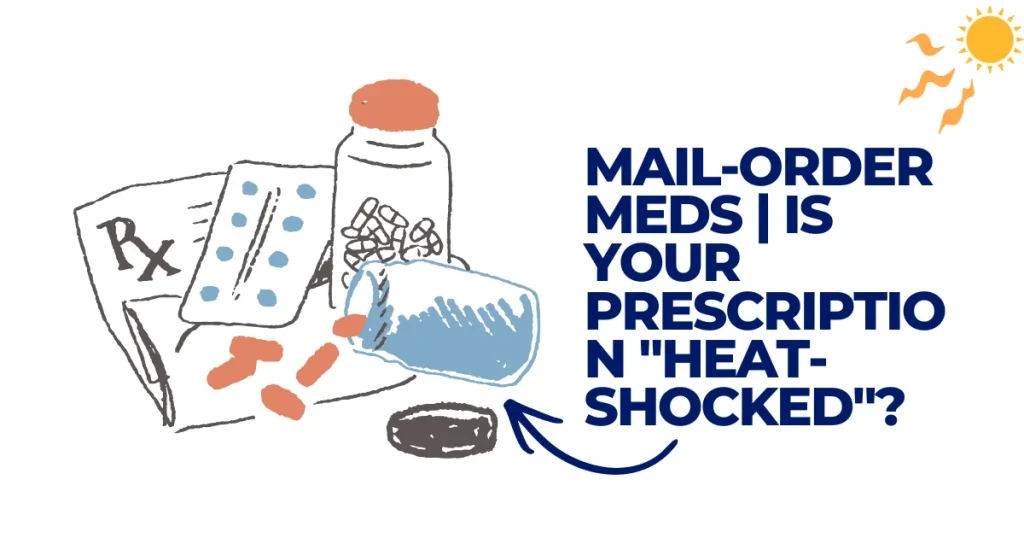
1. What is “Heat-Shock” or “Freeze-Thaw” Damage?
Most people think that as long as a pill isn’t melted, it’s fine. Unfortunately, medicine is much more sensitive than that.
- Heat-Shock: This happens when medications (especially liquids, insulin, or gel caps) are exposed to temperatures above 25°C (77°F) for extended periods. Heat can break down the active ingredients, making the drug less effective or even toxic.
- The Big Freeze: On the flip side, many modern “specialty” drugs are proteins. If they freeze and then thaw, the protein structure “unfolds.” This is called denaturing. Once a protein drug like Ozempic or Humira freezes, it’s essentially useless, even after it melts back to liquid.
2. How to Perform a 10-Second “Cool Check” Heat-Shock
The moment you bring that package inside, don’t just toss it on the counter. Do these three things immediately:
- The Touch Test: Does the bottle feel unusually hot to the touch? Is there condensation (sweat) inside the plastic? If it’s a “cold-chain” drug (one that came in a cooler), is the ice pack still solid or at least cold?
- The Visual Inspection: Look for “clumping” in capsules or “cloudiness” in liquids that are supposed to be clear. If a liquid medication looks like it has tiny shards of glass in it, those are likely frozen crystals.
- The Smell Test: Some medications, like aspirin, develop a strong vinegar-like smell when they break down due to heat and humidity.
3. Your Secret Weapon: The “Stability Indicator” Heat-Shock
By 2026, most high-end mail-order pharmacies have started including Smart Stability Indicators on the packaging. These are small, color-changing stickers or “TTIs” (Time-Temperature Indicators). Heat-Shock
- How they work: These stickers monitor the environment inside the box.
- The Color Shift: Usually, the dot will be a solid color (like Blue or Green). If the box exceeds a safe temperature for too long, the dot will turn Red or Orange.
- The Rule: If that sticker has shifted colors, do not take the medication. Even if the pill looks perfect, the “bioavailability” (how much of the drug actually gets into your system) could be compromised.
4. Why “Potency” Matters More Than You Think Heat-Shock
You might think, “If it’s only 80% as strong, it’s better than nothing, right?” Wrong.
For many conditions—like blood pressure, seizures, or thyroid issues—the dosage needs to be exact. If your “heat-shocked” blood pressure medication is only working at 60% capacity, you are at risk for a stroke or hypertensive crisis. In the medical world, we call this a “sub-therapeutic dose,” and it is a leading cause of hospital readmissions in 2026. Heat-Shock
5. What to Do If Your Meds Are Compromised Heat-Shock
If your “Cool Check” fails, follow these steps:
- Keep the Packaging: Do not throw away the box or the color-shifting indicator. Take a photo of it.
- Call the Pharmacy: Mail-order pharmacies have “Pharmacist-on-Call” lines. Tell them the stability indicator has turned or that the medication arrived hot/frozen.
- Request a Reship: Most reputable pharmacies in 2026 will reship the medication at no cost if the temperature was compromised during transit. They can file a claim with the courier.
- Do Not Dispose Down the Drain: If you have to get rid of damaged meds, follow local guidelines for “Medication Take-Back” to protect the environment. Heat-Shock
Pro-Tips for 2026 Mail-Order Users Heat-Shock
- Sign Up for Alerts: Most couriers now offer “Delivery Within 1-Hour” alerts. Be ready to bring the package in immediately.
- Use a P.O. Box: If your home mailbox is metal and sits in the sun, consider having meds delivered to an indoor P.O. box or a local pharmacy pickup point.
- Seasonal Switching: I often advise my patients to switch to “In-Person Pickup” during the peak of summer or the dead of winter if their medication is temperature-sensitive.
Health Disclaimer
This content is for educational and SEO purposes only. It is not a substitute for professional medical advice, diagnosis, or treatment. Always check your specific medication’s storage instructions on the manufacturer’s insert. If you suspect your medication is damaged, contact your prescribing doctor or pharmacist immediately. DrugsArea
Sources & References
- FDA: Storing Your Medicines Safely, USP: Temperature and Storage Standards, Journal of Pharmaceutical Sciences – Mail Order Stability Studies, CDC: Medication Safety in Extreme Weather
People Also Ask
1. What does it mean if a medicine is “heat-shocked”?
“Heat-shocked” refers to medication that has been exposed to temperatures well above its safe storage limit—usually 77°F (25°C)—for a prolonged period. This often happens in delivery trucks, mailboxes, or on sunny porches. High heat can trigger a chemical reaction that causes active ingredients to break down, potentially making the drug less effective or even harmful.
2. How can I tell if my mail-order pills have been damaged by heat?
While some damage is invisible, look for these physical “red flags”:
- Physical Changes: Tablets that are cracked, chipped, or sticking together.
- Texture: Capsules that feel unusually soft, sticky, or “melty.”
- Odor: An unusual or vinegary smell (common in aspirin when it degrades).
- Appearance: Discoloration or a “foggy” look on what should be clear liquid.
3. Is it safe to take my medicine if it sat in a hot mailbox for hours?
It depends on the drug. Many standard tablets are fairly resilient to short “excursions,” but life-critical meds like insulin, EpiPens, and certain heart medications are extremely heat-sensitive. If the bottle feels hot to the touch or you live in a climate where mailboxes hit 100°F+, do not take the first dose until you’ve called your pharmacist to verify its stability.
4. Which medications are most at risk during summer shipping?
Biological and liquid-based medications are the most vulnerable. This includes:
- Insulin: Heat can cause it to clump or lose its glucose-lowering power.
- Inhalers: High heat can change the pressure in the canister, leading to inconsistent dosing or even a rupture.
- EpiPens: Extreme heat can degrade the epinephrine, making it unreliable in an emergency.
- Hormones: Thyroid meds and birth control can lose potency when overheated.
5. Do mail-order pharmacies use “Smart-Labels” to track temperature?
Many high-end specialty pharmacies now include digital data loggers or chemical sensors (Smart-Labels) in the box. These labels change color or show a digital alert if the temperature inside the package crossed a “danger zone” during transit. If your package has one, check it immediately upon opening.
6. What should I do if my meds arrive and the ice pack is melted?
A melted ice pack isn’t always an emergency, but it is a sign to investigate. If the medication itself still feels cool or room-temp, it may be fine. However, if the medicine feels warm and was supposed to be refrigerated (like Ozempic or refrigerated antibiotics), call the pharmacy. They can check the “stability data” for that specific batch to see if it’s still safe.
7. Can heat make my medication more powerful or toxic?
It’s rare, but possible. While most heat-damaged meds simply become “weaker” (less potent), some can undergo chemical changes that increase side effects or cause stomach irritation. For example, degraded aspirin can break down into salicylic acid, which is much harsher on the stomach lining.
8. Will a mail-order pharmacy replace meds damaged by heat for free?
In most cases, yes. If you can show that the medication arrived damaged or was exposed to extreme weather without proper insulation, the pharmacy is responsible for the “cold chain” integrity until it hits your door. Take photos of the damaged pills or a “triggered” temperature sensor as proof when you call.
9. How can I protect my prescriptions from “porch bake”?
To prevent heat shock, try these three SEO-favorite tips:
- Sign up for alerts: Use the carrier’s app (UPS/FedEx/USPS) to get a text the second it’s delivered.
- Use a locker: Have sensitive meds delivered to a temperature-controlled pickup point or your workplace.
- Request “Hold for Pickup”: Most mail-order pharmacies allow you to pick up the package at a local shipping hub rather than leaving it on a hot porch.
10. Can I still use an inhaler if it was left in a hot car?
Exercise extreme caution. Beyond the medication degrading, the propellant inside the canister can expand in the heat. This can lead to the inhaler “malfunctioning” or delivering a blast of air without the medicine. If the canister feels hot, let it return to room temperature naturally, then test-prime it. If the spray looks weak or unusual, replace it.