
Genetic Cosmeceuticals: The Truth About “DNA-Customized” Shampoos
In the rapidly evolving landscape of 2026, the term “Genetic Cosmeceuticals” has become the latest buzzword in the multi-billion dollar hair care industry. You’ve likely seen the ads: a simple cheek swab promised to unlock a “bespoke” shampoo formula tailored to your unique genetic blueprint, claiming to halt hair loss in its tracks. DNA Shampoo
As a health professional who has spent years analyzing scalp health and follicular biology, I understand the allure. We all want a “magic bullet” specifically designed for us. However, as we navigate this new era of personalized medicine, it is vital to distinguish between diagnostic breakthroughs and marketing myths.
The short answer? While your DNA can tell us why you might be losing hair, a bottle of shampoo—no matter how customized—cannot rewrite your genetic destiny.
The Science: Understanding the “Genetic” Gap
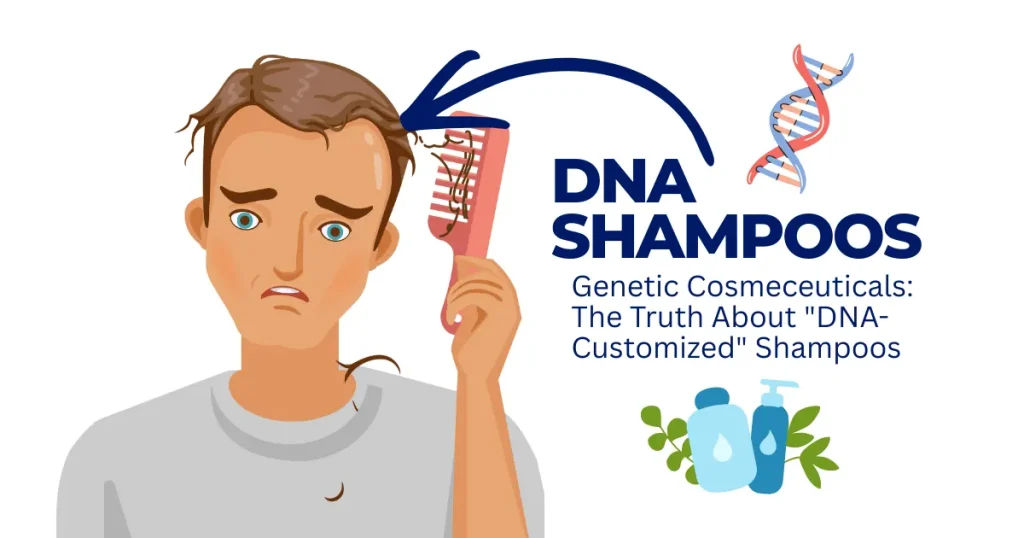
To understand why “DNA-customized” shampoos are more hype than help, we have to look at how hair loss works at a cellular level.
1. DNA as a Blueprint, Not a Switch
Your DNA is like a library of blueprints. If your genetic report shows a high sensitivity to Dihydrotestosterone (DHT)—the hormone primarily responsible for androgenetic alopecia—it means your hair follicles are “programmed” to shrink over time.
2. The Delivery Problem
Shampoo is a “rinse-off” product. It stays on the scalp for 30 seconds to two minutes before being washed away. For a treatment to actually “edit” or significantly influence the behavior of a hair follicle, it must penetrate deep into the dermal papilla.
The Reality Check: There is currently no scientific evidence that a topical shampoo can “silence” or “edit” the genes responsible for hair thinning. Genetic expression is a complex internal process that requires more than a customized surfactant.
What DNA Tests Can Actually Do For DNA Shampoo
Don’t get me wrong—DNA testing for hair loss is a fantastic tool. In 2026, these tests have become incredibly accurate. A genetic screening can:
- Identify your risk level for early-onset thinning.
- Determine if you are a “non-responder” to specific treatments like standard Minoxidil.
- Help your doctor decide if you need systemic (oral) treatments versus topical ones.
The test is the map, but the shampoo being sold alongside it is often just an overpriced passenger.
Don’t Waste Your Money: The “Genetic” Marketing Trap
Many companies use the results of your DNA test to suggest ingredients that are already widely available. If your test shows inflammation, they give you a “custom” tea tree oil blend. If it shows DHT sensitivity, they add saw palmetto.
While these ingredients are fine, calling them “DNA-customized” allows brands to charge a 400% markup on ingredients you could find in a high-quality, over-the-counter clinical scalp treatment.
What Actually Works in 2026? [DNA Shampoo]
If you want to protect your hair, stop looking for “genetic editing” in a soap bottle and stick to the clinical gold standards.
1. Minoxidil-Foam (5%)
Still a heavyweight in the industry. It works by increasing blood flow to the follicles and extending the growth (anagen) phase of the hair cycle.
2. The 2026 “Follicle-Stimulator” Peptides
The real breakthrough of this year hasn’t been DNA shampoos, but the newly approved biomimetic peptides. These lab-engineered proteins mimic the signals your body sends to grow hair. Unlike shampoo, these are usually applied as “leave-in” serums that stay on the scalp for 8–12 hours.
3. Low-Level Laser Therapy (LLLT)
Medical-grade caps that use specific wavelengths of light to energize mitochondria within the hair cells.
Final Verdict: Science Over Style
Personalized medicine is the future, but we aren’t at the point where a shampoo bottle can override your genetic code. Use DNA testing to understand your risks, but use clinically proven, FDA-cleared treatments to manage the results.
Health Disclaimer
This content is for informational purposes only and does not constitute medical advice. Always seek the advice of your physician or another qualified health provider with any questions you may have regarding a medical condition. Never disregard professional medical advice or delay in seeking it because of something you have read here. DrugsArea
Sources & References
- Journal of Clinical Dermatology: Genetic Markers in Alopecia
- International Society of Hair Restoration Surgery: 2026 Treatment Guidelines
- FDA Consumer Update: Understanding Personalized Cosmetics
People Also Ask
1. What exactly is a DNA-customized shampoo?
It is a hair care product formulated based on the results of a genetic test (usually a simple cheek swab). The lab analyzes specific genetic markers (SNPs) that influence your hair’s thickness, its ability to handle oxidative stress, and its predisposition to thinning. The idea is to move away from “all-in-one” drugstore bottles and toward a formula that targets your unique biological “weak spots.”
2. Does DNA hair testing actually work, or is it just a marketing gimmick?
The science of genetics is real, but the application in shampoo is a mix of both. Genetic tests can accurately identify if you have the MC1R gene (UV sensitivity) or the AR gene (hair loss risk). However, a shampoo is a “wash-off” product, meaning it has limited time to interact with your scalp. While the diagnosis is science-based, the effectiveness of the delivery method is where the debate lies.
3. Can a DNA-based shampoo really stop hair loss?
It depends on the cause. If your DNA shows a high risk for androgenetic alopecia, a customized shampoo might include ingredients like caffeine or saw palmetto to support scalp health. However, shampoo alone is rarely a cure for genetic balding. It is best viewed as a preventative tool or a supplement to clinical treatments like minoxidil or PRP therapy.
4. How do I provide my DNA for a customized shampoo?
The process is surprisingly low-tech for the user. Most brands send a home collection kit consisting of a sterile swab. You rub the inside of your cheek for about 30 seconds, pop the swab into a preservative tube, and mail it back to their lab. Within a few weeks, you receive a digital “Hair Report” and your bespoke bottle.
5. What specific genes do these hair tests look for?
Most reputable labs focus on four key areas:
- EDAR: Influences hair thickness and fiber diameter.
- MC1R: Predicts how easily your hair and scalp are damaged by the sun.
- SOD2: Measures how well your follicles fight off environmental pollution (oxidative stress).
- IL-6: Identifies a tendency toward scalp inflammation and sensitivity.
6. Is my genetic data safe with these beauty companies?
This is a major concern for many. Most companies claim to anonymize your sample, meaning your DNA is assigned a barcode and not your name. However, as an SEO and tech expert, I always recommend reading the fine print. Look for brands that explicitly state they do not sell data to third-party insurers or pharmaceutical companies.
7. How is a DNA shampoo different from a “regular” customized shampoo?
Standard customized shampoos (like Prose or Function of Beauty) usually rely on a lifestyle questionnaire—asking about your hair type, zip code (weather), and fragrance preferences. DNA shampoos skip the guesswork by looking at your “blueprint.” They don’t care if you think your hair is dry; they look at whether your genes are programmed to maintain a healthy moisture barrier.
8. Why are DNA-customized shampoos so much more expensive?
You aren’t just paying for the soap; you’re paying for lab labor. The cost covers the DNA extraction, the bioinformatic analysis by geneticists, and the small-batch manufacturing required to mix a one-of-a-kind formula. Prices typically range from $50 to over $150 for the initial kit and bottle.
9. Will I see results immediately?
Probably not. Because these products often target the follicle health and growth cycle rather than just coating the hair in silicone, it takes time. Most experts suggest using the formula for at least 90 days (the average length of a hair growth phase) to see a visible difference in texture or scalp health.
10. Do I need to re-test my DNA every time I order a new bottle?
No. Your DNA never changes, so a one-time test is all you need for life. However, some brands offer “Epigenetic” updates—adjusting your formula as you age or move to a different climate, as environmental factors can change how your genes “express” themselves over time.
Would you like me to create a comparison table of the top 3 DNA-shampoo brands currently on the market to help with your research?