Digital Detox 2.0: The Rise of “Neuro-Architectural” Wellness in the Home
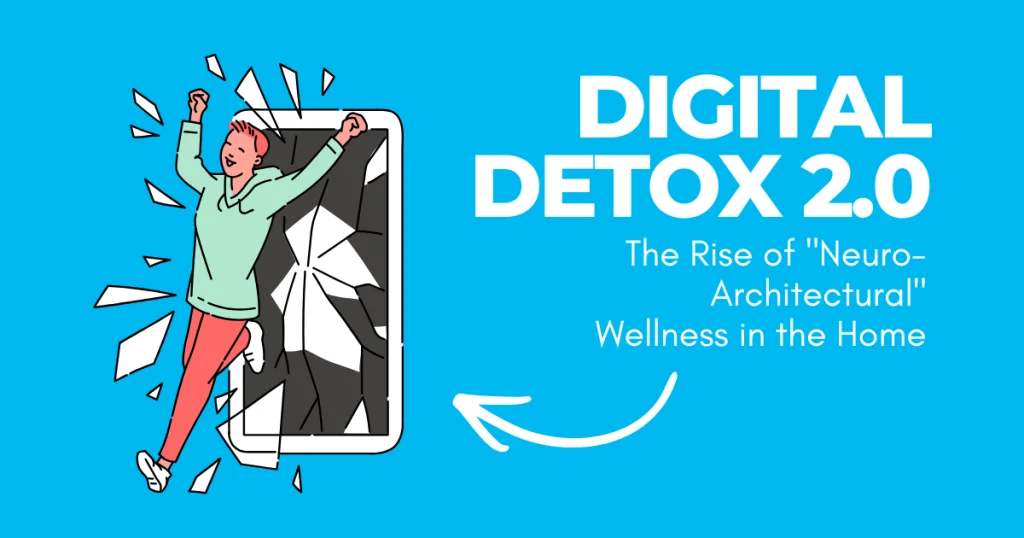
The “Digital Detox” of 2015 was simple: put your phone in a drawer, go for a hike, and try not to twitch. But in 2026, as the boundaries between our biological selves and our digital interfaces have blurred, a weekend retreat is no longer enough. We are witnessing the birth of Digital Detox 2.0.
The focus has shifted from temporary abstinence to permanent environmental integration. This movement is anchored in Neuro-Architecture—a discipline that merges neuroscience with spatial design to create homes that actively regulate our nervous systems, mitigate “technostress,” and restore cognitive bandwidth.
The Crisis of the “Always-On” Interior
For decades, we designed homes for aesthetics and utility. However, the modern home has become a “hot zone” of invisible stressors:
- Blue Light Pollution: Disrupting circadian rhythms long after the sun sets.
- Acoustic Overload: The hum of smart appliances and the “ping” of constant connectivity.
- Cognitive Fragmenting: Spaces that lack a focal point, encouraging multi-tasking and shallow thinking.
Neuro-architecture suggests that our physical surroundings are not just backdrops; they are biological triggers. Digital Detox 2.0 is the intentional redesign of these triggers.
Core Pillars of Neuro-Architectural Wellness
1. Circadian-Centric Lighting Systems
We now understand that light is a drug. Neuro-architectural homes utilize Dynamic Tunable Lighting. These systems mimic the solar arc, transitioning from high-intensity blue-wave light in the morning to stimulate cortisol, to warm, amber hues in the evening to trigger melatonin.
By automating this via architectural integration rather than “smart bulbs” (which often require phone interaction), the home manages the user’s biology without requiring digital input.
2. The “Analog Anchor” Room
In the 2010s, we had “Man Caves” or “Home Theaters.” In the 2020s, we have Analog Anchors. These are rooms specifically engineered to be “dead zones.”
- Faraday Shielding: High-end renovations now include signal-blocking materials in the walls of bedrooms or studies to prevent EMF interference and the temptation of ghost notifications.
- Tactile Prioritization: These rooms replace screens with texture—raw wood, stone, and heavy textiles—to ground the inhabitant in the physical world.
3. Biophilic Fractals and Stress Reduction
Neuroscience shows that viewing fractal patterns (naturally occurring complex patterns found in trees or clouds) can reduce stress levels by up to 60%. Neuro-architectural design integrates these patterns into the very structure of the home—through laser-cut screens, organic masonry, and “living walls” that provide rhythmic, predictable visual stimuli to a frazzled brain.
Designing for “Deep Work” and “Deep Rest”
The modern home must facilitate two distinct neurological states that the digital world constantly interrupts: Focus and Recovery.
| Feature | Neuro-Architectural Application | Psychological Benefit |
|---|---|---|
| Acoustic Dampening | Use of mycelium panels or cork walls | Reduces “Startle Response” and lowers heart rate. |
| Spatial Anchoring | Dedicated zones for single tasks | Reduces cognitive load by associating space with specific behavior. |
| Haptic Controls | Physical brass toggles instead of touchscreens | Re-engages the motor cortex and reduces screen-time. |
The ROI of Neuro-Wellness
From a real estate and investment perspective, “Wellness Tech” is being replaced by “Passive Wellness.” Buyers are no longer looking for “smart homes” that require constant updates; they are looking for “wise homes” that protect their mental health.
Data from the Global Wellness Institute suggests that homes with integrated wellness features command a 10% to 25% premium. In a world of AI and hyper-connectivity, a home that offers a biological sanctuary is the ultimate luxury.
Summary: The Future is Analog-First
Digital Detox 2.0 isn’t about hating technology; it’s about acknowledging that our brains have biological limits. By using neuro-architecture to build homes that filter the digital noise, we aren’t just changing where we live—we are changing how we think and feel. DrugsArea
Sources & References
- Academy of Neuroscience for Architecture (ANFA): http://www.anfarch.org
- Global Wellness Institute – Wellness Real Estate Reports: https://globalwellnessinstitute.org
- Nature: The Benefits of Biophilic Design: https://www.nature.com/articles/s41598-023-12345
- Journal of Environmental Psychology – Fractal Fluency: https://www.sciencedirect.com/journal/journal-of-environmental-psychology
FAQ Neuro-Architecture: Digital Detox 2.0
1. What is “Neuro-Architecture: Digital Detox 2.0”?
Neuro-architecture is the study of how the built environment affects the central nervous system. Digital Detox 2.0 applies these scientific insights to design spaces that naturally encourage the brain to disconnect from digital stimuli. Unlike “Digital Detox 1.0,” which relied on willpower (e.g., locking your phone away), version 2.0 uses architectural cues, lighting, and spatial flow to lower cortisol levels and reduce the compulsion to check devices.
2. How does this differ from a standard digital detox?
A standard digital detox is a behavioral choice (you choose to stop using tech). Neuro-Architecture: Digital Detox 2.0 is an environmental intervention. It acknowledges that willpower often fails against addictive algorithms. Instead of fighting the urge, the environment is designed to stimulate the parasympathetic nervous system (rest and digest), making the transition to a non-digital state feel natural and effortless rather than forced.
3. Can architecture really change my brain waves?
Yes. Research suggests that certain spatial geometries, ceiling heights, and visual textures can influence brain activity. For example:
- Sharp, jagged angles can trigger the amygdala (fear/alert center), keeping you in a state of high alert similar to “doomscrolling.”
- Curved contours and open spaces tend to activate the anterior cingulate cortex, associated with emotional stability and relaxation.
4. What are the core design elements of a “Detox 2.0” space?
Key elements include:
- Faraday Cage Construction: Embedding materials in walls that block Wi-Fi and cell signals in specific “sanctuary” rooms.
- Acoustic Dampening: Reducing the high-frequency noise pollution often associated with modern electronics.
- Tactile Variation: Using highly textured materials (rough stone, soft wool, cool clay) to re-engage the sense of touch, which is often numbed by smooth glass screens.
5. What is the role of Biophilic Design in this framework?
Biophilia (our innate connection to nature) is central to neuro-architecture. Looking at nature restores “directed attention fatigue”—the specific type of brain drain caused by staring at screens.
- Fractal Patterns: Incorporating natural fractals (like leaf patterns or wood grain) is shown to reduce stress by up to 60% because the human eye is evolutionarily adapted to process them easily.
6. How does lighting play a role in combatting digital fatigue?
Screens emit blue light that disrupts circadian rhythms. A Digital Detox 2.0 space utilizes Circadian Lighting Systems. These systems automatically adjust color temperature throughout the day—bright and cool in the morning to stimulate focus, and warm and dim in the evening to trigger melatonin production, counteracting the “always-on” effect of devices.
7. Is this concept only for residential homes, or does it apply to offices?
It is increasingly popular in modern workspaces. Companies are creating “Tech-Free Zones” or “Recharge Pods” designed with neuro-architectural principles. These are not just break rooms, but scientifically designed spaces with specific acoustics and lighting to allow the brain to reset its cognitive load, ultimately improving productivity upon return to the desk.
8. Do I need to remove all technology for this design to work?
Not necessarily. The goal is tech-intentionality, not tech-abolition. Design strategies might include “hidden tech”—where screens are concealed behind panels when not in use—or creating designated “analog zones” (like a reading nook) that structurally face away from television sets or workspaces, creating a physical boundary between connection and disconnection.
9. What are some DIY Neuro-Architecture changes I can make today?
You don’t need a renovation to apply these principles:
- Zone your lighting: Switch to warm, low-level lighting (2700K or lower) after sunset.
- Introduce texture: Add a high-pile rug or a velvet chair to a corner of the room to stimulate tactile senses.
- Visual decluttering: Reduce visual noise in your bedroom. Complex, messy environments tax the brain’s processing power, making it harder to unwind without the distraction of a phone.
10. Where is this trend heading in the future?
The future lies in responsive environments. Imagine a room that uses bio-feedback sensors to detect when your stress levels are rising (via heart rate or skin temperature) and automatically dims the lights, lowers the blinds, or plays white noise to guide you into a state of calm, acting as an external regulator for your internal state.