The Silent Strain of the Midnight Oil
As we observe American Heart Month this February 2026, the medical community is shifting its focus from just “what” we eat to “when” we live. For decades, we’ve known that night-shift workers face unique challenges. However, groundbreaking new data released this year has uncovered a “hidden” link that we can no longer afford to ignore. The Cardiac Stress
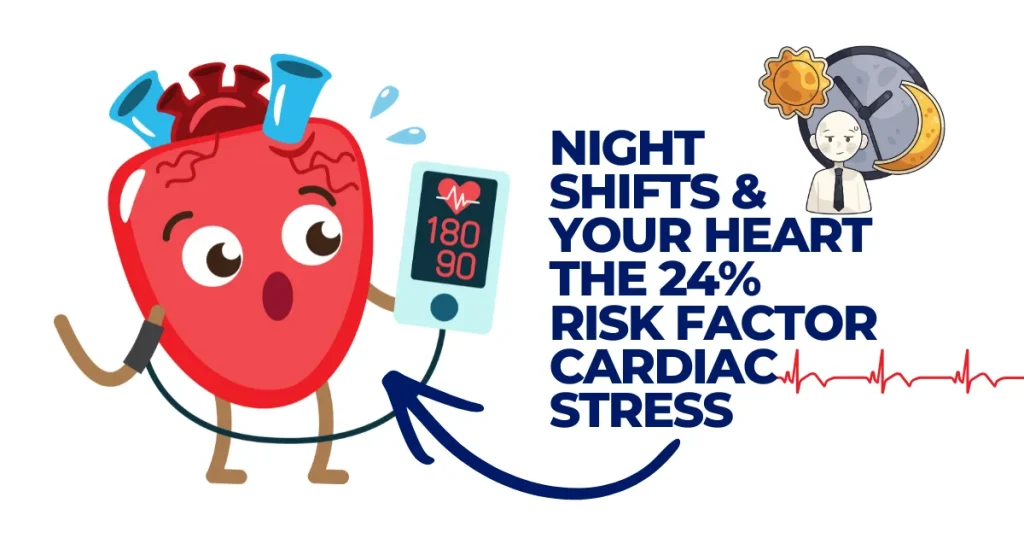
Recent longitudinal studies have quantified the toll of irregular hours: individuals working non-traditional shifts face a 24% increased risk of developing heart disease. As a health professional, I see the human faces behind these statistics every day. It isn’t just about being tired; it’s about a biological tug-of-war happening inside your chest. When you work while the world sleeps, you aren’t just fighting your alarm clock—you’re stressing your metabolic clock. Cardiac Stress
The Science: Why the “Metabolic Clock” Matters “Cardiac Stress”
Every cell in your heart has a tiny internal timer. This is part of your circadian rhythm. Under normal conditions, this rhythm tells your heart when to lower blood pressure and slow the heart rate to allow for tissue repair.
The 2026 Findings on Circadian Disruption
New research indicates that when sleep schedules are inconsistent, the heart never receives the signal to enter “repair mode.” Instead: Cardiac Stress
- Cortisol Levels Spike: Your body stays in a state of high alert, keeping blood pressure elevated.
- Insulin Sensitivity Drops: This stresses the arteries and increases inflammation.
- The 24% Gap: This specific percentage represents the cumulative damage caused by the heart attempting to function at peak capacity during its natural “low-power” phase.
The “Hidden” Link: Metabolic Stress
The danger isn’t merely the lack of sleep; it’s the timing of the stress. When you eat, move, and work against your natural light-dark cycle, your heart experiences “metabolic friction.” Imagine driving a car with the parking brake partially engaged; you can still move, but the engine—your heart—is wearing out much faster than it should.
Daily Action: The “Dark-Room Recovery” Protocol For Cardiac Stress
If your career requires irregular hours, you don’t have to accept heart disease as an inevitability. The most effective tool we have in 2026 to combat this 24% risk is a technique called Dark-Room Recovery.
To help your heart “reset” its rhythm despite the odd hours, you must trick your biology into thinking it is night.
How to Implement Dark-Room Recovery:
- Total Blackout: Use high-quality blackout curtains or a weighted sleep mask. Even a sliver of light hitting your skin can disrupt melatonin production and signal your heart to wake up.
- The “Cooling” Effect: Keep your room between 60-67°F (15-19°C). A drop in core body temperature is a biological trigger for cardiac rest.
- Digital Sunset: Turn off all screens 30 minutes before your “daytime” sleep. The blue light from phones is a direct “stress signal” to your metabolic clock.
Strategic Support for Shift Workers In Cardiac Stress
Beyond your sleep environment, consider these professional tips to mitigate cardiac stress:
| Strategy | Impact on Heart Health |
|---|---|
| Consistent Meal Windows | Reduces metabolic load on the heart during “off” hours. |
| Strategic Napping | A 20-minute power nap can lower blood pressure spikes. |
| Magnesium-Rich Foods | Supports heart muscle relaxation and better sleep quality. |
Final Thoughts from a Health Perspective For Cardiac Stress
Your heart is a rhythmic organ. It thrives on patterns. When your job breaks those patterns, you must be intentional about creating a “synthetic night” to allow for recovery. This American Heart Month, let’s move beyond basic advice and address the reality of the modern workforce.
Protecting your heart isn’t just about the gym; it’s about the quality of the darkness where you recover.
Health Disclaimer
The information provided in this article is for educational purposes only and is not intended as medical advice, diagnosis, or treatment. Always seek the advice of your physician or other qualified health provider with any questions you may have regarding a medical condition. Never disregard professional medical advice or delay in seeking it because of something you have read here. DrugsArea
Sources & References
- American Heart Association: Circadian Rhythms and Cardiovascular Health
- Journal of Clinical Sleep Medicine: 2026 Shift Work Meta-Analysis
- CDC: Heart Disease Prevention for Shift Workers
People Also Ask
1. Why does working night shifts increase the risk of heart disease?
It mostly comes down to circadian rhythm disruption. Your heart and vascular system have their own internal clocks that expect to “rest” at night. When you’re active, eating, and stressed during the night, it causes a mismatch between your internal biology and external behavior. This leads to chronic inflammation, higher blood pressure, and metabolic changes that strain the heart over time.
2. Does the “24% increased risk” apply to everyone who works nights?
Not necessarily. This figure is a statistical average from large-scale studies. The risk is typically higher for “rotating shift” workers (those who switch between days and nights) and those who have worked nights for more than five years. Factors like genetics, preexisting health conditions, and how well you manage your “off-time” habits play a huge role in your individual risk level.
3. How can I protect my heart if I have to work night shifts?
Focus on the “Big Three”: sleep hygiene, diet, and movement. Try to maintain a consistent sleep schedule even on your days off, avoid heavy/sugary meals during your shift to prevent insulin spikes, and keep up with regular cardiovascular exercise. Small wins, like wearing blue-light-blocking glasses on your drive home in the morning, can help protect your melatonin production.
4. What are the early warning signs of heart strain in shift workers?
Beyond the usual chest pain or shortness of breath, shift workers should watch for persistent fatigue that doesn’t go away after sleep, palpitations (feeling like your heart is racing), and a noticeable increase in blood pressure. Because night shifts can mask these symptoms as “just being tired,” it’s vital to get regular screenings.
5. Can a healthy diet offset the heart risks of night shifts?
It’s a powerful tool, but not a total “cure.” Digestion is naturally slower at night, so eating large, high-carb meals during a shift can lead to higher levels of fats and sugars in the blood. Experts recommend eating a “main meal” before your shift starts and sticking to light, protein-rich snacks during the night to keep your metabolism stable.
6. How many years of night shifts does it take to impact heart health?
Research suggests that the most significant cardiovascular risks begin to appear after 5 to 10 years of consistent shift work. However, some metabolic changes—like how your body handles glucose—can be seen much sooner. The good news? Studies show that for many people, the risk begins to decline significantly once they return to a standard day schedule.
7. Is “Permanent Night Shift” better for the heart than “Rotating Shifts”?
Generally, yes. The heart hates “social jetlag”—the constant flipping of the clock. Permanent nights allow your body to somewhat adapt to a new rhythm. Rotating shifts (switching from days to nights every few days) keep the body in a state of constant emergency, which keeps stress hormones like cortisol perpetually high.
8. What role does sleep apnea play in shift-related heart risk?
Shift workers are at a higher risk for sleep disorders, including insomnia and sleep apnea. Sleep apnea causes you to stop breathing briefly during sleep, which drastically drops oxygen levels and spikes blood pressure. This “double hit” of poor shift-work sleep and apnea is a major driver of heart disease and should be treated by a specialist.
9. Does caffeine make night shift heart risks worse?
In moderation, caffeine is a helpful tool for alertness. However, relying on it too late in your shift can ruin your “day-sleep” quality. If you’re constantly over-caffeinated, it can lead to sustained high blood pressure and heart rate. A good rule of thumb: stop the caffeine intake about 5 to 6 hours before you plan to head to bed.
10. Are there specific supplements that help shift workers’ hearts?
While no pill replaces sleep, some people find success with Melatonin to help reset their sleep-wake cycle, or Omega-3 fatty acids to combat the inflammation associated with shift work. Always talk to a doctor first, as the goal is to support your heart’s natural rhythm, not to over-stimulate or sedate it.