Alpibectir: The New Molecule “Re-arming” TB Antibiotics in 2026
A Breakthrough Moment in the Fight Against Superbugs
As a healthcare professional, I’ve seen firsthand the toll that Tuberculosis (TB) takes on patients. For years, the rise of “superbugs”—bacteria that have learned to outsmart our best medicines—has felt like a losing battle. But today, February 19, 2026, we have a reason to celebrate.
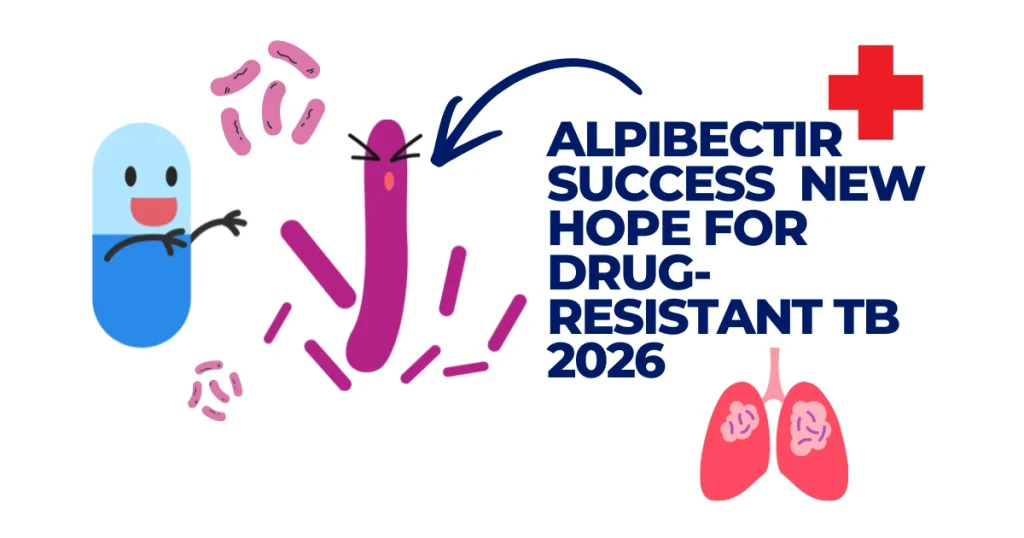
The New England Journal of Medicine (NEJM) has just published the results for a ground-breaking molecule called Alpibectir (BVL-GSK098). This isn’t just another antibiotic; it’s a “potentiator” that effectively “re-arms” our existing medical arsenal, making old drugs potent enough to kill even the most stubborn, drug-resistant strains of TB.
What is Alpibectir and how does it work?
Think of Alpibectir as a master locksmith. Many TB bacteria have “locked” themselves behind a wall of resistance, making standard antibiotics like Ethionamide (Eto) bounce right off.
Alpibectir works by targeting a specific part of the bacteria’s genetic code (the VirS transcriptional regulator). It essentially forces the bacteria to open a “back door” bioactivation pathway. This allows the antibiotic to enter and do its job. In simple terms: Alpibectir doesn’t kill the bacteria itself—it disables the bacteria’s armor so our existing antibiotics can finish the job.
Why is the NEJM publication today so important?
The Phase 2a trial results published today provide the “clinical proof of concept” we’ve been waiting for. The study, conducted in South Africa, showed that when Alpibectir is combined with Ethionamide (a combination known as AlpE), it kills TB bacteria just as effectively as the current first-line gold standard, Isoniazid.
This is a massive deal because about 10% of TB cases worldwide are now resistant to Isoniazid. Having a new, potent alternative that can step in and take its place is a literal lifesaver for millions.
Can this treatment reduce side effects?
One of the biggest hurdles in treating TB is the “pill burden” and the toxicity of high doses. Ethionamide is powerful, but at the high doses required to fight resistance, it causes severe nausea, vomiting, and liver stress.
Because Alpibectir makes the antibiotic so much more effective, we can slash the dose of Ethionamide by two-thirds. This “low-dose, high-impact” approach means patients feel better while they heal, making it much more likely they will finish their full course of treatment.
Is Alpibectir effective against “Extensively Drug-Resistant” (XDR) TB?
Yes. The 2026 data confirms that Alpibectir overcomes the specific mutations that make TB resistant to second-line drugs. By “potentiating” the medication, we are essentially turning a “weakened” drug back into a high-powered weapon against MDR (Multi-Drug Resistant) and XDR strains.
When will this be available for general use?
While today’s NEJM results are a major milestone, we are currently in the Phase 2 study phase. The European Medicines Agency (EMA) and the FDA have already granted it “Orphan Drug” status, which fast-tracks the approval process. Larger Phase 3 trials are expected to move quickly throughout 2026, with the goal of making Alpibectir a standard part of global TB regimens within the next 18 to 24 months.
The Health Professional’s Take: Why This Matters for You
For patients on long-term antibiotic courses, the fear of “treatment failure” is real. The success of BVL-GSK098 signals a shift in how we treat infections. Instead of just trying to find stronger poisons, we are finding smarter ways to make our current medicines work better.
This “potentiator” technology is the future of medicine. It allows for safer, lower doses and gives us a way to stay one step ahead of the bacteria.
Health Disclaimer
This information is based on the latest clinical trial results published in 2026 and is intended for educational purposes only. If you or a loved one are undergoing treatment for Tuberculosis, do not change your medication regimen without consulting your infectious disease specialist or primary care physician. DrugsArea
Sources & References
- New England Journal of Medicine (NEJM) – Alpibectir Phase 2a Results,
- BioVersys AG Official Press Release – Feb 19, 2026,
- GSK Global Health R&D Report 2026,
- World Health Organization (WHO) TB Resistance Tracker.
People Also Ask
1. What is Alpibectir and how does it treat Tuberculosis?
Alpibectir (also known as BVL-GSK098) is a “potentiator” molecule, not a standalone antibiotic. It works by targeting the bacterial transcriptional regulators in Mycobacterium tuberculosis. Essentially, it “switches on” a hidden gateway in the bacteria that allows existing antibiotics like Ethionamide to enter and kill the germ much more effectively than they could on their own.
2. Why is Alpibectir being called a “re-armer” for antibiotics?
It’s called a “re-armer” because it breathes new life into Ethionamide, a 50-year-old drug that has lost its edge due to antibiotic resistance. Alpibectir bypasses the resistance mechanisms the TB bacteria have built up, making the bacteria “vulnerable” again. It effectively takes an old, weakened weapon and makes it sharp enough for the modern fight against TB.
3. Can Alpibectir cure drug-resistant TB (MDR-TB)?
Yes, that is its primary mission. Because Alpibectir uses a “backdoor” (the MymA pathway) to activate medicine inside the bacteria, it can kill TB strains that have become resistant to standard treatments. In 2026, clinical data showed it is particularly effective against Isoniazid-resistant and multi-drug resistant (MDR) strains.
4. Does Alpibectir reduce the side effects of TB treatment?
Significantly. One of the biggest hurdles with the old drug, Ethionamide, was that patients had to take massive doses to see results, leading to severe nausea and liver toxicity. Because Alpibectir makes the antibiotic so much more potent, doctors can cut the antibiotic dose by up to 75%, dramatically reducing the “pill burden” and toxic side effects for the patient.
5. What are the results of the 2026 Alpibectir clinical trials?
In February 2026, breakthrough Phase 2a results published in the New England Journal of Medicine showed that the Alpibectir-Ethionamide (AlpE) combination was safe, well-tolerated, and highly effective. The study proved it could kill TB bacteria in the lungs just as fast as traditional first-line drugs, but with a much lower risk of resistance.
6. Is Alpibectir available for patients right now?
As of early 2026, Alpibectir is in advanced Phase 2 clinical trials (such as the UNITE4TB program). While it has received “Orphan Drug Designation” from the FDA and EMA—which fast-tracks its development—it is currently available only to patients enrolled in clinical studies. Widespread pharmacy availability is expected following Phase 3 trials.
7. How is Alpibectir taken—pill or injection?
Alpibectir is designed as an oral medication (pill). This is a major win for global health, as it allows patients to be treated at home rather than requiring hospital stays for painful daily injections, which were previously common for drug-resistant TB cases.
8. Can Alpibectir be used to treat TB Meningitis?
Yes. One of the most exciting aspects of the 2026 rollout is its potential for TB Meningitis, a deadly form of the disease that affects the brain. Early studies show that Alpibectir and Ethionamide can cross the blood-brain barrier effectively, offering hope for a condition that currently has very few successful treatment options.
9. Who developed Alpibectir?
The molecule is the result of a massive public-private partnership between the Swiss biotech BioVersys, the pharmaceutical giant GSK, the University of Lille, and the Pasteur Institute of Lille. It was funded largely by European research grants (IMI and EDCTP) aimed at stopping the global antimicrobial resistance (AMR) crisis.
10. Will Alpibectir replace current first-line TB treatments?
Researchers are currently testing Alpibectir as a replacement for Isoniazid, which is a cornerstone of current TB therapy. Since roughly 10% of new TB cases are already resistant to Isoniazid, Alpibectir could potentially become part of a new “standard” 4-drug cocktail that works for almost everyone, regardless of their resistance profile.