National Kidney Month 2026: The Secret Connection Between Salt, Blood Pressure, and Your Kidneys
The Silent Master of Your Blood Pressure
As a pharmacist, I spend a lot of time behind the counter teaching clients how to take blood pressure drugs like amlodipine and lisinopril. Your kidneys are like the “thermostat” for your blood pressure. This is what I hope I could tell every patient before they ever need a medicine:
People usually think of the heart when they hear the term “high blood pressure.” But in the medical field, we know that the kidneys are actually in charge. During National Kidney Month in March, the worldwide health community is raising attention to an important but frequently overlooked link: how taking care of your kidneys now can help you avoid “untreatable” high blood pressure in your 50s and 60s.
How the “Hidden” Loop’s Kidneys Keep the Pressure Under Control
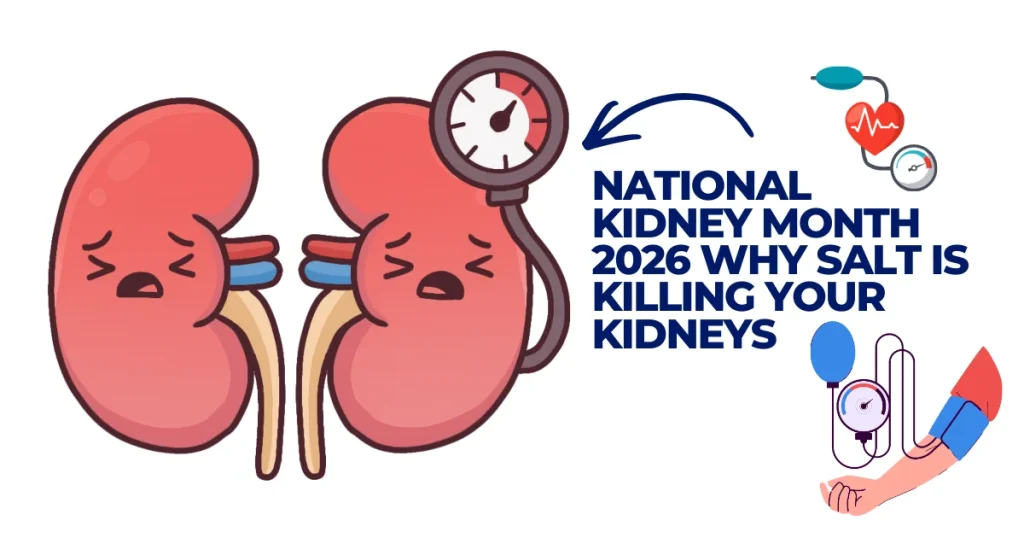
Your kidneys do a lot more than just create pee. They act like a high-tech filter that maintains the fluids in your body in the right amounts. The Renin-Angiotensin-Aldosterone mechanism (RAAS) is a complicated system that signals your blood vessels when to relax and when to tighten.
Your kidneys can readily get rid of waste and extra fluid when they are healthy. When they are agitated, which is generally because they have too much salt or high blood sugar, they have a hard time getting rid of the additional water. This additional fluid lingers in your blood and puts a lot of strain on the walls of your blood vessels. Over time, this high pressure affects the nephrons, which are the kidneys’ fragile filters. High blood pressure harms the kidneys, which makes blood pressure go up, which hurts the kidneys again.
The WHO’s objective for 2026 is the <5g Salt Challenge.
By 2026, the globe Health Organization (WHO) wants everyone in the globe to eat less than 5 grams of salt per day. It’s around one teaspoon of salt for every meal you eat during the day.
People now consume about twice as much as they used to. You don’t receive most of this from the salt shaker on your table; you get it from “stealth” meals like bread, processed meats, and even canned veggies. Your kidneys hold onto water to dilute the salt when you ingest a lot of sodium. This makes your blood pressure go up right away. Getting to that goal of fewer than 5g will provide your kidneys a much-needed respite. This enables them naturally control your blood pressure without giving you a lot of medicine.
What you do now will have an effect on your 50s and 60s.
A lot of the time, people in their late 50s come to the pharmacy with “resistant hypertension.” This is high blood pressure that regular medicines don’t work well for. Most of the time, the culprit is years of concealed stress on the kidneys.
The best approach to prevent having to take five different blood pressure medications later in life is to take care of your kidneys in your 30s and 40s. Kidney damage is frequently permanent; if those filters break, they can’t regenerate back. Avoiding dialysis is one way to stop renal failure. Another choice is to live a good life to protect your heart and brain from the bad effects of high blood pressure.
Pharmacists’ Advice on How to Keep Your Kidneys Healthy
Don’t only look at the calories; additionally check the “Sodium” label. Look at how many milligrams of sodium there are. You should pick foods that have fewer than 140 mg per serving.
The “Rinse” Rule says that you should rinse canned beans or veggies in cold water for 30 seconds. This approach can get rid of as much as 40% of the extra sodium.
Drink Water: Water helps the kidneys get rid of waste. Your kidneys have to work twice as hard to concentrate your pee when you’re dehydrated. This can make them very stressed out and cause stones to develop.
Look at your medications: use cautious when you use over-the-counter drugs like ibuprofen or naproxen. In fact, taking them every day might harm the kidneys over time by cutting off their blood supply
Health Disclaimer
I am a pharmacist, but I am not your pharmacist or doctor. This information is intended for educational purposes and should not replace professional medical diagnosis or treatment. Always consult with your healthcare provider before making significant changes to your diet or medication regimen, especially if you have pre-existing kidney conditions. DrugsArea
Sources & References
- World Health Organization – Sodium Reduction 2026,
- National Kidney Foundation – Blood Pressure Connection,
- CDC – Chronic Kidney Disease Basics,
- International Society of Nephrology