The “CARMA” Revolution: Engineering Immune Cells to Cross the Brain Barrier
A Big Win Against Brain Metastases
As a medical professional, I see a lot of pain that comes from lung cancer moving to the brain. It is one of the hardest problems in oncology. The blood-brain barrier (BBB) is a natural defence system in our bodies that has been a double-edged sword for a long time. It stops 98% of cancer drugs that may save lives and keeps toxins out.
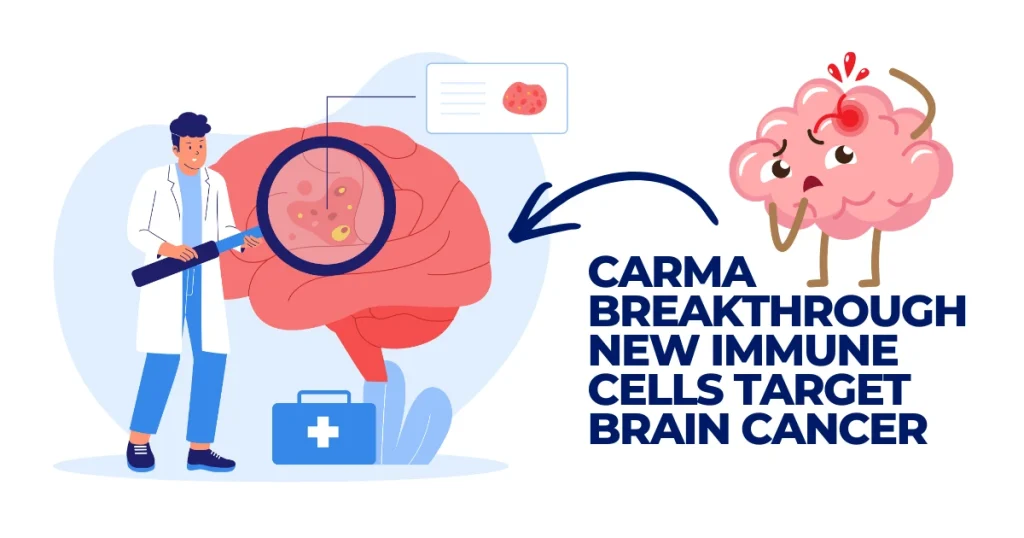
But a new discovery from Wake Forest University School of Medicine has changed the course of events as of March 2, 2026. Researchers have produced a “Trojan Horse” called CAR-Macrophages, or CARMA for short, to cure cancer. These are biological hunters that can go over the barrier that is not allowed and kill tumours from the inside. They are not simply cells.
Science and the “Trojan Horse”
Traditional therapies like CAR-T cells have worked very well on blood cancers, but they may have trouble getting through the dense, protective environment of a brain tumour. At this moment, the Wake Forest team chose to do things differently. Instead of T-cells, they used macrophages.
Macrophages are the immune system’s “Pac-Man” cells.
It’s important that they already know how to get beyond the blood-brain barrier. Their job is to go to any region of the body and get rid of garbage and fight disease.
By “armouring” these cells with a Chimeric Antigen Receptor (CAR), scientists have given these natural travellers a weapon and a GPS. In this study, which was published today in Nature Biomedical Engineering, the CARMA cells were trained to find mesothelin, a protein that is often seen on lung cancer cells that have migrated to the brain.
How CARMA Changes the Battleground
This discovery is not just remarkable because of the direct attack. Almost one in three lung cancer patients have brain metastases, which make the immune system “cold,” so the body basically gives up.
The CARMA revolution has two parts:
Direct Destruction: The modified macrophages find the cancer cells and “eat” them through a process called phagocytosis.
Immune Reboot: By releasing signalling molecules like TNF-α, these cells “wake up” the immune system around them. They flick a switch that turns a “cold” tumour into a “hot” one that the body can fight against on its own.
Why This Matters Right Now
Radiation and surgery were the only ways to treat brain metastases until now. These activities are often “defensive,” even when they are helpful. CARMA is an attack that changes everything. This procedure significantly reduced tumour size and enhanced survival rates in preclinical mice, while presenting a far lower risk of injury compared to previous experimental methods.
Dr. Shih-Ying Wu, the main researcher, said that these cells “naturally know how to cross into the brain.” We are now using the body’s own biology to tackle a problem that synthetic chemistry couldn’t fix just by giving them the right instructions.
Looking forward to clinical trials
Even though we’re celebrating this “landmark study” today, the next step is to go from the lab to real people. The Wake Forest team is already working on early-phase clinical testing. For the millions of families affected by metastatic lung cancer, this means a new age of hope in which cancer cells can no longer hide in the brain.
Health Disclaimer
This article is for informational and educational purposes only. It is based on recent preclinical research findings and does not constitute medical advice or a guarantee of treatment availability. Patients should consult with their oncology team to discuss current FDA-approved treatment options and eligibility for upcoming clinical trials. DrugsArea
Sources & References
- Wake Forest University Newsroom – CARMA Study,
- Nature Biomedical Engineering – CAR Macrophages,
- American Lung Association – Brain Metastasis Guide,
- National Institutes of Health – Immunotherapy Advances