Muscle as a Metabolic Organ: Why Sarcopenia is the New Longevity Marker
The Transition from “Thin” to “Resilient” in 2026.
The weight on the scale was the focus of the fitness industry’s obsession for decades. “Losing weight” was the ultimate health aim, we were taught. However, the medical community has experienced a significant change in viewpoint as 2026 progresses. We are now focusing on the quality of our tissue rather than the scale.
I’m here to inform you, as a health practitioner, that muscle isn’t only for bodybuilders. Skeletal muscle is now categorized as a metabolic organ in contemporary medicine. It is the main factor that affects how well you age, controls blood sugar, and powers your metabolism. Sarcopenia is the new adversary of lifespan, not only body fat.
Why Does Sarcopenia Matter and What Is It?
The clinical word for the age-related decrease of strength and muscular mass is sarcopenia. We used to believe that this was a normal aspect of aging, something that made you somewhat “frail” in your seventies.
The data in 2026 reveals a reality that is far more pressing. Insulin resistance, chronic inflammation, and metabolic inflexibility are now directly associated with sarcopenia. Your body’s main “sponge” for glucose is lost as you lose muscle. A decline in metabolic health results when you don’t have enough muscle to absorb the sugar from your food, which remains in your system.
Muscle: The Metabolic Buffer in Your Body
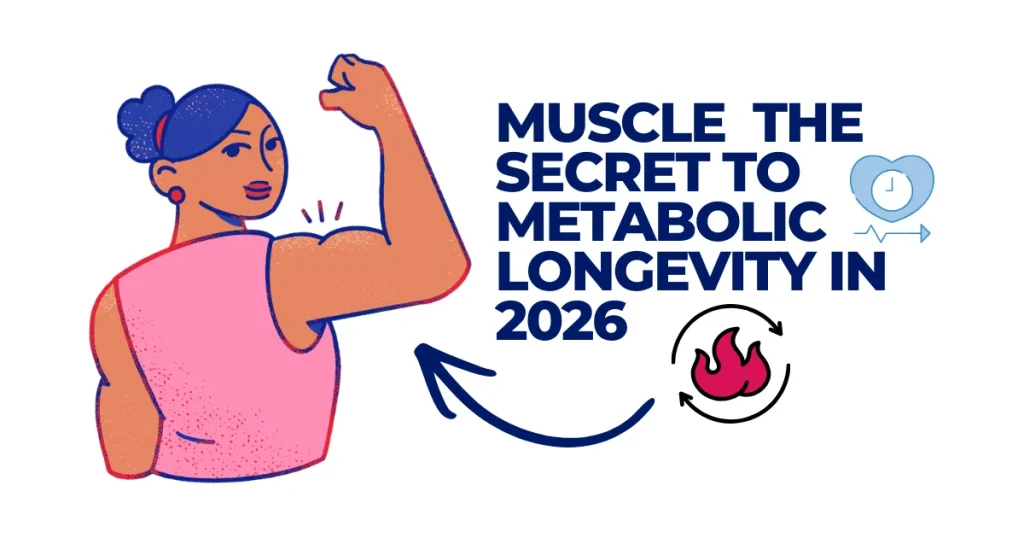
Consider your muscles to be a buffer for metabolism.
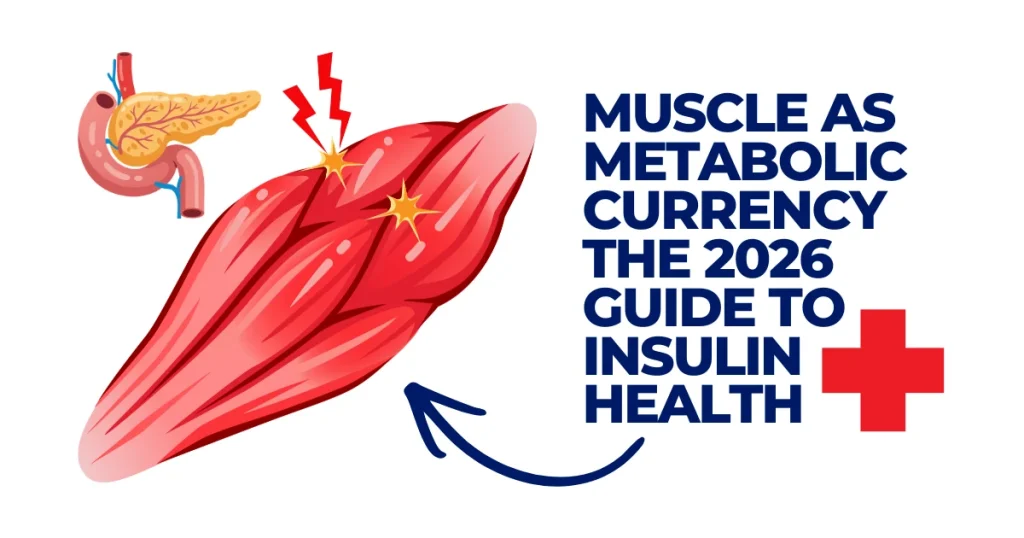
Your body converts carbohydrates into glucose each time you eat them. About 80% of the glucose must be removed from your circulation by your muscles.
Your body must produce more insulin to control that sugar if your “muscle tank” is tiny or inactive. This wears down your system over time. Putting muscle bulk first not only makes you look better in a t-shirt, but it also creates a biological barrier that protects you from cardiovascular disease and Type 2 diabetes. We refer to this as metabolic resilience.
Growing Interest in “Resistance Snacking”
One of 2026’s most intriguing fitness trends is the shift from demanding, one-hour workouts to “Resistance Snacking.” We’ve discovered that brief, frequent bursts of muscular stimulation are the most efficient means of preserving metabolic health. Your metabolism can be saved without a gym subscription. All you need is ten minutes of deliberate movement.
while on the phone, wall-sits.
carrying bulky goods by hand rather than with a trolley.
While the coffee is brewing, perform bodyweight squats.
Try doing push-ups on the kitchen counter.
These “snacks” instruct your muscles to remain alert and maintain the activity of those glucose transporters. We handle these motions as if they were daily prescriptions in 2026.
Why Strength Is the Foundation of Longevity
Living a long life is only one aspect of longevity; another is Healthspan, or the number of years you are able to move around and be independent.
Myokines are signaling chemicals produced by skeletal muscle. Through your circulation, these “hope molecules” communicate with your immune system, liver, and brain. They enhance cognitive performance and lessen inflammation. “Muscle is a Metabolic Organ,” and we mean it literally—it’s an internal pharmacy that creates the chemicals you need to stay youthful.
The 2026 Bottom Line
In this new age, if you want to safeguard your health, you should quit aiming for “skinny” and instead pursue “strong.” The finest investment you can make for your future self is to maintain your muscular mass. It is useful, fundamental, and—above all—under your control.
Health Disclaimer
This information is provided for educational purposes only and is not intended as medical advice. Always consult with a qualified healthcare professional before beginning a new exercise regimen or making significant changes to your physical activity, especially if you have underlying health conditions or are over the age of 50. DrugsArea
Sources & References
- Journal of Cachexia, Sarcopenia and Muscle,
- The Lancet: Longevity and Metabolic Health,
- Harvard Health: The Power of Resistance Training,
- Mayo Clinic: Sarcopenia Prevention