Medication Alert: The 2026 “Particulate” Ibuprofen Recall
Safety First: Why Your Medicine Cabinet Needs a Quick Audit Today
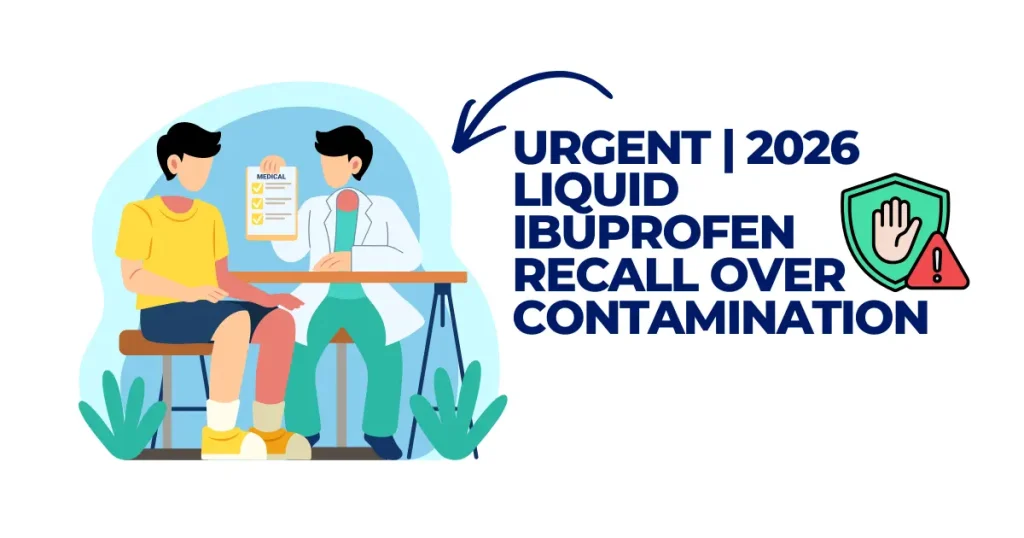
As a healthcare professional, my priority is always your family’s safety. While ibuprofen is a staple in most homes for fever and pain, a recent safety notice for 2026 has flagged a specific issue that requires your immediate attention. We are seeing a voluntary recall of certain liquid Ibuprofen batches due to “micro-particulate” contamination.
In plain English? Some bottles have been found to contain tiny, microscopic specks or “floating particles” that shouldn’t be there. While this might sound minor, any foreign material in a liquid medication can change how the drug works or, in some cases, cause an adverse reaction.
How do I identify the recalled Ibuprofen?
You don’t need to be a scientist to check your supply. Grab your bottle of liquid Ibuprofen (especially infant or children’s suspensions) and look at the back or side label for the Expiration Date.
- The Danger Zone: Check for bottles with expiration dates between September 2026 and December 2026.
- The Visual Test: Hold the bottle up to a bright light. If the liquid looks cloudy, has clumps, or you see tiny floating specks (even if they are the size of dust), do not use it.
What exactly are “micro-particulates”?
Micro-particulates are tiny pieces of solid matter that have accidentally entered the liquid during the manufacturing or bottling process. In the 2026 recall, these are often “precipitates”—meaning the medicine itself has started to crystallize or bind to foreign particles.
When you swallow these, they can irritate the lining of the throat or stomach. More importantly, if the particles are actually the active medicine “clumping” together, it means the rest of the liquid might not have enough medicine to actually help your fever or pain.
What should I do if I have a recalled bottle?
If your bottle matches the 2026 expiration dates or fails the visual “speck” test:
- Stop Use Immediately: Do not give another dose, even if the symptoms seem urgent.
- Do Not Trash It Yet: Don’t just pour it down the sink (which can harm the environment).
- The Pharmacy Exchange: Take the bottle back to the pharmacy where you bought it. Most retailers in 2026 are prepared to offer a full refund or a safe replacement immediately.
What are the risks if my child already took some?
First, take a deep breath. Most “Class II” recalls (which this typically falls under) mean the risk of a serious, life-threatening reaction is low. However, you should watch for:
- Unusual stomach upset or nausea.
- A “gritty” feeling in the mouth or throat.
- The fever not coming down (because the medicine wasn’t mixed correctly due to the clumps).
If you notice any of these, contact your pediatrician or a pharmacist right away.
Are all brands of Ibuprofen affected?
Not necessarily. Recalls are usually limited to specific manufacturing plants. However, in 2026, many “store brands” (generic versions found at big-box retailers) are produced in the same facilities. This is why checking the expiration date is more reliable than just looking at the brand name.
The Professional “Checklist” for 2026
| Action Item | What to Look For |
|---|---|
| Step 1: Date | Sept 2026 – Dec 2026 |
| Step 2: Clarity | Is it cloudy or clear? |
| Step 3: Texture | Are there “floating specks” or grit? |
| Step 4: Resolve | Return to pharmacy for a safe batch. |
Why “Pharmacovigilance” Matters
This recall is a result of Pharmacovigilance—the science of monitoring the safety of medicines after they hit the shelves. It’s a sign that the safety systems are working. When a company or the FDA spots a trend of “cloudy liquid,” they act fast to protect you.
As we move through 2026, staying informed about these updates is the best way to keep your “home pharmacy” safe.
Health Disclaimer
This article is for educational and informational purposes only. It is not a substitute for professional medical advice, diagnosis, or treatment. If you believe you or your child have had an adverse reaction to a medication, seek medical attention immediately. Always consult with a pharmacist or healthcare provider regarding specific medication batches. DrugsArea
Sources & References
- FDA – Recent Drug Recalls & Safety Alerts,
- MHRAs Safety Roundup 2026,
- Health Canada: Ibuprofen Crystallization Reports,
- Pharmacopoeia Safety Data Sheets
People Also Ask
1. What does “particulate matter” mean in the 2026 Ibuprofen recall?
Particulate matter refers to tiny, unintended foreign particles found inside the medication. In the 2026 recall, these are typically microscopic fragments—such as plastic, silicone, or metal—that accidentally entered the production line during the manufacturing or packaging process. While they may not be visible to the naked eye, they shouldn’t be there.
2. Which brands of Ibuprofen are affected by the 2026 recall?
The recall primarily affects specific batches of generic and store-brand Ibuprofen (including certain lots from major retailers like Walmart, Amazon, and CVS) as well as specific lots of Ibucalm and Aspar Pharmaceuticals products. It is important to check your specific NDC (National Drug Code) and Lot Number, as not all bottles from these brands are unsafe.
3. How can I check if my bottle of Ibuprofen is part of the recall?
Flip your bottle to the back or side label and look for the Lot Number and Expiration Date. Cross-reference these with the official 2026 recall list on the FDA or MHRA website. If your lot number (e.g., those expiring in mid-to-late 2026) matches the list, stop using the product immediately.
4. What are the health risks of taking Ibuprofen with particulates?
For most people taking oral tablets, the risk is considered low, but it can cause gastrointestinal irritation or allergic reactions. The risk is significantly higher for injectable Ibuprofen, where particulates can block blood vessels, cause inflammation, or lead to serious organ damage. If you’ve taken a recalled oral dose, monitor for unusual stomach pain or throat irritation.
5. Should I throw away my recalled Ibuprofen or return it?
Do not just toss it in the household trash where pets or children might find it. Most pharmacies and retailers involved in the 2026 rollout are offering full refunds. You should return the bottle to the place of purchase or follow the manufacturer’s specific disposal instructions provided in the recall notice.
6. Can I still take Ibuprofen that isn’t on the recall list?
Yes. The 2026 recall is “batch-specific,” meaning the issue was isolated to certain manufacturing runs. If your bottle’s lot number is not on the official list, it was produced under different conditions and is considered safe for use according to standard label directions.
7. Is the 2026 Ibuprofen recall related to “cloudy” liquid gels?
While some recent 2025/2026 alerts involved “cloudy” liquid gels (often due to impurities or storage issues), the “particulate” recall specifically refers to solid foreign matter. However, both indicate a quality failure; if your liquid gels look hazy or contain visible floating specks, you should consult a pharmacist before taking them.
8. What should I do if I already took the recalled medication?
Don’t panic. For the 2026 oral tablet recall, adverse events have been rare. However, you should contact your healthcare provider if you experience any new or unusual symptoms. Save the bottle and lot information so you can report the incident to the FDA MedWatch program or your local health authority.
9. Why are so many generic drugs being recalled in 2026?
The increase in recalls is actually a sign of better surveillance. In 2026, many manufacturers implemented new “Smart-Label” and high-resolution scanning tech on assembly lines. This has made it easier to detect microscopic defects that might have gone unnoticed in previous years, leading to more “precautionary” recalls to ensure patient safety.
10. Where can I find the most up-to-date list of recalled Lot Numbers?
The most reliable source is the FDA’s Recalls and Safety Alerts database (or the MHRA in the UK). Many pharmacies also send direct alerts to customers who purchased affected lots using their loyalty cards or prescription records.