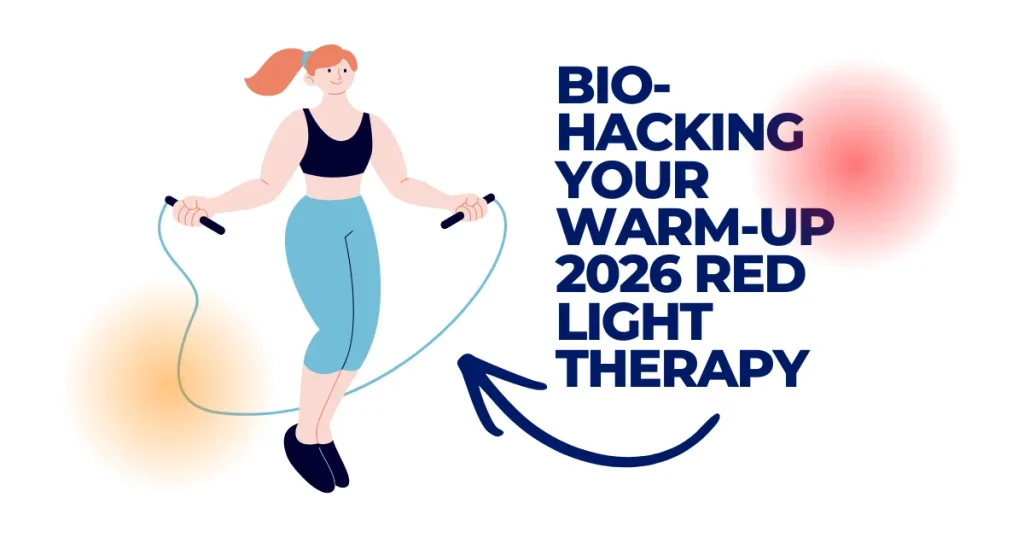
“Bio-Hacking” Your Warm-Up | Why Red Light Therapy is the 2026 Gym Essential
The New Pre-Workout Ritual: Light Before Lift [ Red Light Therapy ]
As we move through 2026, the fitness landscape has shifted. We’ve moved past the era of just “grinding harder” and entered the era of training smarter. If you’ve stepped into a high-end performance center or even a well-equipped home gym lately, you’ve likely seen a crimson glow emanating from the warm-up area.
This isn’t just for aesthetics. It’s a scientifically backed technique known as Pre-Workout Photobiomodulation (PBM)—or more simply, using Red Light Therapy (RLT) before you ever pick up a dumbbell. While most people associate red light with post-workout recovery or skincare, the latest clinical data and athlete testimonials have crowned it the “2026 Gym Essential” for the warm-up phase.
The Science: Charging Your Cellular Batteries To Red Light Therapy
To understand why “lighting up” before a workout is a game-changer, we have to look at the cellular level. Every movement you make, from a heavy squat to a brisk walk, is powered by Adenosine Triphosphate (ATP). This is the primary energy currency of your cells, produced within your mitochondria.
Research shows that specific wavelengths of red (630–670 nm) and near-infrared (810–850 nm) light act like a specialized fuel for your mitochondria. When these light photons hit your muscle tissue, they interact with a photoreceptor called cytochrome c oxidase.
The result? 1. Increased ATP Production: Your cells produce more energy, essentially “priming” the muscle for work.
- Reduced Oxidative Stress: The light helps clear out metabolic “clutter” before the stress of exercise begins.
- Enhanced Nitric Oxide Release: This improves blood flow and oxygen delivery to the targeted muscles.
By spending just 5 minutes under a high-quality red light panel before your session, you aren’t just warming up your joints; you are charging your cellular batteries.
Strength, Endurance, and the “No-Soreness” Secret Of Red Light Therapy
In 2026, “bio-hacking” your warm-up isn’t just about feeling good—it’s about measurable results. Recent studies involving professional athletes and “weekend warriors” alike have shown that pre-exercise PBM can lead to:
- More Repetitions to Failure: Because your muscles have more available ATP, you can often push through those final, growth-inducing reps that were previously out of reach.
- Greater Peak Power: Sprinters and powerlifters are using NIR (near-infrared) light to enhance explosive force.
- The Pre-emptive Strike on DOMS: Perhaps the most “viral” benefit of this trend is the significant reduction in Delayed Onset Muscle Soreness (DOMS). By prepping the tissue with light, you mitigate the inflammatory response that usually leaves you hobbling the next day.
The “Natural” Alternative: Morning Sunlight [ Red Light Therapy ]
I often tell my clients: the best technology is frequently the one we’ve had all along. If you aren’t ready to invest in a dedicated red light panel, you can still reap these mitochondrial rewards for free.
The sun provides a broad spectrum of light, including the therapeutic red and near-infrared wavelengths. Spending 10 minutes in direct morning sunlight—ideally with some skin exposed—can provide a natural, albeit milder, version of this cellular boost.
Try this: Tomorrow morning, before your daily walk or gym session, stand outside for 10 minutes. Let the morning light hit your skin. It’s the original “bio-hack” for setting your circadian rhythm and waking up your mitochondria.
Professional Implementation: How to Use It [ Red Light Therapy ]
If you want to adopt the 2026 “Pro” protocol, follow these simple steps:
- Target the Primary Movers: Aim the light at the muscles you plan to train (e.g., quads before a leg day, chest/shoulders before a push session).
- Keep it Brief: 3 to 5 minutes per area is usually the “sweet spot” for performance enhancement.
- Distance Matters: Stay close to the device (usually 6–12 inches) to ensure the light energy penetrates deep into the muscle tissue.
- Skin Contact: Light cannot penetrate through heavy clothing. For best results, expose the skin of the area being treated.
Health Disclaimer
This content is for informational and educational purposes only and does not constitute medical advice. While Red Light Therapy is generally considered safe, individuals with light-sensitive conditions, active skin cancers, or those who are pregnant should consult with a healthcare professional before beginning a new therapy. Always use eye protection when using high-intensity LED panels. DrugsArea
Sources & Evidence
- Photobiomodulation for Sports Performance (MDPI)
- Red Light Therapy and Muscle Recovery (Cleveland Clinic)
- The Role of ATP in Muscle Contraction (National Institutes of Health)
- Morning Sunlight and Circadian Health (Sleep Foundation)
People Also Ask
1. Does Red Light Therapy (RLT) actually work for warming up muscles?
It really does, and it’s all about the mitochondria. Unlike a traditional warm-up that uses movement to create friction and heat, RLT uses specific wavelengths of light to “recharge” your cells. It increases ATP (energy) production and blood flow before you even pick up a weight, making your muscles more pliable and ready for explosive movement.
2. Should I use Red Light Therapy before or after my workout?
While it’s great for recovery (post-workout), using it before is the big 2026 trend. “Pre-loading” with red light can delay muscle fatigue and reduce the amount of lactic acid your body produces during the session. Think of it as “priming the engine” rather than just “cooling it down.”
3. How long do I need to sit under the light for a “Bio-Hacked” warm-up?
You don’t need an hour-long session. For a pre-workout boost, 10 to 15 minutes is the sweet spot. Anything less might not be enough to penetrate the muscle tissue, and much longer doesn’t necessarily provide extra benefits—your cells can only “absorb” so much light energy at once.
4. Can I do Red Light Therapy while wearing my gym clothes?
To get the full bio-hacking benefit, the light needs direct skin contact. If you’re wearing thick leggings or a hoodie, the fabric will block the light waves. Most 2026 gym setups offer private RLT pods or rooms so you can expose the specific muscle groups you’re about to train.
5. Is Red Light Therapy the same as a tanning bed?
Not at all—and this is a big one! Tanning beds use UV light, which can damage the skin. RLT uses LED-based infrared and near-infrared light, which is non-ionizing and doesn’t contain UV rays. It won’t give you a tan, but it also won’t give you a sunburn or skin damage.
6. Will RLT Red Light Therapy help me lift heavier weights or run faster?
It’s not a magic pill, but it optimizes the environment for your muscles to perform. By increasing oxygenation and reducing oxidative stress, many athletes find they can squeeze out an extra rep or two or maintain a faster pace without hitting “the wall” as early as they usually do.
7. Are there any side effects to using Red Light Therapy every day?
For the average gym-goer, RLT is incredibly safe and non-invasive. The main “side effect” is usually just a bit of temporary redness from increased blood flow. However, you should always protect your eyes from the bright LEDs, and if you have any photosensitive skin conditions, check with a doc first.
8. Why is Red Light Therapy suddenly a “2026 Gym Essential”?
The shift happened because the tech became affordable and portable. We’ve moved past RLT being a “spa luxury” to a “performance tool.” As gyms pivot toward “Longevity and Wellness” rather than just “Weightlifting,” recovery tech like RLT has become a standard expectation for members.
9. Does it matter if I use Red Light or Near-Infrared (NIR) light?
Ideally, you want a device that does both. Red light (around 660nm) is great for skin and surface-level blood flow, but Near-Infrared (around 850nm) travels deeper into the muscle tissue and joints. For a gym warm-up, the NIR setting is what’s doing the heavy lifting for your muscles.
10. Can I just use a Red Light device at home instead of at the gym?
You definitely can, but gym-grade panels are usually much more powerful (higher irradiance). A home device might take 30 minutes to do what a professional gym panel can do in 10. Plus, hitting the light at the gym ensures your muscles are “primed” right before you start your first set.