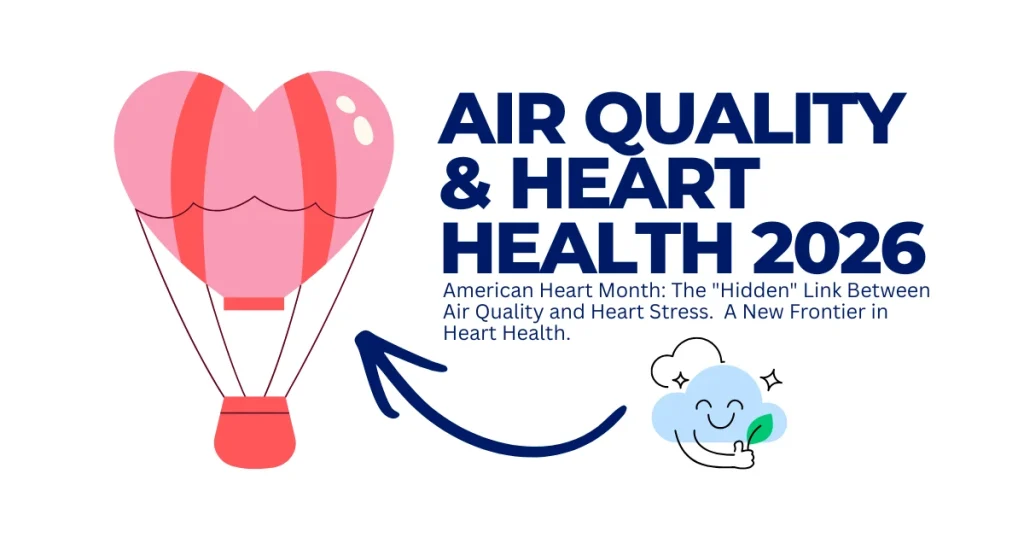
American Heart Month: The “Hidden” Link Between Air Quality and Heart Stress
A New Frontier in Heart Health
As a healthcare professional, I’ve spent years telling patients to watch their sodium, hit the treadmill, and manage their stress. But as we enter American Heart Month 2026, the medical community is pivoting toward a “hidden” culprit that many of us literally breathe in every day: Environmental Cardiology.
We used to think of air pollution as a “lung problem.” We pictured smoggy cities and exhaling exhaust. However, the latest clinical data reveals that the air inside your home—specifically fine particulate matter known as PM2.5—is a direct trigger for cardiovascular distress, including sudden arrhythmias (irregular heartbeats) in vulnerable adults.
If you’ve been feeling unexplained palpitations or fatigue, the answer might not just be in your diet; it might be in your air. The Link Between Air Quality & Heart Health
What is Environmental Cardiology?
Environmental Cardiology is the study of how pollutants, chemicals, and physical factors in our surroundings impact heart function. In 2026, the focus has narrowed significantly on the Indoor Air Quality Index (AQI).
Most Americans spend roughly 90% of their time indoors. If that air is saturated with microscopic particles, your heart pays the price. These particles are so small ( micrometers) that they bypass the lungs’ natural filters, enter the bloodstream, and trigger systemic inflammation.
The Science: How PM2.5 Attacks the Heart
When you inhale PM2.5, it initiates a “fight or flight” response in your autonomic nervous system. This causes:
- Oxidative Stress: A chemical imbalance that damages blood vessels.
- Increased Blood Pressure: Your vessels constrict, forcing the heart to pump harder.
- Electrolytic Instability: This is the big one for 2026. These particles can interfere with the electrical signals in your heart, leading to atrial fibrillation or other arrhythmias.
Essentially, poor air quality makes your heart work overtime, even when you are resting on your couch.
Your Daily Defense: The HEPA Solution
The good news? This is a manageable risk. Unlike genetics or age, you can control your indoor environment.
- Check Your Stats: Use a smart indoor air monitor to track your AQI.
- The HEPA Standard: High-Efficiency Particulate Air (HEPA) filters are no longer a luxury; they are a cardiovascular tool. A true HEPA filter can remove 99.97% of the dust, pollen, and smoke particles that stress your heart.
- Immediate Relief: Turning on a filter during high-pollution days (like during wildfire season or high humidity) provides an immediate reduction in the “workload” your heart has to endure.
Action Plan for February
- Monitor: Download an AQI app and buy an inexpensive indoor sensor.
- Purify: Place a HEPA filter in your bedroom—where you spend 6–8 hours recovering.
- Ventilate: Only open windows when outdoor AQI is “Green” (Good).
By cleaning your air, you aren’t just helping your lungs; you are giving your heart the quiet, stable environment it needs to thrive.
Health Disclaimer
This content is for informational purposes only and does not constitute medical advice. Always seek the advice of your physician or other qualified health provider with any questions you may have regarding a medical condition or cardiovascular symptoms. Never disregard professional medical advice or delay in seeking it because of something you have read here. DrugsArea
Sources & References
- American Heart Association: Air Pollution and Heart Disease, Environmental Protection Agency: PM2.5 Basics, Journal of the American College of Cardiology: Environmental Trends, World Health Organization: Ambient Air Quality Guidelines
People Also Ask
1. How does air quality actually affect my heart?
When you breathe in polluted air, tiny microscopic particles (known as PM2.5) travel deep into your lungs and enter your bloodstream. Once there, they trigger a “red alert” in your body—causing systemic inflammation and oxidative stress. This puts immediate pressure on your heart by forcing it to work harder to pump blood through irritated vessels.
2. Can air pollution cause a heart attack if I’m otherwise healthy?
While people with existing conditions are at higher risk, short-term “spikes” in air pollution can trigger acute heart attacks and strokes in anyone. Poor air quality can cause blood to thicken and promote the formation of clots, which can suddenly block an artery, even if you haven’t felt symptoms of heart disease before.
3. Why is air quality a focus for American Heart Month?
February is American Heart Month, and while we usually focus on diet and exercise, new research shows that environmental “stressors” like air quality contribute to nearly 1 in 5 cardiovascular deaths worldwide. Experts now consider air pollution a major risk factor—right alongside high blood pressure and smoking.
4. What is the “hidden link” between air quality and heart stress?
The link is “hidden” because you can’t always see or smell the most dangerous pollutants. These particles can silently damage the lining of your blood vessels (endothelium), making them narrower and stiffer. Over time, this “hidden” damage accelerates atherosclerosis—the buildup of plaque that leads to coronary artery disease.
5. Does poor air quality affect my heart rhythm?
Yes. Exposure to pollutants can interfere with your heart’s electrical system. This disruption can lead to palpitations or irregular heartbeats, known as arrhythmias. In vulnerable individuals, this stress can even trigger sudden cardiac events by destabilizing the heart’s natural pace.
6. Is indoor air quality just as dangerous for the heart?
It can be. We often think of pollution as “smog” outside, but things like wood-burning stoves, incense, candles, and even cooking without proper ventilation release the same fine particles (PM2.5) that stress the heart. Improving indoor filtration is a critical, often overlooked step in heart health.
7. Who is most at risk from air pollution-related heart stress?
While it affects everyone, the groups most at risk include adults over 65, people with pre-existing conditions (like diabetes or high blood pressure), and children whose systems are still developing. Interestingly, research shows that people of color and low-income communities often face higher exposure levels due to urban planning.
8. Should I stop exercising outdoors when air quality is poor?
Exercise is vital for your heart, but breathing heavily in “moderate” or “unhealthy” air can actually do more harm than good. When the Air Quality Index (AQI) is high, your heart is already under stress; adding a high-intensity workout can overload the system. On those days, it’s much safer to move your workout indoors.
9. Can I reverse the heart damage caused by air pollution?
The heart is resilient. Studies have shown that when air quality improves—either because of new regulations or by moving to a cleaner environment—cardiovascular risk factors and inflammation markers can begin to decrease within just a few years. Reducing your daily exposure is the best way to let your heart heal.
10. How can I protect my heart on high-pollution days?
The best defense is staying informed. Check your local AQI daily via apps or sites like AirNow.gov. On bad days, keep your windows closed, use an air purifier with a HEPA filter, and avoid spending time near high-traffic areas where vehicle emissions are most concentrated.