
The “Preservative Watchlist”: Understanding New Links Between Processed Foods and Cancer
As a pharmacist and health professional, I have always advised patients that “you are what you eat.” However, the complexity of modern food science often makes that easier said than done. Today, January 27, 2026, a landmark study from France’s NutriNet-Santé cohort, published in The BMJ, has provided us with a sobering “Preservative Watchlist.”
This isn’t just another headline designed to scare you. This is a massive, peer-reviewed analysis of over 100,000 adults that specifically pinpoints which chemical additives are most strongly associated with an increased risk of breast, prostate, and overall cancers.
The Science: What the French Study Found food safety
For years, we’ve known that ultra-processed foods (UPFs) aren’t ideal. But this new data moves the needle from “generally unhealthy” to “specifically concerning.” Researchers tracked brand-specific dietary records for over a decade, allowing them to isolate the effects of individual additives rather than just the foods themselves.
The findings were striking:
- Sodium Nitrite (E250): Frequently found in deli meats and bacon, it was associated with a 32% increased risk of prostate cancer.
- Potassium Sorbate (E202): A common mold inhibitor in yogurts, cheeses, and baked goods, linked to a 26% higher risk of breast cancer.
- Nitrates & Sulfites: Potassium nitrate (E252) and various sulfites showed clear associations with increased overall cancer incidence.
As a professional, I must clarify: these are observational findings. This means the study shows a link (correlation), not a definitive proof that the chemical causes the cancer. However, the biological mechanisms—such as DNA damage and chronic inflammation—are consistent with what we see in laboratory settings.
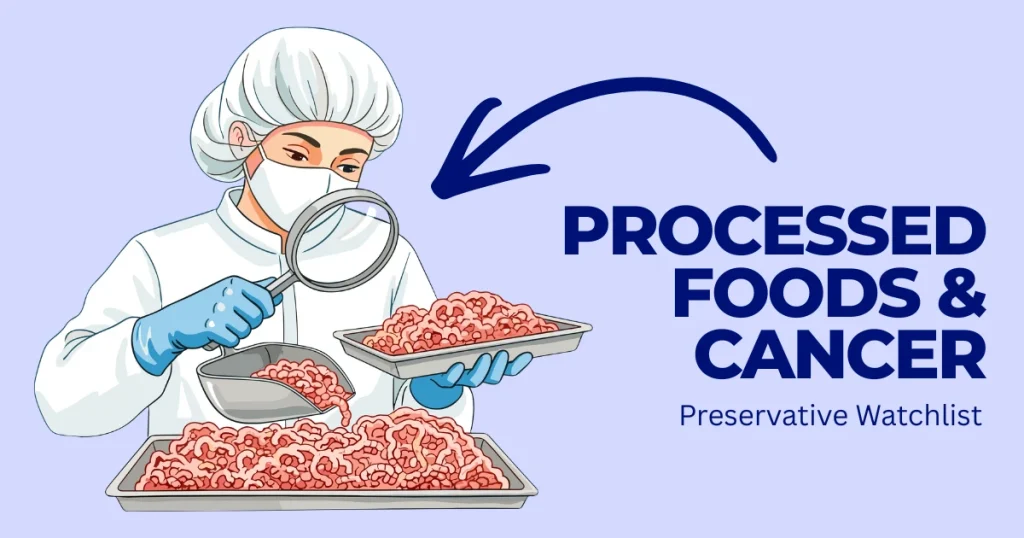
The “Daily Shopping Guide”: How to Read Labels for food safety
Navigating the grocery store can feel like a chemistry exam. Use this guide to identify and swap out the high-risk items on your next trip.
1. The “Big Four” to Avoid
When scanning the ingredient list, look for these specific names:
- Sodium Nitrite / Potassium Nitrite (E249, E250): The primary culprits in cured meats.
- Potassium Sorbate (E202): Used in everything from “diet” snacks to “fresh” tortillas.
- Potassium Nitrate (E252): Often found in hard cheeses and some frozen pizzas.
- Sodium Metabisulfite (E223): Common in dried fruits and some wines.
2. The “Hidden” Locations
Preservatives aren’t just in “junk” food. You’ll often find them in:
- “Healthy” Cereal Bars: Check for sorbates to keep them shelf-stable.
- Pre-Packaged Salads: Dressings often contain acetates and sulfites.
- Plant-Based Meats: Many highly processed vegan options use these additives to mimic the texture and shelf-life of animal products.
3. Professional Tip: Choose “Minimally Processed”
If a product has a shelf-life of two years but contains “fresh” ingredients, it’s a red flag. Look for labels that say “Nitrite-Free” or, better yet, choose whole foods that don’t require an ingredient list at all.
A Pharmacist’s Perspective on Prevention in food safety
In my practice, I see the long-term effects of metabolic stress and chronic inflammation. Reducing your chemical load isn’t about perfection; it’s about cumulative exposure. Switching from packaged deli ham to roasted chicken you prepared at home reduces your sodium nitrite intake to zero. That single change, over a lifetime, significantly alters your risk profile.
Health Disclaimer: The information provided here is for educational purposes only and does not constitute medical advice. Always consult with your physician or a registered dietitian before making significant changes to your diet, especially if you have a history of chronic illness or are undergoing cancer treatment. DrugsArea
Sources & References
- The BMJ: Intake of food additive preservatives and incidence of cancer (NutriNet-Santé)
- ScienceDaily: Common food preservatives may be linked to cancer
- Moffitt Cancer Center: Study Provides More Evidence Linking Food Preservatives to Cancer Risk
- World Cancer Research Fund: Nitrate and Nitrite Intake and Cancer Risk
People Also Ask
1. Which food preservatives are currently on the “cancer watchlist”?
Recent 2026 research has identified several “non-antioxidant” preservatives with potential links to cancer. The primary culprits on the watchlist include potassium sorbate, sodium nitrite, potassium nitrate, sulfites, and acetates (including acetic acid). While 11 out of 17 studied preservatives showed no link, these specific additives are being re-evaluated for their impact on cell DNA and inflammation.
2. Is potassium sorbate linked to breast cancer?
Yes, new data suggests a correlation. A large-scale study published in The BMJ (January 2026) found that higher intakes of potassium sorbate were associated with a 26% increased risk of breast cancer. It is commonly found in packaged bakery products, cheeses, and sauces to prevent mold.
3. Do nitrites in processed meat cause prostate cancer?
Recent findings have highlighted a significant link. Specifically, sodium nitrite—widely used to preserve deli meats and bacon—was associated with a 32% higher risk of prostate cancer. These compounds can convert into nitrosamines in the digestive tract, which are known carcinogens.
4. Are “natural” preservatives safer than synthetic ones?
Generally, yes, but with nuances. Natural alternatives like citric acid, ascorbic acid (Vitamin C), and vinegar (in moderation) are generally viewed as safe. However, the 2026 watchlist warns that even “Generally Recognized As Safe” (GRAS) synthetic additives can trigger inflammatory pathways if consumed in high quantities over time.
5. Why are sulfites considered a cancer risk now?
While sulfites have long been known to cause allergic reactions, the latest research associates “total sulfites” with a 12% increase in overall cancer risk. These are frequently found in dried fruits, bottled lemon juice, and alcoholic beverages like wine.
6. Can acetic acid (vinegar) in processed foods actually cause cancer?
This is a point of debate. The 2026 NutriNet-Santé study noted a 12% higher risk for those with high acetic acid intake from industrial sources. However, experts at institutions like McGill University caution that this may be a marker for a diet high in other ultra-processed ingredients rather than the vinegar itself being the direct cause.
7. What is the difference between antioxidant and non-antioxidant preservatives?
- Antioxidants (like Vitamin C or E) prevent food from oxidizing and are mostly considered safe or even protective.
- Non-antioxidants (like sorbates and nitrates) inhibit microbial growth. The 2026 “Watchlist” focuses almost entirely on non-antioxidants, as they are more likely to interfere with immune and inflammatory pathways.
8. How do these preservatives actually trigger cancer?
Researchers believe these additives may contribute to cancer through three main pathways: DNA damage (genotoxicity), disruption of the gut microbiome, and chronic inflammation. For example, nitrites can chemically modify DNA, leading to mutations that initiate tumor formation.
9. Does the “Preservative Watchlist” mean I should avoid all packaged foods?
Not necessarily. The study found that 11 of the 17 most common preservatives had no association with cancer. The goal isn’t total avoidance but “informed reduction”—prioritizing whole foods and checking labels to minimize the specific high-risk additives like nitrates and sorbates.
10. How can I identify these preservatives on food labels?
To stay safe, look for these specific names in the ingredient list:
- Sorbates: Potassium sorbate, calcium sorbate.
- Nitrites/Nitrates: Sodium nitrite, potassium nitrate.
- Sulfites: Sodium metabisulfite, sulfur dioxide.
- Acetates: Sodium acetate, acetic acid (in highly processed contexts).