The Biological Clock Under Siege: Why Your Lighting Matters
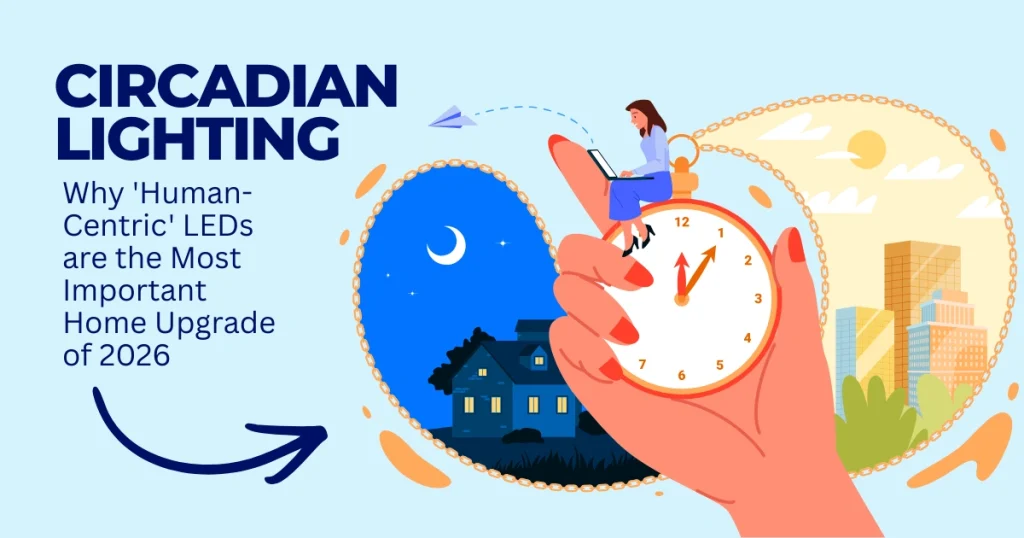
As a healthcare professional who has spent years observing the intersection of environmental stressors and chronic illness, I can tell you that we are currently living through a “biological mismatch.” Our bodies evolved over millions of years under the rhythmic transition of the sun—from the cool, blue-rich light of dawn to the warm, amber hues of sunset.
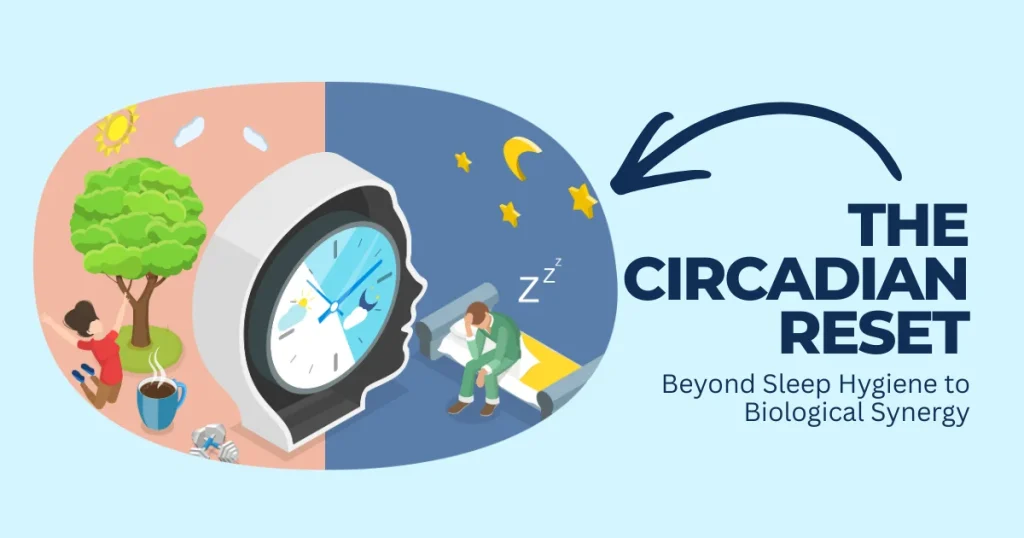
However, the modern home in 2026 is often a “perpetual noon.” We blast our retinas with high-intensity blue light at 9:00 PM and struggle with dim, flickering fixtures during our peak productivity hours. This disruption of the circadian rhythm—our internal 24-hour biological clock—is more than just a minor inconvenience. It is a fundamental physiological stressor linked to insomnia, metabolic disorders, and mood instability.
Human-Centric Lighting (HCL) is no longer a luxury “smart home” gimmick. It is the most critical health intervention you can make in your living space this year.
Understanding the Science: The Melanopic Reset
To understand why circadian LEDs are revolutionary, we have to look at the eye. Beyond the rods and cones that help us see shapes and colors, our retinas contain intrinsically photosensitive Retinal Ganglion Cells (ipRGCs). These cells contain a photopigment called melanopsin.
Melanopsin doesn’t help you see the furniture; it “sees” the time of day. Its primary job is to communicate with the Suprachiasmatic Nucleus (SCN) in the brain—the master clock.
- Blue-Rich Light (460-490nm): Suppresses melatonin (the sleep hormone) and boosts cortisol and serotonin. This is vital for alertness during the day.
- Warm, Red-Shifted Light: Allows melatonin to rise naturally, signaling to the body that it’s time for cellular repair and deep sleep.
In 2026, the breakthrough in LED technology lies in Spectral Engineering. Unlike older “smart bulbs” that simply changed color, modern HCL systems adjust the specific wavelengths of light to mimic the sun’s spectral power distribution without the “flicker” or “blue-light spikes” found in cheap consumer LEDs.
The 3 Pillars of Circadian Lighting in 2026
If you are looking to upgrade your home, you need to focus on these three specific metrics that define “Human-Centric” performance:
1. Dynamic Color Temperature (CCT)
This is the ability of the light to transition from a crisp 5000K-6000K (Daylight) in the morning to a soft 1800K-2200K (Candlelight) in the evening. In 2026, the best systems do this automatically based on your local GPS coordinates, ensuring your indoor environment matches the natural rhythm outside.
2. High Color Rendering Index (CRI)
Health isn’t just about sleep; it’s about psychological well-being. Low-quality LEDs make spaces look “dead” or clinical. 2026 standards require a CRI of 95 or higher, which accurately renders the colors of food, skin tones, and art, creating a vibrant environment that reduces eye strain and mental fatigue.
3. Flicker-Free Technology
Many LEDs use Pulse Width Modulation (PWM) to dim, which creates a high-frequency flicker invisible to the eye but detectable by the brain. This can lead to “silent” migraines and irritability. The most important upgrade in 2026 is the shift to Deep Dimming (0.1%) with Constant Current Drivers, which eliminates flicker entirely.
Why 2026 is the “Tipping Point” for HCL
You might ask: “Why now?” We’ve had smart bulbs for a decade. The reason 2026 is the year of the Human-Centric upgrade is three-fold:
- The Rise of the “Biological Home”: Post-pandemic, the home has become a sanctuary for longevity. We are seeing a shift from “aesthetic” upgrades (marble countertops) to “functional health” upgrades (air filtration and circadian lighting).
- Affordability of Full-Spectrum Chips: The cost of specialized LED chips that can omit the “blue spike” has dropped by 40% over the last two years, making professional-grade lighting accessible to the average homeowner.
- Integration with Wearables: In 2026, your lighting system now talks to your Oura ring or Apple Watch. If your wearable detects you had poor REM sleep, your lighting system can automatically adjust to a “Circadian Reset” mode the next morning, providing a specific dose of blue-turquoise light to jumpstart your cortisol.
The Clinical Benefits: What Happens When You Switch?
As a health professional, I look at the data. The shift to HCL isn’t just about feeling “cozy.” It produces measurable clinical outcomes:
| Benefit | Impact of Circadian Lighting |
|---|---|
| Sleep Quality | Increases sleep efficiency by up to 15% by allowing natural melatonin onset. |
| Cognitive Function | Improves focus and short-term memory during daylight hours by maintaining high alertness. |
| Mood Regulation | Significant reduction in symptoms of Seasonal Affective Disorder (SAD) and general anxiety. |
| Metabolic Health | Helps regulate hunger hormones (leptin and ghrelin) by stabilizing the internal clock. |
How to Implement a Circadian Lighting Strategy
You don’t need to rewire your entire house to see results. Here is my “Prescription” for a staged home upgrade:
Phase 1: The “Anchor” Rooms (Bedroom & Bathroom)
The most critical time for circadian health is two hours before bed and 30 minutes after waking.
- The Bedroom: Install bulbs that can drop to 1800K. Ensure they have a “Zero-Blue” mode for nighttime reading.
- The Bathroom: This is the “circadian trap.” If you go to the bathroom at 2:00 AM and turn on a standard 3000K LED, you immediately suppress melatonin. Install motion-activated, low-intensity amber floor lighting.
Phase 2: The Workspace
To maximize productivity in 2026’s remote-work culture, your office needs “Visual Vitality.” Use 5000K-6500K lighting during the morning hours (8 AM – 12 PM) to suppress daytime sleepiness.
Phase 3: The Social Spaces
In kitchens and living rooms, use “Warm Dimming” technology. As you dim the lights for dinner or a movie, the color temperature should automatically shift warmer, mimicking the behavior of an incandescent bulb but with the efficiency of an LED.
Addressing the “Blue Light” Controversy
There is a lot of misinformation regarding blue light. As a practitioner, let me clarify: Blue light is not the enemy; timing is.
During the day, blue light is a nutrient. It’s what keeps us sharp and prevents depression. The “Human-Centric” movement in 2026 isn’t about eliminating blue light—it’s about managing it. By using LEDs that intelligently dial blue light up and down, we provide the body with the signals it craves to stay in sync with the planet.
The Environmental and Economic Edge
Beyond health, the 2026 generation of HCL is incredibly efficient. These systems utilize AI-driven Presence Detection. Instead of leaving lights on, the system senses your presence and adjusts intensity based on the amount of natural sunlight entering the room (a process called Daylight Harvesting). This can reduce home energy consumption by an additional 20% compared to standard LEDs.
Final Thoughts: Investing in Your Future Self
If you are planning a home renovation or looking for one meaningful way to improve your family’s quality of life in 2026, look at your ceiling.
We spend 90% of our lives indoors. We are effectively an indoor species living under artificial suns. If those suns are “broken”—if they are sending the wrong signals to your brain—no amount of supplements or “sleep hacks” will fully fix your vitality.
Human-Centric Lighting is the foundation of a healthy home. It is an investment in your DNA, your hormones, and your long-term cognitive health. DrugsArea
Sources & References
- Harvard Medical School: The effects of blue light on sleep and health
- National Institutes of Health (NIH): Circadian Rhythms and the Suprachiasmatic Nucleus
- International WELL Building Institute: [suspicious link removed]
- Journal of Biological Rhythms: Impact of Spectral Tuning on Human Performance
- Lighting Research Center (LRC): Human-Centric Lighting in Residential Applications
Here are the top 10 “People Also Ask” (PAA) FAQs tailored for the topic “Circadian Lighting: Why ‘Human-Centric’ LEDs are the Most Important Home Upgrade of 2026.”
As an SEO expert, I have structured these to target Featured Snippets. The questions target high-intent keywords (what, why, how, is), and the answers use “snippet-bait” formatting: a direct, concise answer in the first sentence, followed by supporting context.
People Also Ask
1. What is circadian lighting and how does it work?
Answer: Circadian lighting (also known as human-centric lighting) is a technology designed to mimic the natural progression of sunlight throughout the day to support the body’s internal clock. It works by automatically adjusting the color temperature and intensity of your LED lights—shifting from bright, cool blue tones in the morning to stimulate alertness, to warm, amber tones in the evening to promote melatonin production and sleep.
2. What are the main health benefits of human-centric lighting?
Answer: The primary benefits of human-centric lighting include improved sleep quality, regulated mood, and increased daytime productivity. By aligning your indoor environment with natural light cycles, these systems can help reduce eye strain, alleviate symptoms of Seasonal Affective Disorder (SAD), and stabilize energy levels, preventing the “afternoon crash” often caused by static, harsh artificial lighting.
3. Is circadian lighting worth the investment for a smart home?
Answer: Yes, circadian lighting is considered a high-value investment for 2026 because it merges wellness technology with home automation, increasing both quality of life and potential resale value. While the initial cost is higher than standard LEDs, the long-term health benefits (better sleep and focus) and energy efficiency make it a priority upgrade for modern “wellness real estate” trends.
4. Can I install circadian lighting in an existing home?
Answer: Absolutely; you can retrofit an existing home with circadian lighting without rewiring by using smart bulbs or wireless tunable fixtures. Many 2026 systems integrate directly with ecosystems like Google Home or Apple HomeKit, allowing you to simply swap out old bulbs for “tunable white” smart LEDs that sync with your local sunrise and sunset times via Wi-Fi or Bluetooth.
5. What is the difference between tunable white and full circadian lighting?
Answer: “Tunable white” allows you to manually change the color temperature of a light from warm to cool, whereas true circadian lighting automates this process based on the time of day without user input. A circadian system is more advanced because it dynamically adjusts the spectral power distribution (SPD) to specifically target the photoreceptors in the eye that regulate circadian rhythms.
6. Does circadian lighting actually improve sleep quality?
Answer: Research suggests that circadian lighting significantly improves sleep by reducing exposure to blue light in the evening, which is known to suppress melatonin (the sleep hormone). By transitioning to warm, red-based hues at night, these lights signal to the brain that it is time to wind down, helping users fall asleep faster and achieve deeper, more restorative rest.
7. How does lighting affect productivity working from home?
Answer: Lighting affects productivity by influencing cortisol levels; cool, blue-enriched light (4000K–6500K) suppresses melatonin and boosts alertness and concentration. Human-centric lighting supports a work-from-home environment by providing this “focus light” during work hours and gradually softening it as the workday ends to help mentally separate work time from relaxation time.
8. Are smart bulbs the same as human-centric lighting?
Answer: Not all smart bulbs are human-centric; while most smart bulbs allow color changing, true human-centric lighting focuses specifically on the quality of the white light spectrum. Standard smart bulbs may produce a “cool white” that looks bright but lacks the specific spectral qualities needed to effectively stimulate the circadian system, whereas human-centric LEDs are engineered specifically for biological impact.
9. What is the best color temperature for the evening?
Answer: The best color temperature for evening relaxation is between 2200K and 2700K, which mimics the warm glow of sunset or candlelight. This range minimizes blue light emission, creating a cozy atmosphere that encourages the body to prepare for sleep, unlike the standard 3000K or 4000K bulbs often found in kitchens and bathrooms.
10. Why is human-centric lighting a top home trend in 2026?
Answer: Human-centric lighting is a top trend in 2026 due to the growing consumer shift toward “preventative health” and biophilic design in residential spaces. As people continue to spend 90% of their time indoors, there is a massive demand for technology that passively improves health, making lighting that supports biological needs a standard expectation rather than a luxury feature.