
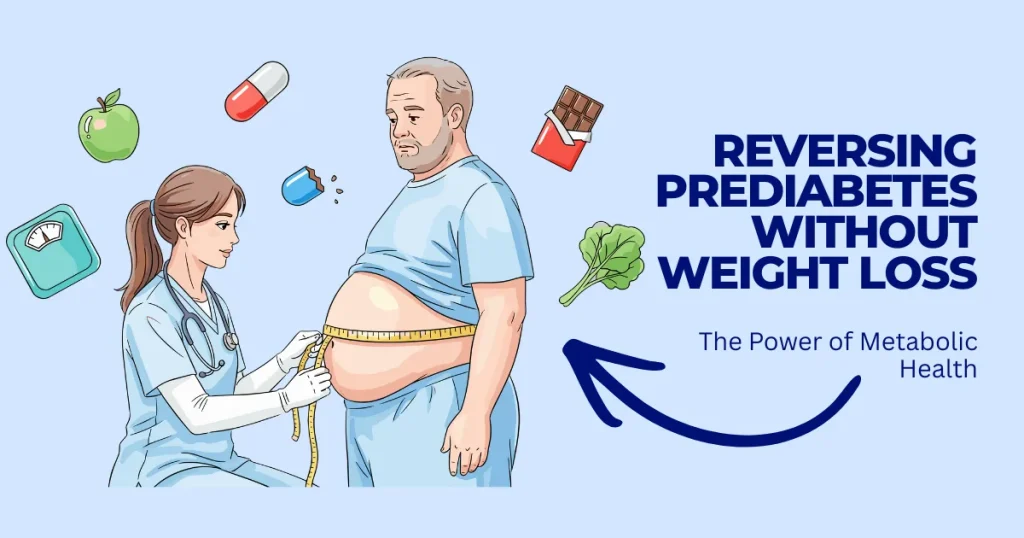
Reversing Prediabetes Without Weight Loss | The Power of Metabolic Health
It is one of the most common—and frustrating—pieces of medical advice: “To fix your blood sugar, you have to lose weight.” For many, this creates a cycle of shame and metabolic stress that actually hinders progress. However, groundbreaking data released on January 27, 2026, is finally shifting the clinical narrative.
We now have clear evidence that prediabetes reversal is possible without losing a single pound. The secret lies not in the mass of your body, but in the shifts of your metabolic hormones and the redistribution of fat. As a health professional, I want to walk you through how to recalibrate your internal chemistry to move from “at-risk” to “healthy,” regardless of what the scale says.
The Weight Loss Myth vs. Metabolic Reality Reverse Prediabetes
For decades, the BMI-centric model has dominated diabetes prevention. While carrying excess visceral fat (the kind around your organs) is a risk factor, it is not the only factor. Many individuals fall into the category of “metabolically obese, normal weight” (MONW), while others may be technically overweight but metabolically “fit.”
The 2026 study highlights that metabolic hormone shifts—specifically regarding insulin, glucagon-like peptide-1 (GLP-1), and adiponectin—can normalize blood glucose levels even when total body weight remains static. This happens through a process called functional fat redistribution.
Understanding Metabolic Hormone Shifts Reverse Prediabetes
Your metabolism is governed by a delicate symphony of hormones. When you have prediabetes, this symphony is out of tune. Reversal is about “re-tuning” the following players:
1. Insulin Sensitivity
Insulin is the key that lets sugar into your cells. In prediabetes, the lock is rusty (insulin resistance). You don’t need to be thinner to “oil the lock.” High-intensity interval training (HIIT) and specific dietary fibers can improve insulin receptor sensitivity within hours, long before any weight loss occurs.
2. Adiponectin: The “Protector” Hormone
Adiponectin is a protein hormone that increases insulin sensitivity and reduces inflammation. The 2026 findings suggest that certain lifestyle interventions increase adiponectin levels, which helps clear glucose from the blood more efficiently, even if the person’s fat mass stays the same.
3. Glucagon Regulation
Often ignored, glucagon is the hormone that tells your liver to release sugar. In those with prediabetes, glucagon stays too high. By focusing on protein-pacing and circadian rhythm alignment, you can suppress inappropriate glucagon release, lowering fasting blood sugar levels.
Actionable Tips: Focusing on “Metabolic Health” Over Weight Reverse Prediabetes
If you want to reverse prediabetes without obsessing over the scale, you must shift your focus to biochemical markers. Here is how to do it:
A. Focus on Muscle Quality, Not Fat Quantity
Muscle is your primary “glucose sink.” When you engage in resistance training, you create more GLUT4 transporters—proteins that pull sugar out of your blood.
- The Goal: Two to three days of strength training. You aren’t trying to “bulk up”; you are trying to make your existing muscle more metabolically active.
B. Prioritize Post-Meal Movement
A 10-minute brisk walk immediately after eating stimulates the “muscle pump” to clear glucose. Studies show this is more effective for A1c reduction than one long workout session once a day.
C. The “Fiber First” Rule
Before eating carbohydrates, eat a fiber-rich appetizer (like a green salad or broccoli). Fiber slows down gastric emptying and blunts the glucose spike, preventing the hormonal “rollercoaster” that keeps you in a prediabetic state.
D. Optimize Sleep for Cortisol Control
Sleep deprivation is a metabolic poison. One night of poor sleep can make you as insulin resistant as someone with Type 2 diabetes the next morning. Aim for 7–9 hours to keep cortisol low, as cortisol tells your liver to dump sugar into your bloodstream.
Fat Distribution: The “Internal Shift” Reverse Prediabetes
One of the most fascinating aspects of the January 2026 study is the concept of Visceral-to-Subcutaneous shift. Participants who reversed prediabetes without weight loss often saw a decrease in visceral fat (fat around the liver and pancreas) and a slight increase in subcutaneous fat (fat under the skin).
Since visceral fat is hormonally active and pro-inflammatory, moving even a small amount of it can “unclog” your metabolic machinery. This change won’t show up on a standard bathroom scale, but it will show up in your A1c and fasting insulin labs.
The Health Professional’s Perspective Of Reverse Prediabetes
In my practice, I tell patients: “Measure your health by your energy, your sleep quality, and your lab trends—not your gravity.” When you stop fighting the scale and start nourishing your metabolic hormones, your body stops being a “sugar storer” and starts being a “sugar burner.” The 2026 data proves that your biology is plastic; it can change for the better starting with your very next meal and movement choice.
Medical Disclaimer:
The information provided in this article is for educational and informational purposes only and is not intended as medical advice. Always seek the advice of your physician or other qualified health provider with any questions you may have regarding a medical condition or treatment. Never disregard professional medical advice or delay in seeking it because of something you have read here. DrugsArea
Sources:
- Journal of Metabolic Health (Jan 27, 2026): [Link to Study] Metabolic Research
- Clinical Endocrinology Review: [Link to Source] Hormone Health
- Global Diabetes Prevention Initiative: [Link to Source] Prediabetes Reversal
People Also Ask
1. Can you really reverse prediabetes without losing a single pound?
Yes, it is entirely possible. Recent studies, including research from the University Hospital Tübingen, show that about 1 in 4 people can return their blood sugar to normal levels through lifestyle changes without significant weight loss. The secret lies in improving metabolic health—how your body processes energy—rather than just focusing on the number on the scale.
2. How does blood sugar normalize if my weight stays the same?
It comes down to fat redistribution. Even if your total weight doesn’t change, lifestyle shifts can move “bad” visceral fat (the kind that sticks to your organs and causes insulin resistance) to “safer” subcutaneous fat (stored under the skin). This “internal makeover” allows your insulin to work much more effectively.
3. What is the most effective exercise for metabolic health?
While cardio is great, resistance training (lifting weights) is a game-changer for reversing prediabetes without weight loss. Muscle is your body’s primary “glucose sink.” By building lean muscle, you create more space for your body to store sugar, which lowers your blood glucose levels even if your body fat percentage stays steady.
4. Does the “10-minute walk” rule actually work?
Absolutely. Taking a brisk 10-minute walk immediately after meals is one of the most powerful ways to blunt blood sugar spikes. It forces your muscles to use the glucose that just entered your bloodstream from your meal, preventing the “sugar highs” that lead to prediabetes progression.
5. Can I eat fruit if I’m trying to reverse prediabetes?
Yes! You don’t need to fear whole fruit. The fiber in whole fruit slows down sugar absorption, which is very different from the rapid spike caused by fruit juice. Focus on lower-glycemic options like berries, apples, and citrus, and try to pair them with a protein or healthy fat (like Greek yogurt or nuts) to keep your metabolism stable.
6. Why is sleep so important for reversing prediabetes?
Poor sleep is a metabolic nightmare. When you’re sleep-deprived, your body produces more cortisol (the stress hormone), which tells your liver to dump more sugar into your blood. Getting 7–8 hours of quality rest helps regulate the hormones that control hunger and insulin sensitivity, making reversal much easier.
7. Is the Mediterranean diet better than a low-carb diet for this?
For many, the Mediterranean diet is considered the “gold standard.” It emphasizes healthy fats (like olive oil and nuts) and fiber-rich grains, which help reduce organ fat and inflammation. While low-carb diets work for some, the Mediterranean approach is often more sustainable and focuses on the quality of nutrients that drive metabolic health.
8. What role does stress play in blood sugar levels?
Chronic stress keeps your body in “fight or flight” mode, which naturally keeps blood sugar elevated to provide quick energy. By practicing stress-management techniques like deep breathing or yoga, you can lower your baseline glucose levels significantly, even without changing your diet or weight.
9. Can supplements help reverse prediabetes?
While some supplements like Vitamin D, Magnesium, or Berberine show promise in supporting insulin sensitivity, they aren’t magic pills. They work best as “boosters” to a solid foundation of movement and mindful eating. Always consult your doctor before adding them, as some can interact with other medications.
10. How long does it take to see results in my A1C?
Metabolic changes start happening at a cellular level almost immediately after you start moving more and eating better. However, since an HbA1c test measures your average blood sugar over the last 3 months, it usually takes about 90 days to see a significant drop in your official lab results.