Fact Check: Does “Cold Shock” from Ice Baths Actually Strengthen the Heart?
Why Everyone Is Joining the Viral Freeze
If you’ve been online at all in 2026, you’ve seen the slow-motion video of a celebrity jumping into a tub of ice-cold water and saying it’s the best “biohack” for a stronger heart. People think that “shocking” the system is a good way to work out their hearts, so the trend has spread from fancy dressing rooms to backyards in the suburbs.
As a health care professional, I believe in pushing the limits to improve health. However, we need to make a distinction between sports recovery and circulatory safety. As agreed upon in 2026, the cold plunge has its place, but the “cold shock response” is a high-stress event that most people should avoid.
How to Understand the “Cold Shock Response”
When you touch water that is below 60°F (15.5°C), your body goes into survival mode. This is what takes place when it’s cold. It’s not a slow “strengthening” of the heart; it’s a sudden physical burst.
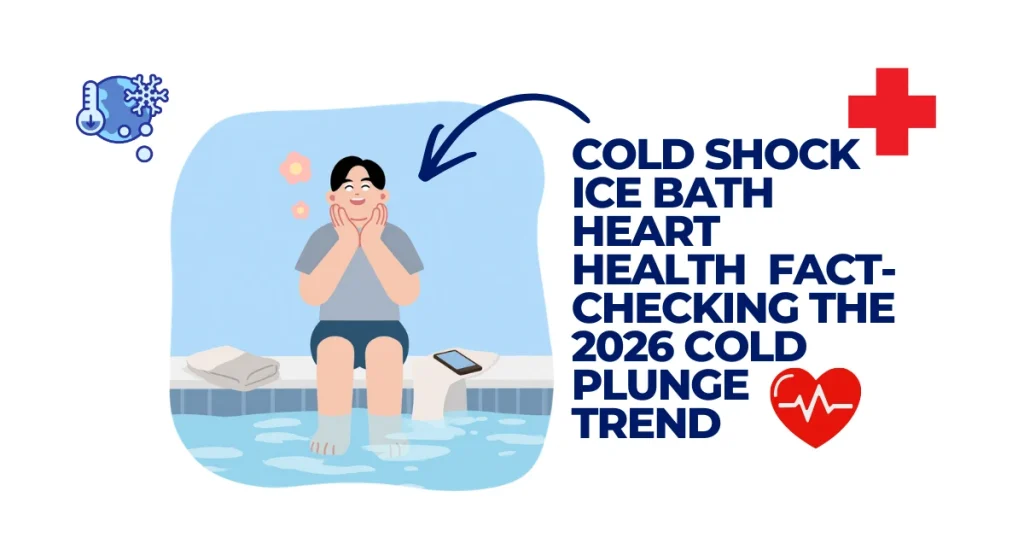
The gasp reflex makes your lungs tighten up, which can make you breathe too fast. Your sympathetic nervous system sends a lot of norepinephrine and adrenaline into your blood. This is called an adrenaline spike. Vasoconstriction means that the blood vessels in your arms and legs close off to protect your organs.
Your heart has to work much harder against the smaller pipes when you put these two things together. This makes your heart rate and blood pressure go up right away and by a lot. It’s a “stress test” for a healthy runner. Arrhythmias or even worse heart problems can happen to people who already have heart problems that aren’t always found.
How Muscles Really Get Better
Cold Shock A lot of people “plunge” after working out to help reduce swelling.
But new research from 2025 and 2026 shows that inflammation is actually your body’s way of telling you to grow.
If you’re not a professional athlete who needs to numb the pain before working out twice in one day, stopping the inflammatory reaction can slow muscle growth. If you freeze your muscles right after pulling weights, you are “turning off” the body’s natural systems that repair fibres and make them stronger.
A safer choice is the cool shower.
If you want to feel good, you don’t have to buy a chiller or a bag of ice for $5,000. A cool shower (around 65–70°F) is enough for most people to wake up and get better without putting their hearts at risk of “shock.”
Another type of hormesis is a cool shower. Hormesis is a good stress that makes you stronger. There are no big drops in blood pressure like there are when you put your whole body in ice. In this way, the body cools down more slowly, which frees up the “rest and digest” system and keeps you out of the “fight or flight” loop.
The Final Choice
Is getting your heart “stronger” by going into cold water? Not like swimming or jogging. People need to be careful with this high-stress situation. Before you jump on the popular trend, think about what you want to achieve. Most likely, a 34°F drop is more dangerous than helpful if you’re not training for the Olympics.
Health Disclaimer
This information is for educational purposes only. Sudden exposure to cold water can cause a rapid increase in heart rate and blood pressure, which may be dangerous for individuals with cardiovascular conditions. Always consult your doctor before starting a cold-water therapy routine. DrugsArea
Sources & References
- American Heart Association – Cold Water Stress,
- Harvard Health – The Risks of Cold Plunges,
- Journal of Physiology – Cold Water Immersion and Muscle Hypertrophy,
- Mayo Clinic – Cardiovascular Response to Cold