
American Heart Month: The “Hidden” Heart Disease in Women
Beyond the “Hollywood” Heart Attack Hidden Heart Risk
When most people think of heart disease, they imagine a “Hollywood Heart Attack”—a man clutching his chest in sudden, crushing pain because a major artery is blocked. As a healthcare professional, I’m here to tell you that for millions of women, the reality of heart disease looks, feels, and acts completely differently.
As we move through American Heart Month 2026, our clinical focus is shifting toward the “hidden” culprit: Microvascular Disease (MVD), also known as Small Vessel Disease. Hidden Heart Risk
If you’ve been told your “large arteries are clear” but you still feel like something is wrong, this guide is for you. We are going to break down why the tiny vessels in your heart matter just as much as the big ones, and how you can advocate for the right tests. The Hidden Heart Risk
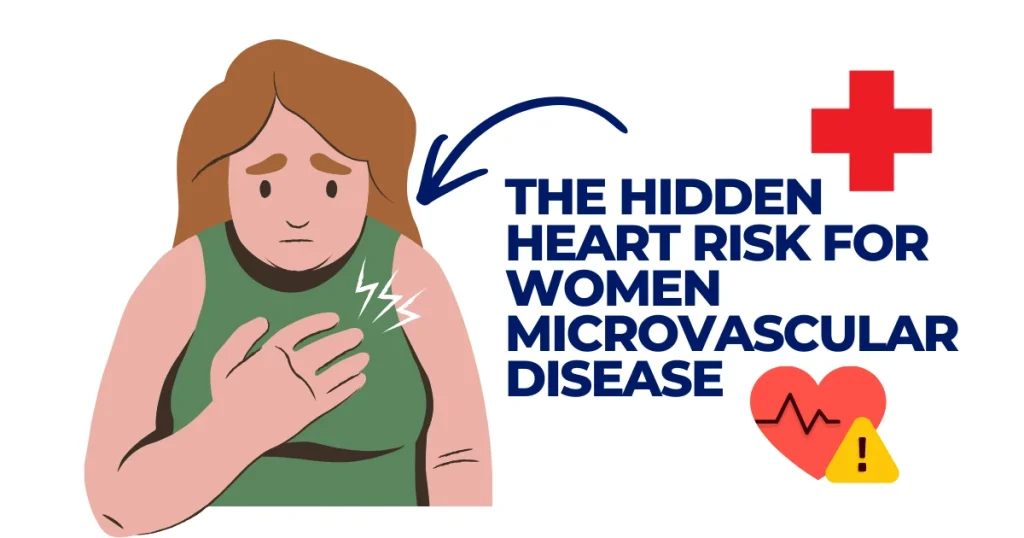
What is Microvascular Disease (MVD) For The Hidden Heart Risk?
Your heart has a massive plumbing system. Most people focus on the “large pipes” (the coronary arteries). However, branching off those pipes are thousands of tiny, microscopic vessels that deliver oxygen-rich blood directly to the heart muscle.
In Microvascular Disease, these tiny vessels don’t have large waxy blockages. Instead, they become damaged or diseased. They might fail to dilate (expand) when you are active, or they may spasm shut. The result? Your heart muscle doesn’t get the oxygen it needs, even if your main “pipes” look perfectly clean on a standard scan. The Hidden Heart Risk
Why is this “Hidden” in Women? For The Hidden Heart Risk
Statistics in 2026 continue to show that women are more likely than men to suffer from MVD. Hormonal shifts—particularly during perimenopause and menopause—affect the lining of these small vessels (the endothelium). The Hidden Heart Risk
The danger lies in the diagnostic gap. Because traditional tests like a standard angiogram look for big blockages, many women are sent home with a “clean bill of health” while their small vessels are actually struggling.
The Symptoms: It’s Not Just Chest Pain For The Hidden Heart Risk
In my years of practice, I’ve heard women describe their symptoms in ways that are often dismissed as “just getting older” or “stress.” If you are experiencing the following, please take note: The Hidden Heart Risk
- Unexplained Shortness of Breath: Do you get winded doing laundry or walking up a flight of stairs that used to be easy?
- Extreme Fatigue: A sense of exhaustion that doesn’t go away with sleep, specifically after physical exertion.
- A “Heavy” Feeling: Not a sharp pain, but a dull ache or pressure in the chest, neck, or jaw.
- Sleep Disturbances: Waking up feeling breathless or having sudden bouts of anxiety-like heart racing at night.
Why You Should Request a “Stress Echo” To The Hidden Heart Risk
If you have these symptoms, a standard EKG might not be enough. This February, I am urging my female patients to request a Stress Echocardiogram (Stress Echo) with a focus on microvascular function.
A Stress Echo uses ultrasound imaging to see how your heart muscle moves before and after exercise. If the “small pipes” aren’t delivering enough blood, the wall of the heart will show subtle movement changes that a resting test would miss. It is non-invasive, uses no radiation, and is one of our best tools for catching MVD early. The Hidden Heart Risk
Daily Action: Listen to Your Body For The Hidden Heart Risk
Don’t wait for a “sign from the universe” to check your heart. If you are experiencing unexplained breathlessness during daily chores, stop dismissing it. The “hidden” nature of this disease means you have to be your own best advocate. When you see your doctor, use specific language: “I am concerned about Microvascular Disease. Can we look into my small vessel function?” The Hidden Heart Risk
Managing Small Vessel Health in 2026
The good news? MVD is treatable. Through a combination of: The Hidden Heart Risk
- Nitrates or Beta-blockers to help vessels relax.
- Statins to improve the health of the vessel lining.
- Targeted Nutrition: Diets rich in nitrates (like beets and leafy greens) which naturally help dilate small vessels.
- Consistent Movement: Low-impact aerobic exercise helps “train” these tiny vessels to stay flexible.
Summary: Make Your Heart a Priority
This American Heart Month, remember that your heart health isn’t just about avoiding a “big” event. It’s about the quality of your daily life. Small vessels might be tiny, but their impact on your energy, longevity, and well-being is massive. The Hidden Heart Risk
Health Disclaimer
This content is for educational purposes and is not a substitute for professional medical advice, diagnosis, or treatment. Always seek the advice of your physician or other qualified health provider with any questions you may have regarding a medical condition. If you believe you are having a medical emergency, call 911 or your local emergency services immediately. DrugsArea
Sources & References
- American Heart Association – Small Vessel Disease in Women,
- Mayo Clinic: Coronary Microvascular Disease,
- Journal of the American College of Cardiology (JACC) 2026 Reports,
- National Heart, Lung, and Blood Institute (NHLBI)
People Also Ask
1. Why is heart disease often called “hidden” in women?
It’s “hidden” because women’s symptoms frequently don’t look like the “Hollywood Heart Attack” (the dramatic chest-clutching scene). Instead of crushing chest pain, women often experience subtle signs like extreme fatigue, indigestion, or jaw pain. Because these symptoms mimic everyday stress or the flu, they are easily overlooked by both women and their healthcare providers.
2. Can a woman have a heart attack without any chest pain?
Absolutely. While chest pressure is still the most common symptom, about 1 in 5 women experience a heart attack with zero chest pain. Women are much more likely than men to report “atypical” symptoms like shortness of breath, nausea, or a heavy ache in the upper back or neck. If you feel “off” in your upper body and it’s accompanied by cold sweats or lightheadedness, don’t wait for chest pain to call 911.
3. How do heart disease symptoms differ between men and women?
Men typically experience the classic “elephant on the chest” sensation. Women’s symptoms are often more “diffuse.” You might feel a squeezing sensation, but you’re just as likely to feel a sense of dread, overwhelming exhaustion (like you’ve run a marathon while sitting still), or pain that radiates into the jaw and shoulders rather than just the left arm.
4. What are the unique risk factors for heart disease in women?
Beyond the standard risks like high blood pressure and smoking, women have specific “gendered” risk factors. These include menopause (due to the drop in protective estrogen), pregnancy complications like gestational diabetes or preeclampsia, and conditions like PCOS (Polycystic Ovary Syndrome) or endometriosis. Even chronic stress and depression are shown to impact women’s heart health more significantly than men’s.
5. Can “Broken Heart Syndrome” actually damage a woman’s heart?
Yes, and it primarily affects women (especially after menopause). Formally called Takotsubo cardiomyopathy, it’s a condition where intense emotional stress—like the loss of a loved one—triggers a sudden weakening of the heart muscle. It can feel exactly like a heart attack, and while it’s usually temporary, it can cause real, serious cardiac complications.
6. Is it true that heart disease kills more women than breast cancer?
This is one of the most important “hidden” facts: Heart disease is the No. 1 killer of women, causing more deaths than all forms of cancer combined. Despite this, surveys show that many women still view heart disease as a “man’s problem,” which leads to lower screening rates and delayed treatment.
7. What is “Microvascular Disease” and why is it harder to find in women?
Women are more likely to have Coronary Microvascular Disease (MVD), which affects the heart’s smallest arteries rather than the large ones. Standard tests like an angiogram are designed to find blockages in large arteries, so they often “miss” MVD. This is why a woman might have clear results on a traditional heart test but still experience real, dangerous symptoms.
8. Does menopause increase my risk of heart disease?
Yes. Estrogen helps keep blood vessels flexible and maintains healthy cholesterol levels. When estrogen levels drop during menopause, your blood pressure may rise, and “bad” LDL cholesterol often increases. This transition is a critical time to work with a doctor to monitor your “numbers” (blood pressure, cholesterol, and blood sugar).
9. How can I tell the difference between anxiety and a heart attack?
This is a tough one because the symptoms—racing heart, sweating, and shortness of breath—overlap perfectly. The “SEO-friendly” rule of thumb: Anxiety usually stays in the head; a heart attack moves through the body. If your “panic” is accompanied by physical pain in your jaw, back, or arms, or if it doesn’t subside with deep breathing, treat it as a medical emergency. It is always better to be told it’s “just anxiety” in the ER than to ignore a heart event at home.
10. What “hidden” signs should I look for during American Heart Month?
Keep an eye out for the “New Fatigue.” If you suddenly find yourself breathless or exhausted by a routine task—like carrying groceries or making the bed—when you were fine a week ago, that is a major red flag. Other hidden signs include persistent indigestion that doesn’t react to antacids and sleep disturbances paired with a heavy feeling in the chest.