The Bio-Simulant Revolution: Why Your Arthritis Meds Just Got 40% Cheaper
Introduction: A New Dawn for Affordable Chronic Care
As a healthcare professional, I’ve often seen the heartbreak in a patient’s eyes when they realize the life-changing medication they need for rheumatoid arthritis or psoriasis costs more than their monthly mortgage. For years, “biologics” were the gold standard of treatment—but they came with a diamond-level price tag.
However, as we move through 2026, the landscape has fundamentally shifted. We are currently in the middle of the “Bio-Simulant” Revolution. Thanks to a massive global and domestic push—most notably the Biopharma Shakti initiative—high-quality, life-saving biologics are finally becoming affordable for the everyday patient. If you’ve been struggling with the cost of your injections, this is the most important update you will read this year.
What is the “Biopharma Shakti” Rollout?
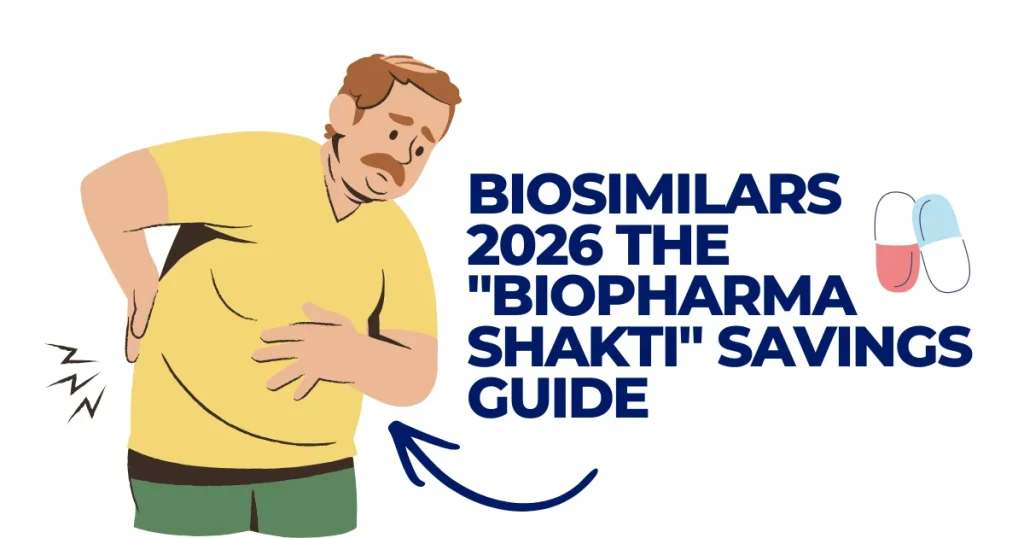
In early 2026, the government officially launched Biopharma Shakti (Strategy for Healthcare Advancement through Knowledge, Technology, and Innovation). With a staggering ₹10,000 crore investment, this initiative was designed to turn India into a global powerhouse for biosimilars.
But what does that mean for you? It means the “monopoly” on expensive brand-name biologics has cracked. By upgrading research centers and streamlining clinical trials, this program has flooded the market with high-quality, lower-cost alternatives. We aren’t just making “cheaper” drugs; we are scaling the production of “smarter” medicine.
Biosimilars vs. Generics: What’s the Difference?
It is a common mistake to call a biosimilar a “generic.”
- Generics are like a simple recipe—think of a sugar cookie. You can copy the chemical formula exactly.
- Biosimilars are more like a complex sourdough starter. Because they are made from living cells, you can’t make an “exact” carbon copy, but you can create a version that is “highly similar” and provides the exact same clinical result.
In 2026, the FDA and local regulatory bodies (like a strengthened CDSCO) ensure these drugs meet rigorous “bio-similarity” standards. This means they work in the same way, at the same strength, and with the same safety profile as the original $10,000-a-month brand.
Why are prices dropping by 40% in 2026?
The “40% drop” isn’t a random number—it’s the result of the “Patent Cliff.” In 2025 and 2026, several major patents for blockbuster drugs used to treat inflammatory conditions expired.
When competition enters the market under the Biopharma Shakti framework, manufacturers no longer have to pay for the initial 20 years of research and development. They can pass those savings—often between 30% and 50%—directly to the pharmacy counter.
Is it safe to switch my current injection?
This is the #1 concern I hear in my clinic. The short answer is yes.
Clinical data from 2026 shows that switching from an “originator” biologic to an approved biosimilar does not result in a loss of efficacy. Whether you are treating:
- Rheumatoid Arthritis
- Psoriatic Arthritis
- Plaque Psoriasis
- Ankylosing Spondylitis
The transition is typically seamless. In fact, many hospital systems now use biosimilars as their “first-line” therapy because they allow them to treat more patients with the same budget.
The “Specialist Check”: How to save thousands today
If you are currently using a biologic injection (like those for Humira, Enbrel, or Stelara), do not wait for your insurance to tell you about the savings.
Take Action:
- Ask your specialist: “Is there a 2026-approved biosimilar for my current biologic?”
- Check your formulary: Many insurance plans have updated their “preferred” lists to include Biopharma Shakti-supported brands.
- Verify the savings: Ask your pharmacist for the “cash price” versus your “insurance co-pay.” In 2026, the cash price for some biosimilars is actually lower than the co-pay for the brand name!
Professional Insight: The Value of “Value-Based” Medicine
As we navigate this revolution, it’s important to remember that “cheaper” does not mean “lesser.” In the biopharma world of 2026, affordability is a clinical outcome. When a patient can afford their medication, they don’t skip doses. When they don’t skip doses, their inflammation stays down, and their quality of life goes up.
The Biopharma Shakti rollout is more than a budget move; it’s a mission to ensure that the best medicine in the world isn’t just for the wealthiest 1%.
Health Disclaimer
This content is for educational purposes and should not replace professional medical advice. Always consult your healthcare provider before switching medications. While biosimilars are clinically equivalent, every patient’s body reacts differently, and medical supervision is essential during any treatment transition. DrugsArea
Sources & References
- Press Information Bureau – Union Budget 2026 Biopharma Shakti,
- Forbes India – The ₹10,000 Crore Biologics Push, Arthritis Foundation – Guide to Biosimilars,
- The Economic Times – 2026 Pharmacy Trends
People Also Ask
1. What are “bio-simulants” or biosimilars for arthritis?
A biosimilar is a biologic medication that is highly similar to an original “reference” biologic (like Humira or Enbrel) already approved by the FDA. Think of them as the high-tech, biological version of a generic drug. Because biologics are made from living cells, they can’t be exact “carbon copies,” but biosimilars are clinically proven to provide the exact same safety and effectiveness as the original.
2. Why are these new arthritis meds 40% cheaper?
The 40% (and sometimes up to 50%+) price drop comes down to competition and R&D costs. The original manufacturers spent billions on discovery and initial clinical trials. Biosimilar companies don’t have to “reinvent the wheel”; they only have to prove their version works the same way. When multiple biosimilars hit the market at once, it creates a “price war” that benefits the patient.
3. Are biosimilars less effective because they cost less?
Not at all. The lower price reflects a more efficient development path, not lower quality. To get approved, a biosimilar must undergo rigorous testing to show it has the same strength, dosage, and “mechanism of action” (how it works in your body) as the original brand-name drug.
4. Can I switch from my current biologic to a cheaper biosimilar?
In most cases, yes. This is known as “switching.” Many patients are successfully transitioning to biosimilars to save on out-of-pocket costs. However, you should always consult your rheumatologist first to ensure the specific biosimilar is a good match for your current treatment plan.
5. What does “interchangeable” mean on an arthritis drug label?
An “interchangeable” biosimilar is a specific FDA designation. It means the manufacturer has provided extra data showing that a patient can switch between the original biologic and the biosimilar multiple times without any loss of efficacy or increase in side effects. In many states, a pharmacist can automatically swap a brand-name biologic for an interchangeable version to save you money.
6. Will my insurance cover biosimilars for my arthritis?
Actually, many insurance companies now prefer them. Because biosimilars are significantly cheaper, many “preferred drug lists” (formularies) are moving biosimilars to lower cost-sharing tiers. Some insurers may even require you to try a biosimilar before they will approve the more expensive brand-name version.
7. Do biosimilars have different side effects than brand-name meds?
No. Because they are made from the same types of living sources and target the same parts of the immune system, the side-effect profile is essentially identical. If you tolerated the original biologic well, you are expected to have the same experience with the biosimilar.
8. Which popular arthritis drugs now have cheaper versions?
The “Bio-Simulant Revolution” has hit the biggest names in the industry. There are now multiple lower-cost versions available for:
- Adalimumab (Reference: Humira)
- Infliximab (Reference: Remicade)
- Etanercept (Reference: Enbrel)
- Rituximab (Reference: Rituxan)
9. How do I know if I’m being prescribed a biosimilar?
You can identify a biosimilar by its name. It will usually have a “core” name (like adalimumab) followed by a four-letter suffix (like adalimumab-atto or adalimumab-adbm). These suffixes help doctors and pharmacists track specific products for safety and monitoring.
10. If the price is lower, will my co-pay assistance program still work?
Most biosimilar manufacturers offer their own co-pay cards and patient assistance programs, just like the brand-name companies do. In many cases, these programs can bring your out-of-pocket cost down to as little as $0 or $5 per month, making these life-changing meds more accessible than ever.