The “Postbiotic” Pantry: Why Fermented Byproducts are 2026’s Gut Superstars
Introduction: The Evolution of the Gut-Brain Connection
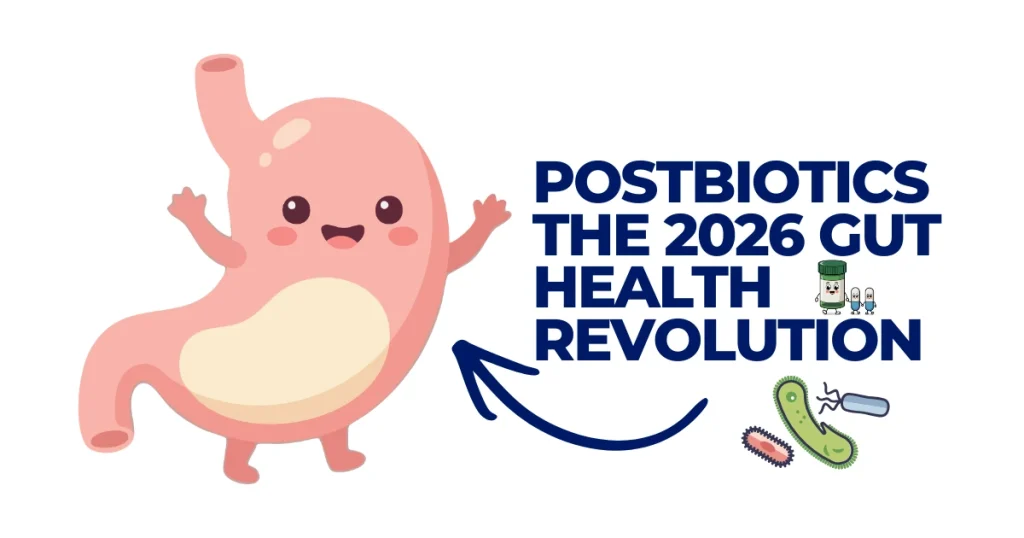
If you feel like you’ve finally mastered the art of probiotics (the “good” bacteria) and prebiotics (the “food” for those bacteria), I have a bit of a surprise for you. As we move through 2026, the scientific community has shifted its gaze toward the real MVP of digestive health: Postbiotics.
As a health professional, I often tell my patients to think of the gut like a high-end restaurant. Probiotics are the chefs, and prebiotics are the raw ingredients. But postbiotics? They are the finished, gourmet meal. They are the actual compounds that do the heavy lifting in your body. In 2026, we’ve realized that you don’t necessarily need to host the “chef” if you can just get the “meal” directly.
What Exactly Are Postbiotics?
In simple, human terms, postbiotics are the “healthy leftovers” created when probiotic bacteria break down fiber in your gut. These aren’t just waste products; they are highly bioactive substances like short-chain fatty acids (SCFAs), functional proteins, and enzymes.
The reason they are trending in 2026 is their bioavailability. Because these compounds are already “processed” by bacteria, your body can absorb them almost instantly. There is no waiting for bacteria to colonize your gut—the benefits start the moment they hit your system.
Why 2026 is the Year of the Postbiotic
For years, we focused on “seeding” the gut with live cultures. However, many people found that probiotics didn’t always “stick” or survive the harsh acid of the stomach.
Research published in early 2026 has confirmed that postbiotics are incredibly stable. They don’t need to stay alive to work. This makes them much more reliable for:
- Lowering Systemic Inflammation: They act as signaling molecules that tell your immune system to “cool down.”
- Clearing Brain Fog: Through the gut-brain axis, postbiotics help maintain the integrity of the blood-brain barrier.
- Metabolic Support: They help regulate how your body burns fat and stores energy.
The “Postbiotic” Pantry: Where to Find Them
You don’t need a fancy supplement to get your postbiotic fix. In fact, 2026 nutrition is all about the “Postbiotic Pantry.” Here are the superstars you should be reaching for:
Sourdough Bread (Long-Fermented)
The slow fermentation process used in traditional sourdough produces a wealth of postbiotics. The bacteria have already done the work of breaking down gluten and anti-nutrients, leaving behind a bread that is easier on the gut and rich in beneficial organic acids.
Miso and Tempeh
Aged soy products are postbiotic goldmines. The aging process allows for a dense accumulation of bioactive peptides that have been linked to improved heart health and reduced inflammation in 2026 clinical trials.
Aged Balsamic Vinegar
Not all vinegar is created equal. True, aged balsamic contains melanoidins—postbiotic compounds that act as powerful antioxidants. A drizzle over your salad isn’t just for flavor; it’s a dose of gut-to-brain signaling support.
High-Quality Grass-Fed Butter
Butter contains butyrate, one of the most famous short-chain fatty acids (and a primary postbiotic). Butyrate is the preferred energy source for the cells lining your colon.
How Postbiotics Fix “Brain Fog”
We’ve all had those days where the world feels a bit “fuzzy.” In 2026, we understand that brain fog is often a symptom of neuroinflammation—basically, your brain is slightly “inflamed.”
Postbiotics like acetate and propionate travel from the gut into the bloodstream. They can cross the blood-brain barrier and stimulate the production of BDNF (Brain-Derived Neurotrophic Factor). Think of BDNF as “Miracle-Gro” for your brain cells. When your postbiotic levels are high, your mental clarity usually follows.
Daily Habits for Immediate Results
You don’t have to wait months to feel the difference. Because postbiotics don’t require “colonization,” you can support your gut-to-brain signaling today:
- The Morning Ritual: Swap your standard toast for a thick slice of slow-fermented sourdough.
- The Mid-Day Boost: Incorporate a tablespoon of miso into your soup or salad dressing.
- The Evening Finish: Use aged vinegars or fermented pickles as a garnish to your main meal.
Postbiotics vs. Probiotics: Which Do You Need?
It isn’t an “either/or” situation. Think of it as a team effort.
- Probiotics are great for long-term microbiome diversity.
- Postbiotics are great for targeted, immediate physiological effects.
In 2026, many of my patients who were “probiotic-sensitive” (experiencing bloating or gas from live cultures) are finding that postbiotic-rich foods provide all the benefits without the digestive upset.
The Future: Personalized Postbiotics
As we look toward the rest of 2026 and into 2027, the trend is moving toward personalized postbiotic profiles. We are beginning to see home tests that don’t just tell you what bacteria you have, but what compounds those bacteria are producing. This allows us to tailor diets to fill specific “postbiotic gaps.”
The Bottom Line
The shift from probiotics to postbiotics represents a more mature understanding of human health. We are moving away from just “counting bacteria” and moving toward “optimizing compounds.” By stocking your pantry with fermented byproducts, you are taking a direct shortcut to better brain health and lower inflammation.
Health Disclaimer
This content is for educational purposes only and does not replace professional medical advice, diagnosis, or treatment. Always seek the advice of your physician or other qualified health provider with any questions you may have regarding a medical condition or dietary changes. Never disregard professional medical advice because of something you have read online. DrugsArea
Sources & References
- Journal of Gastrointestinal Health – 2026 Postbiotic Review,
- Harvard Health: The Gut-Brain Connection,
- International Scientific Association for Probiotics and Prebiotics (ISAPP),
- World Journal of Gastroenterology
People Also Ask
1. What exactly are postbiotics, and how do they differ from probiotics?
Think of probiotics as the “workers” (live bacteria) and prebiotics as their “fuel” (fiber). Postbiotics are the beneficial byproducts—like short-chain fatty acids (SCFAs), enzymes, and cell wall fragments—created when those workers finish their meal. In 2026, we’ve realized you don’t always need the live “worker” if you can get the “finished product” directly, which is often more stable and easier for the gut to absorb.
2. Why are postbiotics being called “2026’s Gut Superstars”?
The hype is all about convenience and stability. Probiotics are notoriously finicky—they can die in a hot delivery truck or a warm pantry. Postbiotics are “inanimate,” meaning they are already heat-stable. This allows them to be added to everything from hot coffee and baked goods to shelf-stable pantry snacks without losing their health benefits, making gut health accessible to everyone, not just people with a fridge full of kombucha.
3. Can I find postbiotics in regular food, or do I need supplements?
You can absolutely find them in your pantry! Traditional fermented foods like sourdough bread, aged cheeses, tamari, and pasteurized sauerkraut are naturally rich in postbiotics. Even though the “live” bacteria might be killed during baking or pasteurization, the healthy byproducts (the postbiotics) remain intact. 2026 is seeing a surge in “postbiotic-fortified” pantry staples like pasta and granola.
4. Are postbiotics better for people with sensitive stomachs?
Often, yes. Because postbiotics don’t contain live, active cultures that need to colonize your gut, they are less likely to cause the “bloating and gas” sometimes associated with starting a high-dose probiotic. For people with SIBO (Small Intestinal Bacterial Overgrowth) or highly sensitive digestion, postbiotics offer a way to support the gut lining without adding more live bacteria to an already crowded system.
5. What are the main health benefits of a postbiotic-rich diet?
The “big three” benefits are strengthening the gut barrier (helping with “leaky gut”), modulating the immune system, and reducing systemic inflammation. Specifically, postbiotics like butyrate are famous for “feeding” the cells of your colon, which can improve everything from your skin clarity to your daily energy levels and even your mood via the gut-brain axis.
6. Do I still need to eat fiber if I’m taking postbiotics?
Yes! Don’t ditch the veggies just yet. While postbiotics give you the “end result,” eating prebiotic fiber encourages your own unique microbiome to produce its own custom blend of postbiotics. Think of a postbiotic supplement as a “top-off” and fiber as the “long-term infrastructure” for your gut health.
7. How can I cook with postbiotics without destroying them?
This is the best part: you can’t really “kill” them. Unlike probiotics, which die at high temperatures, postbiotics are structural components and metabolites. You can bake them into sourdough, simmer them in a bone broth, or stir postbiotic powders into a hot stir-fry. They are designed to survive the “Postbiotic Pantry” environment.
8. How do I identify postbiotics on a food label?
Look for terms like “fermented [ingredient] lysate,” “heat-inactivated cultures,” or specific metabolites like “short-chain fatty acids” or “butyrate.” Many brands in 2026 are also using a “Postbiotic Certified” seal to help consumers distinguish them from standard fermented foods.
9. Are postbiotics safe for children and the elderly?
Generally, postbiotics are considered very safe because they don’t carry the risk of “bacterial translocation” (bacteria moving where they shouldn’t), which is a rare but real concern for immunocompromised individuals using live probiotics. However, as with any 2026 health trend, it’s always best to check with a doctor before starting a concentrated supplement for vulnerable groups.
10. Will postbiotics replace probiotics eventually?
Not likely. Instead, they are becoming complementary. We are seeing a move toward “Synbiotic” products that contain all three: the fuel (pre), the worker (pro), and the result (post). Postbiotics simply fill the gap for shelf-stable, easy-to-use gut support that fits into a busy, modern lifestyle.