The 5mL Syringe Swap: Why Your Liquid Meds Need a New Measuring Tool
Introduction: A Small Change with Big Safety Implications
As a healthcare professional, I’ve seen firsthand how a tiny mistake in the kitchen can lead to a big problem in the emergency room. When it comes to liquid medications—whether it’s an antibiotic for your toddler or a pain reliever for yourself—precision isn’t just a suggestion; it’s a requirement.
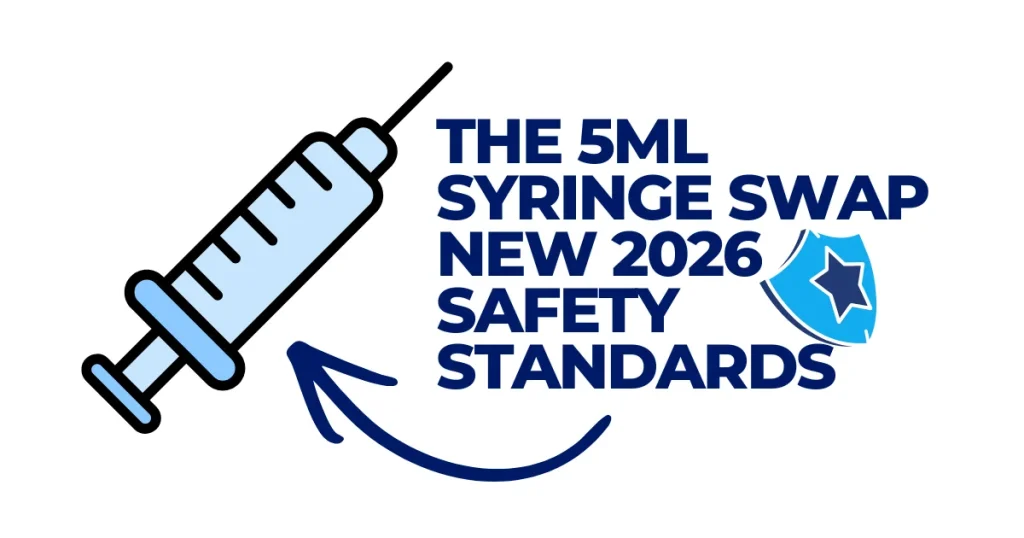
In 2026, the Institute for Safe Medication Practices (ISMP) has introduced a pivotal update that is currently rolling out across pharmacies nationwide. You may have noticed that the familiar 3mL syringe you’ve used for years has been replaced by a standardized 5mL oral syringe. This change isn’t a random supply chain shift; it is a calculated move to reduce “dosing confusion” and save lives.
Let’s break down why this is happening, how to read these new tools, and why your kitchen spoons belong in the drawer, not the medicine cabinet.
The “Why” Behind the 2026 ISMP Safety Update
For years, the medical community has struggled with “unit of measure” errors. Some labels use teaspoons (tsp), some use tablespoons (Tbsp), and others use milliliters (mL). To fix this, the industry has moved toward a “mL-only” standard.
The transition from the 3mL to the 5mL syringe as the baseline tool is designed to provide a more universal scale. Many common pediatric doses hover right around the 2.5mL to 5mL mark. By using a 5mL standard, pharmacies can provide a tool that covers a wider range of common doses without requiring patients to keep multiple different syringe sizes on hand, which often leads to grabbing the wrong one in the dark at 2 AM.
The Dangers of “Eyeballing” and Kitchen Spoons
I cannot stress this enough: A kitchen spoon is not a medical device. Research shows that household spoons can vary in volume by as much as 20% to 50%. Depending on the curve and depth of your silverware, a “teaspoon” of medicine could actually be a double dose or half a dose.
- Under-dosing: The medicine doesn’t work, allowing an infection to grow or pain to persist.
- Over-dosing: This can lead to toxicity, especially with medications like acetaminophen (Tylenol), which can damage the liver if consistently dosed incorrectly.
The new 5mL syringe ensures that “1mL” is exactly “1mL,” regardless of which pharmacy you visit or which brand of medicine you buy.
How to Use the New 5mL Syringe Correctly
If you just picked up a prescription and noticed the syringe looks different, don’t panic. Here is your professional “cheat sheet” for using the new 2026 standard:
1. Identify the Markings
On the new 5mL syringes, the lines are usually bold and easy to read. Most will have increments of 0.2mL or 0.5mL. Before you draw up the liquid, find the exact number prescribed on your bottle’s label.
2. The “Top Ring” Rule
When pulling the plunger back, look at the black rubber stopper inside the syringe. You should align the top ring (the part closest to the tip/opening) with the line on the barrel. Do not measure from the bottom of the plunger or the “pointed” part of the rubber.
3. Check for Air Bubbles
Air bubbles take up space where medicine should be. If you see a large bubble, squirt the medicine back into the bottle and try again. A tiny, pin-head-sized bubble won’t hurt, but a large gap means you aren’t getting the full dose.
Daily Safety Checklist: What to Do Today
If you have liquid medications in your home, I want you to take these three steps today:
- Check Your Tool: Look at your current syringe. Is it a 3mL or the new 5mL standard? If it’s old or the markings are rubbing off, ask your pharmacist for a new one. They are usually free!
- Verify the Label: Ensure the label says “mL” and not “tsp.” If your doctor wrote “teaspoon,” call the pharmacy and ask them to convert it to mL for you so you can match it to the syringe markings.
- Clean Properly: After each use, pull the plunger out and wash both parts with warm, soapy water. Let them air dry. Never put medical syringes in the dishwasher, as the heat can warp the plastic and make the measurements inaccurate.
Why Pharmacies are Making the Swap Now
The shift to the 5mL standard is part of a broader 2026 initiative to “Humanize Healthcare.” By simplifying the tools we use at home, we reduce the “cognitive load” on parents and caregivers who are often stressed, tired, or overwhelmed.
Standardization means that whether you are at a hospital, a local clinic, or your home, the language of measurement stays the same. This “continuity of care” is the backbone of modern patient safety.
Summary: Precision is Protection
The 5mL syringe swap might seem like a small logistical change, but it represents a massive leap in patient safety. By moving away from “eyeballing” and household spoons, and embracing standardized, clear-mark tools, we are making the home environment as safe as the clinical environment.
Next time you are at the pharmacy counter, take ten seconds to look at the syringe in the bag. If you have any doubt about where the “fill line” is for your specific dose, ask the pharmacist to mark it with a permanent marker. We love it when patients ask—it shows you are taking your safety seriously.
Health Disclaimer
This content is for educational purposes only and does not replace professional medical advice, diagnosis, or treatment. Always follow the specific instructions provided by your healthcare provider or pharmacist. If you suspect a medication error or overdose, contact Poison Control or seek emergency medical attention immediately. DrugsArea
Sources & References
- Institute for Safe Medication Practices (ISMP) 2026 Guidelines, FDA – Using Oral Syringes Safely, CDC – Medication Safety Program, American Academy of Pediatrics – Dosing Standards
People Also Ask
1. Why can’t I just use a kitchen spoon to measure my liquid medicine?
Kitchen spoons are for soup, not science. Research shows that household spoons vary in size by as much as 20% to 50%, making it impossible to get an accurate dose. A “teaspoon” in your drawer might hold or , which can lead to a dangerous overdose or an ineffective underdose for a child.
2. What is the “5mL Syringe Swap” everyone is talking about?
Medical experts and pharmacies are phasing out the old “teaspoon/tablespoon” (tsp/Tbsp) measurements in favor of a milliliter-only () standard. The “swap” refers to pharmacists now providing a specific oral syringe with every liquid prescription to ensure that the volume you measure matches the metric dose prescribed by the doctor.
3. Is a 5mL syringe more accurate than a dosing cup?
Yes. Dosing cups are prone to “parallax error,” where the liquid looks level from one angle but is actually off. They also tend to leave a coating of medicine behind on the plastic walls. An oral syringe allows you to draw the exact amount into the barrel, ensuring the full dose actually reaches the patient’s mouth.
4. How do I read the markings on a 5mL oral syringe?
Look for the black lines on the side of the clear plastic barrel. Each long line usually represents , with smaller tick marks representing or . When drawing medicine, you should align the top ring of the black plunger (the part closest to the tip) with the line for your prescribed dose.
5. What should I do if my prescription says “teaspoon” but my syringe only has “mL”?
You should call your pharmacist immediately to confirm the conversion. Generally, , but to avoid math errors at 2:00 AM, ask your pharmacist to rewrite the instructions on the bottle to match the markings on your syringe.
6. Can I reuse the 5mL syringe, or is it single-use?
For home use, most oral syringes are reusable for the duration of that specific prescription. However, you must clean it after every use with warm, soapy water and let it air dry. If the markings start to rub off or the plunger becomes difficult to move, it’s time to ask your pharmacist for a new one.
7. Why are doctors moving away from “teaspoons” (tsp) entirely?
The main reason is safety and clarity. The abbreviations “tsp” (teaspoon) and “tbsp” (tablespoon) look incredibly similar on a handwritten or printed label. Switching to —a universal scientific unit—drastically reduces “look-alike/sound-alike” errors that lead to medication accidents in the ER.
8. Is it safe to squirt the medicine directly into the back of a child’s throat?
No. To prevent choking, you should aim the syringe toward the inside of the cheek. Slowly depress the plunger as the child swallows. This “buccal” administration is safer and also helps bypass some of the bitter taste buds on the back of the tongue.
9. My syringe has a cap—is that a choking hazard?
Yes, those small clear caps are a major choking hazard for infants. Many pharmacies are now switching to “integrated” tips or child-safe adapters that stay in the bottle. If your syringe has a small removable cap, always keep it out of reach of children and double-check that it’s removed before you begin the dose.
10. Can I get a 5mL syringe for free at the pharmacy?
In most cases, yes. If you are picking up a liquid medication for a child or a senior, most pharmacists will provide a calibrated syringe at no extra cost if you ask. They would much rather give you a free tool than have you struggle with an inaccurate kitchen spoon.