One-Shot Cholesterol Cure: The Landmark Base Editing Breakthrough
Imagine a world where a single injection replaces a lifetime of daily pills. For the millions living with Familial Hypercholesterolemia (FH)—a genetic condition that keeps “bad” LDL cholesterol dangerously high regardless of diet—this isn’t science fiction anymore. It is the medical reality of 2026.
As a healthcare professional, I’ve seen patients struggle with the “statin fatigue” of daily medication and the anxiety of a genetic clock ticking toward early heart disease. This week, we witnessed a landmark breakthrough: the first successful human application of In-Vivo Base Editing to permanently silence the genes responsible for high cholesterol.
What is Base Editing? The Genetic “Scalpel”
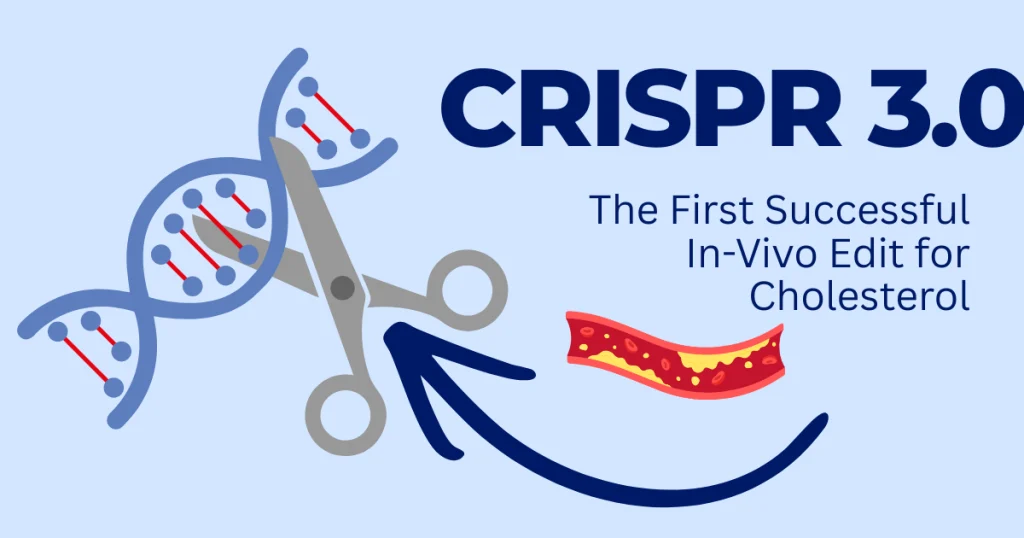
Traditional gene editing, like the famous CRISPR-Cas9, works like a pair of “genetic scissors,” cutting through both strands of DNA to disable a gene. While effective, it can be messy.
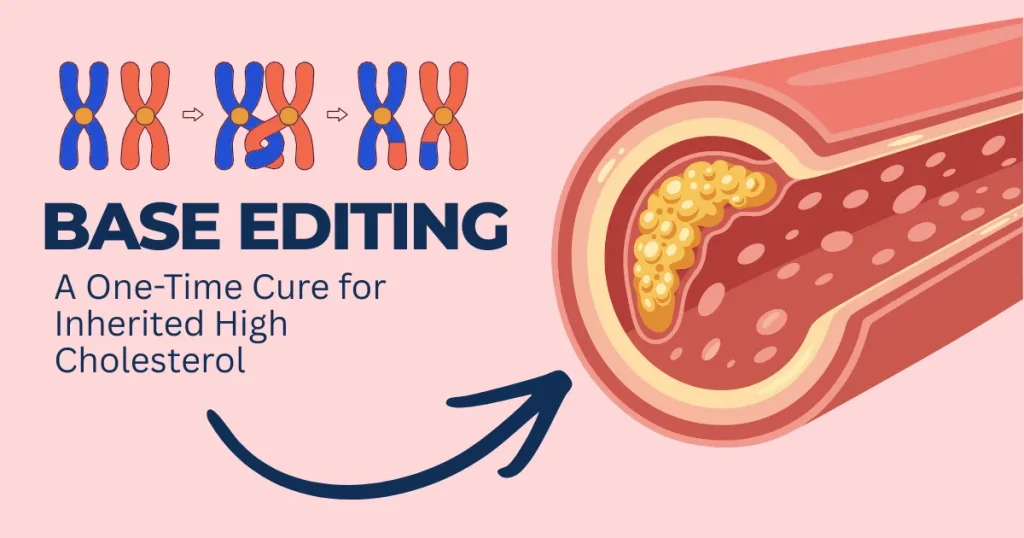
Base editing is the evolution of this technology. Think of it as a precision scalpel or a “pencil and eraser.” Instead of cutting the DNA, it chemically changes a single “letter” in your genetic code. In the case of inherited high cholesterol, scientists target the PCSK9 gene in the liver. By changing just one adenine (A) to a guanine (G), the treatment “switches off” the gene permanently.
The Breakthrough: From Daily Statins to “One-and-Done”
The latest clinical data from the heart-1 and heart-2 trials (testing candidates like VERVE-101 and VERVE-102) have shown staggering results:
- LDL Reduction: Patients saw their “bad” cholesterol levels drop by up to 55% after a single infusion.
- Durability: Unlike a pill that clears your system in 24 hours, this edit is permanent. Data now shows these low levels sustained for over 18 months, with expectations that they will last a lifetime.
- Liver Precision: The treatment uses lipid nanoparticles (essentially tiny fat bubbles) to deliver the “editor” directly to the liver cells, leaving the rest of the body untouched.
Why This Matters for the FH Community
If you have inherited high cholesterol, your liver lacks the receptors to clear LDL from your blood. Even the best diet and maximum-dose statins often aren’t enough. This “one-and-done” approach removes the human error of forgotten doses and the side effects of long-term medication, offering a true genetic cure.
Health Disclaimer
This content is for informational purposes only and does not constitute medical advice. Gene-editing therapies are currently in clinical trial phases and are not yet widely available for all patients. Always consult with your cardiologist or lipid specialist regarding your specific treatment plan. DrugsArea
Sources and References
- Heart.org: First-in-human trial of CRISPR gene-editing therapy
- CRISPR Medicine News: Clinical Update: First Trial of Base-Editing Therapy
- Nature Medicine: Epigenetic editing to silence PCSK9
- Mayo Clinic: Familial Hypercholesterolemia Diagnosis and Treatment
People Also Ask
1. What is the “One-Shot Cholesterol Cure” breakthrough?
It refers to a new type of gene-editing therapy (specifically base editing) that aims to permanently lower LDL or “bad” cholesterol with a single intravenous infusion. Unlike traditional drugs that require daily or monthly doses, this treatment “switches off” a specific gene in the liver—typically PCSK9 or ANGPTL3—to reduce the risk of heart attacks for life.
2. How does base editing differ from traditional CRISPR?
Standard CRISPR-Cas9 works like “molecular scissors,” cutting both strands of DNA to disable a gene. Base editing is often called a “molecular pencil and eraser.” It’s a more precise tool that changes a single “letter” of the genetic code (e.g., changing an A to a G) without breaking the DNA strand, which scientists believe reduces the risk of unintended genetic damage.
3. Which genes are being targeted in these trials?
The two primary targets are the PCSK9 gene and the ANGPTL3 gene.
- PCSK9: Regulates the receptors that clear LDL from the blood.
- ANGPTL3: Involved in the metabolism of both cholesterol and triglycerides.
By disabling these, the liver becomes significantly more efficient at clearing fats from the bloodstream.
4. What were the results of the landmark clinical trials?
In recent Phase 1 trials (such as Verve-102 and CTX310), participants saw dramatic results. Some patients experienced a reduction in LDL cholesterol of up to 55% to 69% after just one dose. These effects have remained stable in follow-up monitoring, suggesting the “one-and-done” goal is achievable.
5. Can base editing actually “cure” high cholesterol?
While “cure” is a strong word, for patients with Familial Hypercholesterolemia (HeFH)—a genetic condition where cholesterol is dangerously high from birth—this is as close to a cure as science has come. It addresses the root genetic cause rather than just treating the symptoms.
6. Is the one-shot cholesterol treatment safe?
Early human trials (Phase 1) have shown the treatment is generally well-tolerated. Some participants experienced transient “flu-like” symptoms or temporary rises in liver enzymes, which is common with liver-targeted therapies. However, because gene editing is permanent, the FDA requires long-term monitoring (up to 15 years) to ensure no delayed side effects occur.
7. Will this treatment replace statins?
Not immediately. Currently, these trials focus on high-risk patients who don’t respond to statins or have severe genetic disorders. In the future, it could replace daily pills for the general population, but it will likely take another decade of safety data and a significant drop in cost before it becomes a first-line treatment.
8. How is the therapy delivered into the body?
The treatment uses Lipid Nanoparticles (LNPs)—the same technology used in COVID-19 mRNA vaccines. These microscopic fat bubbles carry the base-editing “instructions” directly to the liver cells, where the editing takes place, before being naturally cleared by the body within days.
9. Who is eligible for this cholesterol gene-editing treatment?
Currently, eligibility is limited to participants in clinical trials, specifically those with atherosclerotic cardiovascular disease (ASCVD) or familial hypercholesterolemia who cannot reach their target cholesterol levels through traditional medications.
10. When will the one-shot cholesterol cure be available to the public?
While the results are groundbreaking, the therapy is still in the early clinical trial stages (Phase 1 and 2). Experts estimate that if larger Phase 3 trials are successful, the first of these therapies could receive FDA approval and reach the market by 2028–2030.