The Invisible Urban Hazard: Is Your Home Secretly Making You Sick?
When we talk about “environmental hazards,” we usually picture smog-filled horizons, industrial smokestacks, or polluted rivers. As a health professional, I’ve noticed a shift in the clinical landscape: the most significant threats to our wellbeing are no longer just outside—they are sitting on our shelves, flowing through our taps, and floating in the very air of our modern apartments.
We call this The Invisible Urban Hazard. While modern urban living offers convenience and sleek design, it often comes at the cost of “tight” building envelopes and synthetic materials that trap toxins. Today, we are peeling back the curtain on two of the most pressing hidden risks: Indoor Air Quality (IAQ) and Microplastics in household water.
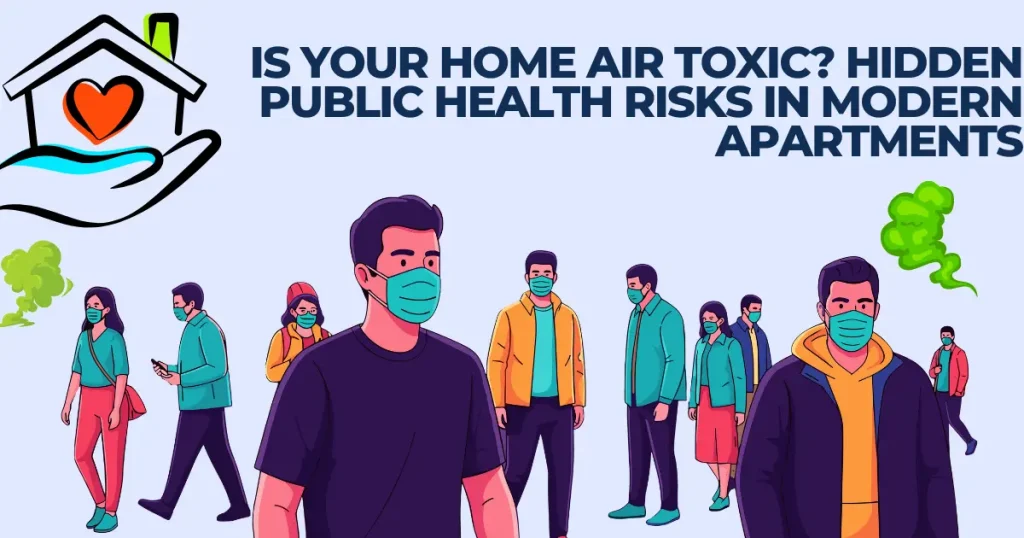
The Modern Lung: Understanding Indoor Air Quality (IAQ)
In the medical world, we often see patients with “unexplained” fatigue, chronic headaches, or persistent respiratory irritation. Frequently, the culprit isn’t a virus, but the air they breathe for 90% of their day.
Modern apartments are designed for energy efficiency. They are airtight to keep heat or AC in, but this also means they trap pollutants. This leads to what we call Sick Building Syndrome.
1. Volatile Organic Compounds (VOCs)
Your new sofa, that fresh coat of paint, and even your favorite scented candle release gases known as VOCs. These chemicals, like formaldehyde, can irritate the eyes, nose, and throat, and in the long term, they are linked to more serious organ damage.
2. The Hidden Mold Growth
High-rise living often involves complex HVAC systems and poor ventilation in bathrooms. Microscopic mold spores can trigger asthma attacks and chronic sinus issues without you ever seeing a green patch on the wall.
3. Fine Particulate Matter ()
Cooking on gas stoves or living near a busy road introduces tiny particles () into your living space. These are small enough to enter your bloodstream through your lungs, contributing to cardiovascular stress.
The Plastic Stream: Microplastics in Your Tap
The second pillar of the Invisible Urban Hazard is the water we drink and bathe in. Recent studies have shown that microplastics—tiny plastic fragments less than 5mm long—are nearly ubiquitous in urban tap water.
How Do They Get There?
Microplastics often enter our water systems through:
- Synthetic Clothing: Thousands of fibers are released during a single laundry cycle.
- Degraded Urban Waste: Plastic bottles and bags breaking down in the ecosystem.
- Pipe Degradation: Older urban infrastructure can shed particles into the water supply.
The Health Implications
From a clinical perspective, we are still uncovering the full impact of microplastics on human biology. However, early research suggests they may act as endocrine disruptors, mimicking hormones and potentially interfering with metabolic health and fertility. Furthermore, microplastics can act as “magnets” for heavy metals and bacteria, carrying them directly into our digestive systems.
Practical Steps: Reclaiming Your Home Health
You don’t need to move to the countryside to stay healthy. Small, intentional changes can significantly lower your “toxic load.”
- Prioritize Ventilation: Open your windows for at least 10 minutes a day, even in winter, to flush out stagnant air.
- Invest in High-Quality Filtration: Look for air purifiers with HEPA filters and water filters certified for microplastic removal (such as reverse osmosis or high-grade carbon filters).
- Ditch the Synthetic Scents: Swap chemical air fresheners for beeswax candles or essential oil diffusers.
- Low-VOC Choices: When buying furniture or paint, look for “Low-VOC” or “GreenGuard” certifications.
- The “Shoes-Off” Policy: A simple way to keep urban pollutants and lead dust off your floors is to leave your shoes at the door.
The Professional Perspective: Why This Matters Now
As we move further into the 21st century, public health is no longer just about vaccines and exercise; it is about the chemistry of our environments. By acknowledging the Invisible Urban Hazard, we empower ourselves to create homes that aren’t just shelters, but sanctuaries for our health.
By making these adjustments, you aren’t just “cleaning” your home—you are practicing preventative medicine.
Health Disclaimer
The information provided in this article is for educational and informational purposes only and is not intended as medical advice. Always seek the advice of a qualified healthcare provider regarding a medical condition or health goals. Do not disregard professional medical advice or delay in seeking it because of something you have read here. DrugsArea
Sources & References
- Environmental Protection Agency (EPA): Introduction to Indoor Air Quality
- World Health Organization (WHO): Guidelines for Indoor Air Quality
- National Institutes of Health (NIH): Impact of Microplastics on Human Health
- Harvard T.H. Chan School of Public Health: The 9 Foundations of a Healthy Building
People Also Ask
1. Can the air inside a modern apartment really be more toxic than outdoor air?
Surprisingly, yes. The EPA and various health studies indicate that indoor air can be 2 to 5 times more polluted than the air outside. In modern, energy-efficient apartments, buildings are often “sealed” so tightly to save on heating and cooling that they trap pollutants like chemicals from furniture, cleaning products, and even cooking fumes inside with nowhere to go.
2. What are the most common “hidden” toxins found in apartments?
The biggest culprits are Volatile Organic Compounds (VOCs). These are invisible gases emitted from everyday items like new carpets, pressed-wood furniture (common in many modern builds), paints, and even scented candles. Other hidden risks include mold spores in damp corners, nitrogen dioxide from gas stoves, and “off-gassing” from synthetic fabrics and foams.
3. How can I tell if my apartment’s air is making me sick?
Keep an eye on “Sick Building Syndrome” symptoms. If you experience persistent headaches, itchy eyes, a dry throat, or “brain fog” that magically clears up when you leave the building for a few hours, your indoor air is likely the trigger. Physical signs like unexplained dust buildup or a musty, lingering smell are also major red flags.
4. Are scented candles and air fresheners actually harmful?
While they make a home smell “clean,” many are a primary source of indoor pollution. Most mass-market candles and sprays release particulate matter and phthalates into the air. If you’re looking for a healthy scent, it’s much better to use a HEPA-filtered air purifier and natural options like essential oil diffusers or even just a bowl of baking soda to absorb odors.
5. Does living in a brand-new apartment increase my health risks?
In the short term, often yes. Brand-new apartments go through a period of heavy “off-gassing.” The new paint, cabinetry, and flooring are all releasing chemicals at their highest concentrations during the first few months. If you’ve just moved in, it’s critical to keep windows open as much as possible to flush out these initial “new apartment” fumes.
6. Can house plants actually “detox” the air in a large apartment?
Plants like Snake Plants or Spider Plants do absorb some toxins, but you would need a literal jungle to make a significant dent in a modern apartment’s air quality. While they help with CO2 and boost your mood, they aren’t a replacement for mechanical ventilation or a high-quality air purifier.
7. What is the most effective way to clean indoor air on a budget?
The most effective (and free) strategy is cross-ventilation. Opening two windows on opposite sides of your apartment for just 15 minutes a day can completely flush out stagnant, toxic air. Additionally, switching to “green” cleaning products like vinegar and baking soda reduces the chemical load you’re adding to your environment every week.
8. Are gas stoves a major public health risk in small apartments?
Yes, especially in smaller units with poor ventilation. Cooking with gas releases nitrogen dioxide (NO2) and carbon monoxide. If you don’t have a high-powered exhaust fan that vents outside (not just recirculates), these gases can reach levels that would be illegal outdoors. Always use your range hood or open a nearby window while cooking.
9. Should I buy an air purifier, and what kind is best?
If you live in a modern apartment, an air purifier is a smart investment. Look for one with a True HEPA filter (to catch 99.97% of particles like dust and mold) and an activated carbon filter (to neutralize gases and VOCs). Avoid “ionizers” or “ozone generators,” as these can actually produce lung-irritating ozone as a byproduct.
10. How does poor air quality affect children and pets differently?
Because children and pets are smaller and breathe more rapidly, they are hit harder by toxins that settle lower to the ground. Particulates from floor cleaners or “off-gassing” carpets are at their highest concentration right where your toddlers and pets live. Improving air quality isn’t just a comfort issue; it’s a vital step in preventing long-term respiratory issues like asthma in kids.