Grip Strength : The “Secret” Metric for a Longer Life
In the world of modern medicine, we often look for high-tech solutions to aging. We track our sleep with rings, monitor our glucose with patches, and analyze our DNA. But what if I told you that one of the most powerful indicators of how long—and how well—you will live is sitting right at the end of your arms?
In 2026, the scientific community reached a definitive consensus: Your grip strength is more than just hand power; it is a primary biomarker for your biological age.
As a health professional, I’ve seen patients focus entirely on cardio while ignoring their hands. However, the data is clear: if you want to protect your heart and keep your mind sharp into your 80s and 90s, you need to start training your grip today.
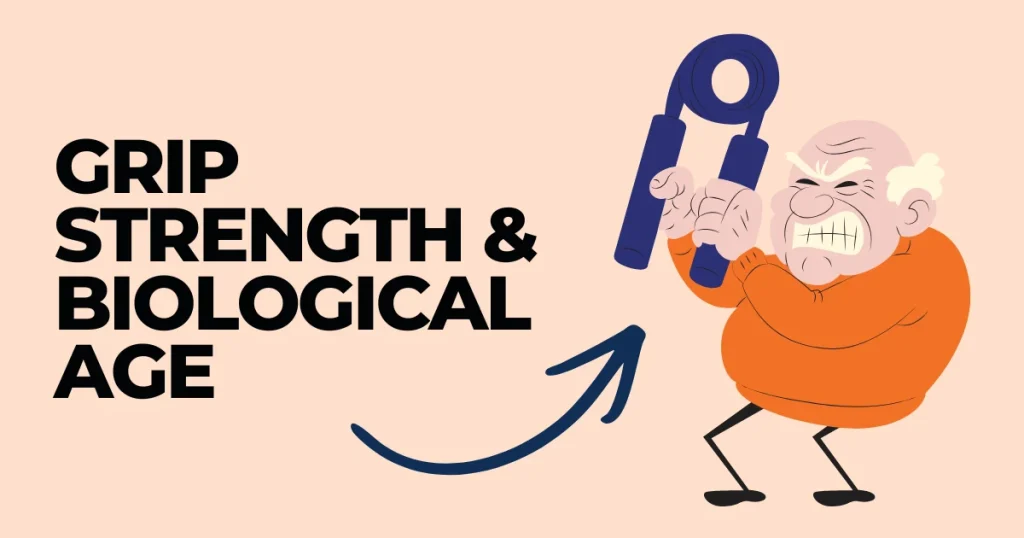
Why Grip Strength is the “Remote Control” for Longevity Grip Strength
It might seem strange that squeezing a handle correlates with how long your heart keeps beating. But when we look at the human body as an integrated system, it makes perfect sense.
1. The Heart-Hand Connection
Research published in early 2026 has further solidified the link between hand strength and cardiovascular health. Low grip strength is often a “canary in the coal mine” for systemic inflammation and arterial stiffness. When your muscles are weak, it often reflects a decline in overall muscle mass (sarcopenia), which is a major risk factor for heart disease.
2. Cognitive Function and Brain Health
There is a fascinating neurological link between our hands and our brains. The “motor homunculus”—the map in your brain that controls body parts—allots a massive amount of space to the hands. Engaging in complex grip tasks stimulates the nervous system. Studies now show that those with stronger grips maintain higher “white matter integrity” in the brain, leading to better memory and faster processing speeds as they age.
3. Biological vs. Chronological Age
You might be 50 on paper, but if your grip strength matches the average 35-year-old, your biological age is likely much lower. Strength serves as a proxy for your body’s “functional reserve”—the ability to bounce back from illness or injury.
The 2026 Research: What’s New? Grip Strength
Recent longitudinal studies have moved grip strength from a “suggested” metric to a “primary” biomarker. Key findings include:
- Mortality Predictor: Grip strength is a more accurate predictor of cardiovascular death than systolic blood pressure in certain demographics.
- DNA Methylation: Stronger individuals show “younger” patterns in DNA methylation, meaning their cells are literally aging slower.
The 5-Minute “Longevity Grip” Daily Routine Grip Strength
You don’t need a gym membership to improve this metric. This 5-minute routine is designed to be done anywhere—at your desk, on the couch, or while waiting for coffee.
| Exercise | Duration | Benefit |
|---|---|---|
| Finger Glides | 60 Seconds | Improves joint mobility and reduces stiffness. |
| The “Tennis Ball” Squeeze | 90 Seconds | Builds crushing strength and forearm endurance. |
| Extensor Finger Splay | 60 Seconds | Balances the muscles to prevent carpal tunnel. |
| Dead Hang (or Doorframe Pull) | 90 Seconds | Total upper body tension and grip stability. |
Step-by-Step Instructions
1. Finger Glides (Warm-up)
Make a tight fist, then extend your fingers straight out. Then, touch your fingertips to the base of your palm (claw hand). This lubricates the tendons.
2. The Crush Squeeze
Take a tennis ball or a dedicated grip trainer. Squeeze as hard as you can for 5 seconds, then release for 5. Repeat for 90 seconds. This mimics the “all-out” effort needed to stimulate the nervous system.
3. The Rubber Band Splay
Most people only train the “closing” of the hand. To protect your joints, you must train the “opening.” Place a thick rubber band around your fingers and thumb. Spread them apart against the resistance.
4. The Functional Carry
If you aren’t near a pull-up bar for a “Dead Hang,” simply pick up two heavy grocery bags or jugs of water. Walk around for 90 seconds without letting go. This builds “work capacity” in the forearms.
Implementing the Change
Improving your grip isn’t about becoming an elite powerlifter. It’s about maintaining the independence and vitality that allow you to open your own jars, carry your own luggage, and keep your nervous system “plugged in.”
The Professional Tip: Track your progress. Use a simple hand dynamometer (available online) once a month. Seeing that number go up is the best motivation because you aren’t just getting stronger—you’re getting younger.
Disclaimer: The information provided in this article is for educational purposes only and does not constitute medical advice. Always consult with a healthcare professional before starting a new exercise regimen, especially if you have pre-existing heart or joint conditions. DrugsArea
Sources & References
- Journal of Longevity Science (2026): Biomarkers of Aging Longevity
- World Health Organization: Muscle Mass and Sarcopenia Report Health
- Harvard Health: The Grip-Heart Connection Heart Health
- Neurology Today: Hand Strength and Cognitive Decline Brain Health
People Also Ask
1. Why is grip strength considered a “biomarker” for aging?
Think of your grip as a dashboard light for your entire body. It’s not just about hand strength; it’s a proxy for your overall muscle mass, bone density, and nervous system health. Research shows that as our cells age or undergo systemic inflammation, muscular force is one of the first things to decline.
2. Can a weak grip actually predict a shorter lifespan?
It sounds dramatic, but yes. Large-scale studies (like those in The Lancet) have found that reduced grip strength is a stronger predictor of cardiovascular mortality and all-cause mortality than systolic blood pressure. It’s a snapshot of your “frailty risk”—the weaker the grip, the higher the biological age.
3. What is the average grip strength for my age?
While it varies by gender, a general rule of thumb for “healthy” biological aging is:
- Men (30s-40s): 40–50 kg (88–110 lbs)
- Women (30s-40s): 25–35 kg (55–77 lbs)
If you fall significantly below these ranges for your bracket, your biological age might be “older” than your birth certificate suggests.
4. How does grip strength correlate with brain health?
There is a fascinating link between “handshake power” and cognitive function. Studies show that people with stronger grips tend to have more white matter integrity and better memory. This is likely because the same neuro-protective habits (exercise, nutrition) benefit both the brain and the muscles.
5. If I train my grip, will I actually lower my biological age?
Here is the nuance: Crushing a gripper won’t make you immortal. However, increasing your grip strength usually requires compound movements (like deadlifts or carries) that build systemic muscle mass. That systemic strength is what lowers your biological age by improving metabolic health and hormonal balance.
6. Does grip strength affect heart health?
Surprisingly, yes. A weak grip is often an early sign of “silent” vascular changes. Doctors have found that for every 5 kg (11 lbs) decrease in grip strength, there is a 17% increased risk of cardiovascular death. It’s a low-cost, non-invasive way to screen for heart stress.
7. How often should I test my grip strength?
If you’re using a digital dynamometer, testing once every 3–6 months is plenty. You’re looking for long-term trends, not daily fluctuations. A steady decline over a year is a red flag that your biological aging process might be accelerating due to lifestyle factors.
8. What causes grip strength to decline as we age?
The primary culprit is sarcopenia (age-related muscle loss) and a decrease in motor unit firing. Basically, the connection between your brain and your muscles gets “noisy” or weak. Chronic inflammation and poor protein synthesis also play a major role in “aging” your hands.
9. Are there simple ways to test this at home without a tool?
While a dynamometer is best, the “Dead Hang” test is a great DIY alternative. If you can’t hang from a pull-up bar for at least 30 seconds, it’s a sign that your functional strength-to-weight ratio (a key longevity marker) needs some work.
10. Can biological age tests (DNA methylation) predict grip strength?
Actually, it’s usually the other way around! Grip strength is often used to validate biological age clocks. If your “epigenetic clock” says you’re 35 but your grip strength is in the bottom 10th percentile, it’s a sign that your physical body is aging faster than your DNA might suggest.